


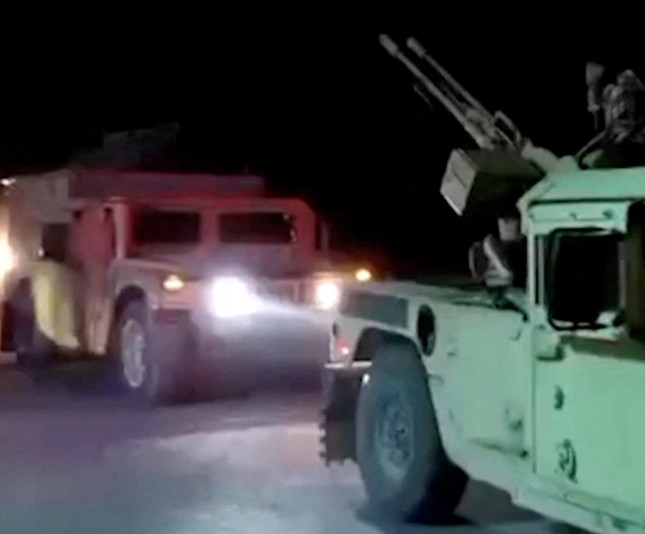
The Pakistan Afghanistan clashes have dramatically escalated after Pakistan launched overnight airstrikes on Kabul and other Afghan cities, with Islamabad declaring what it called an “open war” against Afghanistan’s Taliban government.
Pakistani defence minister Khawaja Asif made the announcement on X early Friday, accusing Kabul of harbouring militants.
The strikes reportedly took place in Kabul, Kandahar and Paktia in the early hours, following cross-border attacks late Thursday night.
The situation now threatens to collapse a fragile Qatar-mediated ceasefire along the 2,600km border between the two nuclear-armed neighbours.
What triggered the latest Pakistan Afghanistan clashes?
Pakistan says it acted in retaliation. According to senior Pakistani security officials, Taliban forces carried out cross-border mortar and militant attacks on Thursday night targeting villages near the frontier.
Islamabad claims it struck “Afghan military facilities” in response. Taliban spokesperson Zabiullah Mujahid confirmed explosions in Kabul but said no casualties had been reported in the capital so far.
This escalation follows Pakistani airstrikes earlier this week that the United Nations Assistance Mission in Afghanistan (UNAMA) said killed 13 civilians in Nangarhar province.
UNAMA stated it had “credible reports” that civilian areas were hit in Behsud and Khogyani districts. Afghanistan’s defence ministry condemned those strikes as a violation of its sovereignty.
Why are Pakistan and the Taliban fighting at the border?
Tensions have simmered for months. Violence surged in October, killing soldiers and civilians on both sides.
Pakistan blames the Tehreek-e-Taliban Pakistan (TTP), a militant group separate from but allied with Afghanistan’s Taliban, for attacks inside Pakistan. Islamabad accuses the group of operating from Afghan territory. Kabul denies this.
On Sunday, Pakistan’s military claimed it killed at least 70 militants in earlier cross-border strikes. Afghan officials rejected that claim and said civilians, including women and children, died in those attacks.
Several rounds of peace talks in November failed to secure a formal agreement, despite mediation efforts reportedly backed by Qatar.
What damage has Pakistan claimed overnight?
Pakistani government spokesperson Mosharraf Zaidi said on X that:
Pakistan has started; Afghanistan is just answering.#Pakistan #Afghanistan Clashespic.twitter.com/6ik9Ft9RR4
— Adil (@_Adil_Waseem) February 26, 2026
- 27 Taliban military posts were destroyed
- Nine posts were captured
- 133 Afghan fighters were killed
- More than 200 were wounded
- Over 80 tanks, artillery units and armoured vehicles were destroyed
These figures remain unverified by independent observers. Taliban officials have not confirmed these casualty numbers.
How has Afghanistan responded?
Afghan authorities reported evacuations near the Torkham border crossing after missile strikes wounded at least 13 civilians, including women and children.
Taliban forces reportedly fired mortars into Pakistani border villages. Pakistani police said there were no confirmed civilian casualties on their side.
Afghan officials earlier warned they would respond militarily to Pakistani airstrikes that killed civilians. That warning appears to have materialised in Thursday night’s cross-border fire.
What are Pakistan’s leaders saying?
Pakistan’s Prime Minister Shehbaz Sharif said in a statement: “There will be no compromise on the defence of the beloved homeland and every aggression will be met with a befitting reply.”
Taliban Turned Afghanistan Into A Colony Of India : Pakistan Defence Minister Khawaja Asif
IN WHICH WORLD IS HE LIVING
PAKISTAN CREATED TALIBAN AGAINST INDIA NOW THEY’RE BLAMING INDIA 😂🤦🍿 pic.twitter.com/7SxwhlRv9A
— Sachiin Ramdas Suryavanshi (@sachiinv7) February 27, 2026
Defence Minister Khawaja Asif wrote on X: “Our cup of patience has overflowed. Now it is open war between you and us.” He also accused Afghanistan of harbouring terrorists and acting as a proxy for India, though he did not provide evidence.
Why does this matter to the UK?
The escalation could have direct and indirect consequences for Britain:
1. Regional stability
The UK has diplomatic interests in South Asia. A full-scale conflict could destabilise the wider region, particularly given Pakistan’s nuclear status.
2. Counter-terrorism concerns
The UK has long monitored extremist networks operating in the Afghanistan-Pakistan region. Renewed conflict could create space for militant groups to regroup.
3. Migration impact
Pakistan expelled hundreds of thousands of Afghan migrants since October 2023. A widening war could trigger new refugee flows, potentially affecting Europe and the UK’s asylum system.
4. Global security
Britain remains engaged diplomatically with both Islamabad and international partners via the UN Security Council framework.