


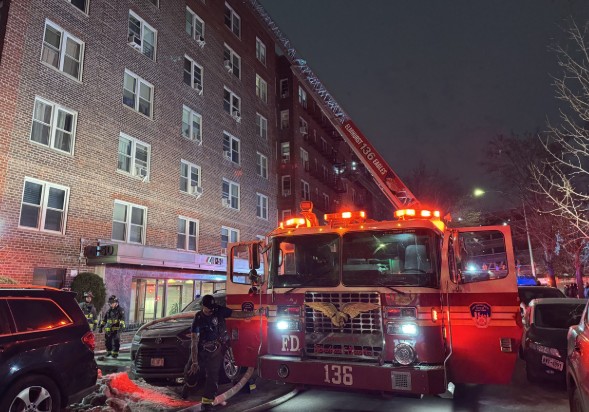
An NYC apartment fire in Queens has killed an elderly man after firefighters faced delays getting water to the blaze because a car blocked a fire hydrant, according to officials.
The fire broke out on Sunday evening in the Elmhurst area of New York City, prompting a major emergency response.
Authorities said the incident highlights a serious public safety issue, as blocked hydrants can slow firefighters during life-or-death situations.
The blaze started just before 7:20pm at an apartment building on 78th Street, between Broadway and Woodside Avenue, and quickly spread heavy smoke across the top floor.
What happened in the NYC apartment fire in Queens?
The New York City Fire Department (FDNY) said nearly 90 emergency personnel, including firefighters and EMS crews, rushed to the scene after reports of a serious fire inside the multi-storey building.
Firefighters found heavy fire and heavy smoke conditions on the sixth floor of the building during search operations.
During their search, crews discovered an 83-year-old man unconscious inside an apartment unit. Officials said he suffered severe injuries and showed no response when found.
NYC apartment fire kills 1 after firefighters’ battle to extinguish blaze slowed due to blocked hydrant “When vehicles are parked at a hydrant, it definitely impedes our operations, it slows everything down. Getting water on the fire fast is a critical part of our jobs,” FDNY D… pic.twitter.com/SIGBvfmURK
— NahBabyNah (@NahBabyNahNah) February 16, 2026
The man was rushed to the hospital but was later pronounced dead, according to the New York Police Department (NYPD).
Where was the victim found inside the building?
FDNY officials said the man was located in the rear bedroom of an apartment on the sixth floor, where conditions were particularly dangerous.
FDNY Deputy Chief Jeff Meister described the scene as extremely challenging due to smoke and fire spreading across the entire top floor.
“There was heavy fire and heavy smoke conditions on the whole top floor,” FDNY Deputy Chief Jeff Meister said at the scene.
Why did a blocked hydrant slow firefighters down?
Fire crews reported major difficulties accessing water supplies because one hydrant was blocked by a parked vehicle, while another nearby hydrant was reportedly frozen.
Deputy Chief Meister warned that this type of obstruction can seriously affect emergency response times.
“When vehicles are parked at a hydrant, it definitely impedes our operations. It slows everything down. Getting water on the fire fast is a critical part of our jobs,” Meister said.
Firefighters rely on hydrants to deliver immediate high-pressure water. Any delay can allow flames to spread further inside a building, especially in high-density residential blocks.
How many firefighters responded to the blaze?
Officials said nearly 90 FDNY firefighters and EMS personnel attended the incident, showing the scale of the emergency response required.
Large fires in apartment buildings often demand multiple units because crews must:
- evacuate residents
- search smoke-filled flats
- Stop flames spreading between floors,
- protect neighbouring buildings
The FDNY has not yet confirmed how many residents were displaced.
Is blocked hydrant parking a wider issue in New York City?
FDNY officials suggested the issue is becoming increasingly common across the city. “It seems to be an issue throughout the city where residents are parking on hydrants,” Deputy Chief Meister said.
Illegal hydrant parking can delay crews by forcing them to find alternative water sources, which may take extra minutes. In major building fires, even short delays can make a deadly difference.
What caused the NYC apartment fire?
The cause of the fire remains under investigation.
Officials have not yet confirmed whether the fire started due to:
- an electrical fault
- a cooking incident
- a smoking-related cause
- a heating appliance
- or another source
Investigators will typically examine burn patterns, witness accounts, and possible ignition sources inside the flat.
What lessons does this NYC apartment fire raise for UK readers?
Although the tragedy happened in the United States, the key warning applies strongly to the UK as well.
Fire hydrants in the UK are usually located underground and marked by yellow signs on nearby walls or posts. Emergency crews still depend on fast access to them, especially in built-up areas with flats, terraces, and tower blocks.
In the UK, blocking emergency access points can lead to enforcement action from local authorities, and in some cases, vehicles may be removed if they create a serious hazard.
This case also reinforces the importance of working smoke alarms, especially for older residents who may struggle to escape quickly.