


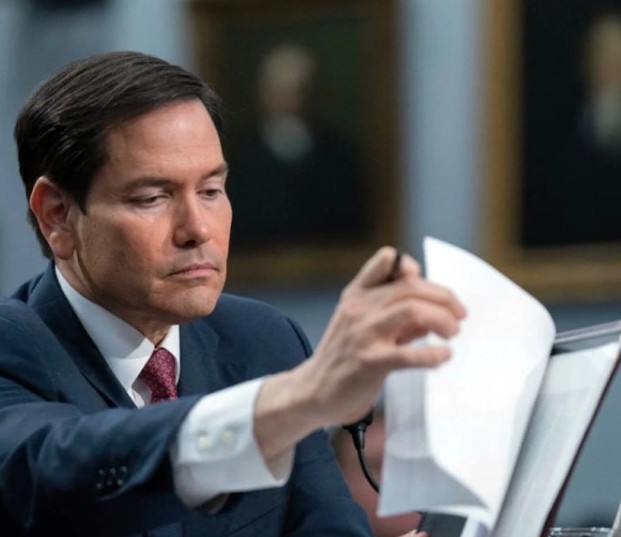
US Secretary of State Marco Rubio has said he expects to have a chance to meet Ukrainian President Volodymyr Zelensky at this week’s Munich Security Conference, as global leaders gather in Germany to discuss the future of European security.
Rubio made the comments on Thursday, shortly before travelling from Washington as part of a major US delegation attending the annual defence summit in Munich, which runs through Sunday.
The meeting matters because Ukraine continues to rely heavily on Western military and financial support, while Russia steps up attacks on Ukrainian cities and energy infrastructure.
The conference is expected to feature urgent discussions about military aid, NATO security planning, and how Europe, including the UK, responds to a long war that shows no signs of ending soon.
Why is Marco Rubio’s meeting with Zelensky seen as a big moment?
The possible meeting between Marco Rubio and Zelensky is important because it signals ongoing high-level US involvement in Ukraine’s defence strategy at a time when Russia continues to pressure Ukraine through relentless air attacks.
Ukraine’s leadership has repeatedly warned that the country needs more air defence systems, ammunition, and long-term guarantees from Western allies. Any direct talks with the US Secretary of State could influence:
- future US military aid packages
- diplomatic strategy for Ukraine’s long-term security
- NATO is planning for the next phase of the war
For the UK, this matters because Britain remains one of Ukraine’s strongest European supporters. If the US shifts its tone or priorities, the pressure on European allies, including the UK, could increase.
What did Marco Rubio actually say about meeting Zelensky?
Speaking to reporters before leaving Washington, Marco Rubio said he would likely have a chance to meet President Zelensky during the Munich conference.
Marco Rubio stated his intention to hold a private meeting with Zelensky at the Munich Security Conference on February 13-15, 2026, revealing Washington’s aim to reshape the Ukraine file according to the demands of a new geopolitical age, while this encounter serves as a warning… pic.twitter.com/mRWMUFRxhx
— Burak Keskin (@Burak_Keskin85) February 13, 2026
While he did not confirm a formal sit-down meeting, his remarks strongly suggested the two leaders could speak directly as part of the packed schedule of diplomatic talks happening at the event.
As reported by international media, “I’ll have a chance to see him,” Rubio said when asked about meeting Zelensky during the conference.
That short line has drawn attention because it signals the US intends to remain visible in Ukraine discussions at one of Europe’s most influential security gatherings.
What is the Munich Security Conference and why does it matter to the UK?
The Munich Security Conference (MSC) is one of the world’s most high-profile defence and diplomacy events. It brings together political leaders, defence ministers, military chiefs, and intelligence officials from NATO countries and beyond.
The MSC matters to the UK because it often sets the tone for major international decisions, including:
- NATO defence planning
- European military spending priorities
- International responses to conflict zones like Ukraine
- policy coordination between the US, UK, Germany, and France
Britain’s defence and foreign policy decisions are deeply tied to NATO strategy. If major agreements or warnings emerge in Munich, UK ministers and military planners usually respond quickly.
What’s happening in Ukraine right now as leaders meet in Munich?
Rubio’s comments come as Ukraine faces another wave of Russian strikes targeting its infrastructure during the winter period.
Ukrainian officials reported that Russian drones and ballistic missiles hit key areas overnight, leaving large numbers of people without heating, electricity, and water in major cities.
In Kyiv, officials said thousands of apartment buildings were affected, with heating supplies disrupted in many high-rise blocks.
This matters because Russia has increasingly focused on hitting Ukraine’s energy network during colder months, aiming to weaken morale and create civilian hardship.
How could this affect the UK’s position on the war?
The UK has consistently backed Ukraine with military aid, training programmes, and diplomatic support. But the longer the war continues, the more pressure grows on Western governments to maintain funding and equipment supplies.
If Rubio’s discussions with Zelensky lead to renewed calls for increased support, the UK could face:
- stronger expectations to expand defence support
- pressure to increase weapons production
- further involvement in long-term NATO security planning
Britain has already provided significant support since the start of the war, including air defence commitments, armoured vehicles, and training support for Ukrainian troops.
However, UK defence spending remains a politically sensitive topic, especially during a period of rising household costs and public concern over domestic services.
Could the Munich talks influence peace negotiations or ceasefire discussions?
The Munich Security Conference often serves as a behind-the-scenes meeting ground for sensitive diplomatic conversations.
While no official peace summit has been announced, leaders attending the event are expected to discuss:
- How long can Western support be sustained
- What Ukraine needs to hold its territory
- whether future negotiations are possible
- What “security guarantees” might look like after the war
Any conversation between Rubio and Zelensky could become an early indicator of whether the US is pushing for long-term military backing or exploring diplomatic alternatives.
For UK audiences, the key question remains whether Western unity stays strong or whether cracks begin to show.
What does this mean for everyday people in the UK?
Even though the conference takes place in Germany, its outcomes could affect the UK in real ways.
If NATO countries agree to increase defence commitments, it may influence:
- UK government spending priorities
- military procurement and weapons manufacturing
- future energy security planning
- The wider cost of supporting Ukraine long-term
British households may not feel the impact immediately, but defence decisions often shape public budgets over several years.