


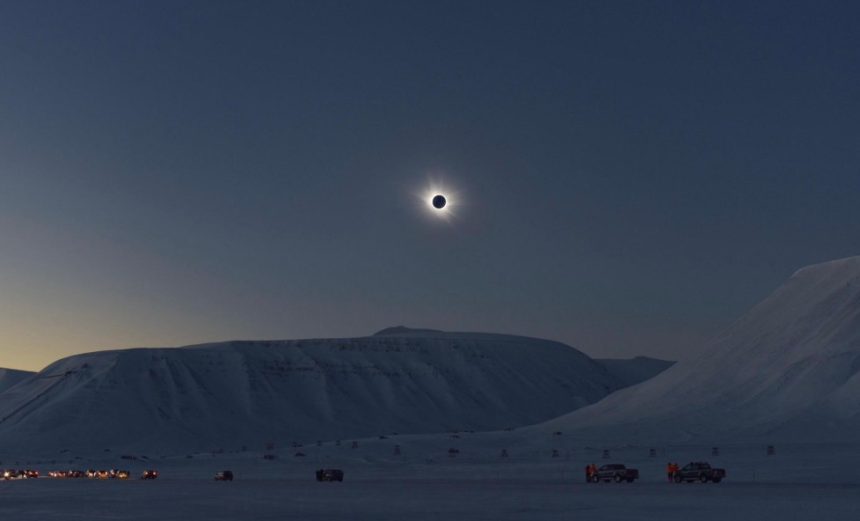
A rare and truly stirring elysian event is on the way, and astronomy suckers won’t want to miss it.
In August 2027, the world will witness the longest solar eclipse in a century, a remarkable moment when the moon will fully cover the sun and plunge several regions into a creepy noon darkness.
With further than six twinkles of summation, this is set to be one of the most dramatic solar events many of us will ever substantiate.
A Historic Eclipse Path Across Three Continents
According to NASA’s decline data, the total solar decline on 2 August 2027 will trace a wide path across the corridor of Europe, North Africa, and the Middle East.
The decline will begin its trip over Morocco and the southern tip of Spain, moving eastward across Algeria, Tunisia, Libya, and Egypt before continuing towards Yemen and the Somali seacoast.
The most emotional spectacle will take place in Egypt, especially in Luxor and Aswan, where summation will reach an astonishing 6 twinkles and 23 seconds, the longest duration seen in 100 years.
For anyone standing in these regions, the experience will be surreal daylight fading into twilight, an unforeseen drop in temperature, and bright stars getting visible in the middle of the day.
Adding to the magic, numerous of these locales are home to ancient tabernacles, burial spots, and literal monuments.
Watching a formerly- by-a-century decline unfold above milestones that have stood for glories may well be one of the most memorable gestures in ultramodern skywatching.
Why Does This Eclipse Last So Long?
Solar eclipses occur when the moon passes between the Earth and the sun, aligning impeccably enough to cast a shadow on our Earth.
This alignment doesn’t occur frequently due to the moon’s tilted orbit, which is why total solar eclipses are fairly rare, especially long-lasting ones.
The 2027 decline stands out due to the unique positioning of the Earth, moon, and sun at that time. NASA’s studies show that the figure of this alignment will stretch summation to further than six twinkles, making it the longest solar eclipse in a hundred years.
Analogous long declines won’t return until 2045 and further, making this event particularly special for skywatchers, shutterbugs, and anyone with an interest in astronomy or natural prodigies.
A Celestial Event Steeped in Culture and History
Solar declines have fascinated humanity throughout history. Long before ultramodern wisdom explained them, numerous societies interpreted declines as important foreshadowings.
In ancient China, a solar decline was allowed to gesture the displeasure of the welkin, while in Mesopotamia it was seen as a warning that the king had fallen out of godly favour.
Moment, indeed, with our scientific understanding, a total decline still has the power to leave people speechless.
The 2027 event is anticipated to draw thousands of trippers, decline chasers, and astronomy suckers to the path of summation.
Scientists, too, will use this rare occasion to study the sun’s nimbus, solar winds, and the geste
of light during summation.
How to Safely Watch the Solar Eclipse?
As significant as the decline is, it’s pivotal to observe it safely. Looking directly at the sun without proper protection can beget severe and endless eye damage.
Here’s how to view the eclipse safely:
- Use certified eclipse glasses (ordinary sunglasses don’t offer safe protection).
- Try a solar viewer or pinhole projector if you prefer indirect viewing.
- Join a public viewing event, where professional astronomers and local organisations will often provide safe solar-viewing equipment.
- Never look at the sun through cameras, binoculars, or telescopes unless they are fitted with the correct solar filters.
A Once-in-a-Century Moment You Shouldn’t Miss
Whether you’re a devoted skywatcher, a curious first-time observer, or someone who simply enjoys witnessing rare natural events, the August 2027 total solar eclipse is a commodity worth planning for.
With its record-breaking duration, wide visibility, and stunning background across major regions, this decline promises a moment of admiration that won’t be repeated for decades.
So, mark your timetable, prepare your viewing gear, and get ready. The longest solar decline in 100 years is on the horizon, and you won’t want to miss a second of it.