


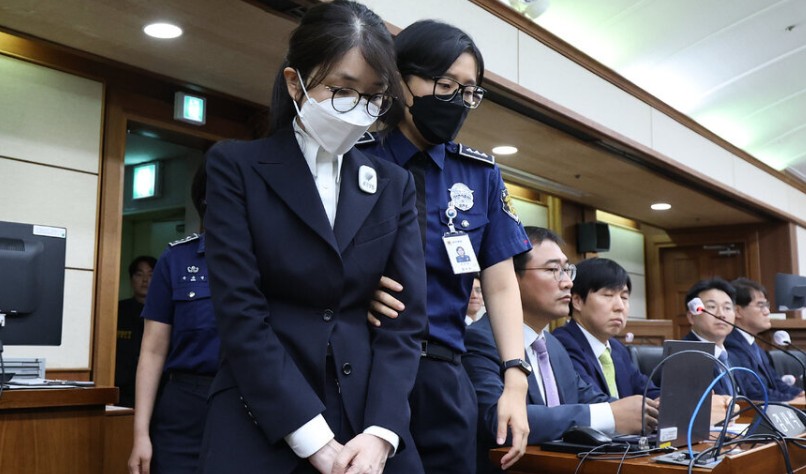
South Korea’s former first lady, Kim Keon Hee, has been sentenced to 20 months in prison for corruption after a court found she accepted bribes linked to religious business interests.
The ruling, delivered on Wednesday in Seoul, lands just weeks before a separate and politically explosive verdict against her husband, disgraced former president Yoon Suk Yeol.
The case matters far beyond South Korea’s borders. It highlights how top-level political scandals can destabilize governments, strain public trust, and affect international partners, including the UK, which maintains close diplomatic and trade ties with Seoul.
Who is Kim Keon Hee, and what was she convicted of?
Kim Keon Hee served as South Korea’s first lady during Yoon Suk Yeol’s presidency. Prosecutors accused her of receiving bribes from the Unification Church in exchange for favourable treatment related to business and influence-peddling.
On Wednesday, the Seoul Central District Court convicted Kim of corruption offences and handed down a 20-month prison sentence.
In a written summary of its ruling, the court said: “The defendant knowingly accepted improper benefits linked to the exercise of political influence.”
Why did the court sentence Kim Keon Hee now?
The timing is politically sensitive. The ruling comes around three weeks before the same court is due to announce its verdict on rebellion charges against former president Yoon Suk Yeol, linked to his controversial imposition of martial law one year ago.
Legal experts in Seoul say the court moved first on Kim’s case because the evidence trail was narrower and more clearly defined, focusing on financial transfers and witness testimony.
How serious were the corruption charges?
Prosecutors argued that Kim received illegal benefits tied to the Unification Church, a powerful religious organisation with business interests in South Korea.
While the court did not impose the maximum sentence, judges said the offence damaged public trust and involved abuse of proximity to power.
For context:
- Corruption sentences in South Korea often range from 1 to 5 years for high-profile figures
- First ladies rarely face prison terms, making this ruling highly unusual
How does this connect to Yoon Suk Yeol’s upcoming verdict?
Kim Keon Hee’s conviction adds pressure ahead of the verdict for Yoon Suk Yeol, who faces a rebellion charge over his declaration of martial law during nationwide unrest last year.
An independent counsel previously demanded the death penalty for Yoon, a legal option still available in South Korea, though rarely carried out.
Analysts say Kim’s sentencing could influence public perception, though judges insist the cases remain legally separate.
What does this mean for South Korea’s politics and public trust?
The conviction of Kim Keon Hee reinforces South Korea’s reputation for holding powerful figures to account, even at the highest level.
Former presidents and close relatives have previously faced prison, reflecting a strict, though politically charged, justice system.
Public reaction has been mixed:
- Some South Koreans welcome the ruling as proof that “no one is above the law”
- Others view it as part of a wider political reckoning following last year’s unrest
Why should UK readers pay attention?
South Korea is a key UK partner in:
- Trade and technology
- Defence cooperation
- Indo-Pacific security strategy
Political instability in Seoul can affect markets, diplomatic planning, and long-term agreements involving British firms and government bodies.