

Israel has said it will reopen the Gaza Strip’s key border crossing with Egypt only after completing a military operation to recover the body of the last remaining Israeli hostage in the territory.
The decision affects humanitarian access into Gaza, regional diplomacy, and the fragile ceasefire agreed earlier this year.
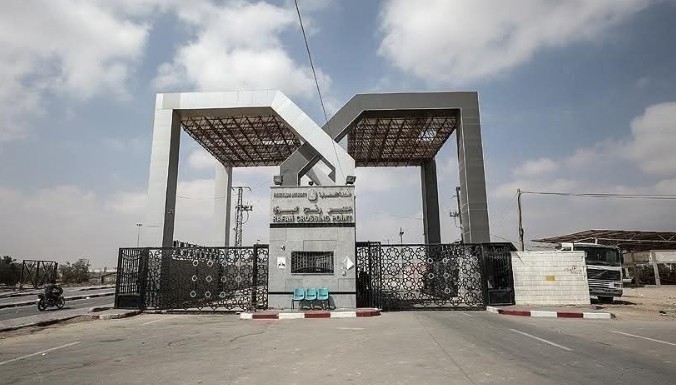
The announcement, made late on Sunday by Prime Minister Benjamin Netanyahu’s office, confirms that the Israel-Gaza crossing at Rafah will remain largely shut until Israeli forces finish their search for the remains of Master Sgt Ran Gvili, a 24-year-old police officer killed during the 7 October 2023 Hamas-led attack.
What is happening at the Rafah crossing right now?
The Rafah crossing, Gaza’s only border point not controlled directly by Israel, has been mostly closed since May 2024, when Israeli troops seized the Palestinian side.
Although the ceasefire between Israel and Hamas, which began in October, was meant to allow its reopening, Israel has now made that step conditional.
On Sunday night, Israel confirmed it had agreed to a limited reopening of the Rafah crossing for pedestrian movement only, and only after a full Israeli inspection process. Officials stressed this would happen after the current operation ends.
“Upon completion of this operation, and in accordance with what has been agreed upon with the US, Israel will open the Rafah crossing,” the Prime Minister’s office said in a statement.
Why is Israel linking the crossing to the recovery of Ran Gvili?
Israeli officials say the operation focuses on retrieving the body of Master Sgt Ran Gvili, believed to be buried in northern Gaza.
Gvili was killed at Kibbutz Alumim on 7 October 2023, and his body was taken into Gaza.
The Israeli military confirmed it has launched a targeted search in Gaza City, including the Shejaiya and Daraj Tuffah areas, east of the so-called Yellow Line, which marks territory still held by Israeli forces under the ceasefire deal.
According to Israeli media reports, the operation could last several days and involves specialist teams, including rabbis, forensic search units, and dental experts using mobile X-ray machines.
What has Hamas said about the operation?
Hamas’s armed wing, the Izzedine al-Qassam Brigades, said it had already shared all the information it holds about Gvili’s burial site with international mediators.
“We have provided mediators with all the details and information in our possession regarding the location,” the group said, adding that Israeli forces were already searching one of the identified sites.
How does this affect humanitarian aid to Gaza?
The continued closure of the Rafah crossing has major humanitarian consequences. Aid agencies have repeatedly warned that restricted access has worsened shortages of food, medicine, and fuel across Gaza.
Under phase one of the ceasefire deal, Israel and Hamas agreed to a surge in humanitarian aid deliveries.
However, the limited status of the Israel-Gaza crossing has slowed that process, placing pressure on international mediators, including the United States and Egypt.
What role are the US and mediators playing?
US officials remain heavily involved. On Saturday, US special envoy Steve Witkoff and Jared Kushner, President Donald Trump’s son-in-law, met Israeli leaders to discuss phase two of Trump’s Gaza peace plan.
Witkoff described the talks as “constructive and positive”. The next phase is expected to include:
- A new technocratic Palestinian authority to run Gaza
- Full demilitarisation of the territory
- Disarmament of Hamas and other armed groups
- Large-scale reconstruction
What do the hostage’s family and the Israeli public say?
Gvili’s family has publicly opposed any reopening of the Rafah crossing before his body is returned to Israel for burial. “First and foremost, Ran must be brought home,” the family said.
Their position reflects wider Israeli public sentiment, where the fate of hostages, living and dead, remains a deeply emotional and political issue.
How did the Gaza war reach this point?
The current war began on 7 October 2023, when Hamas-led fighters killed about 1,200 people in southern Israel and took 251 hostages into Gaza.
Israel’s military response has since killed more than 71,650 people in Gaza, according to the Hamas-run health ministry. The figures cannot be independently verified but are widely cited by international bodies.