

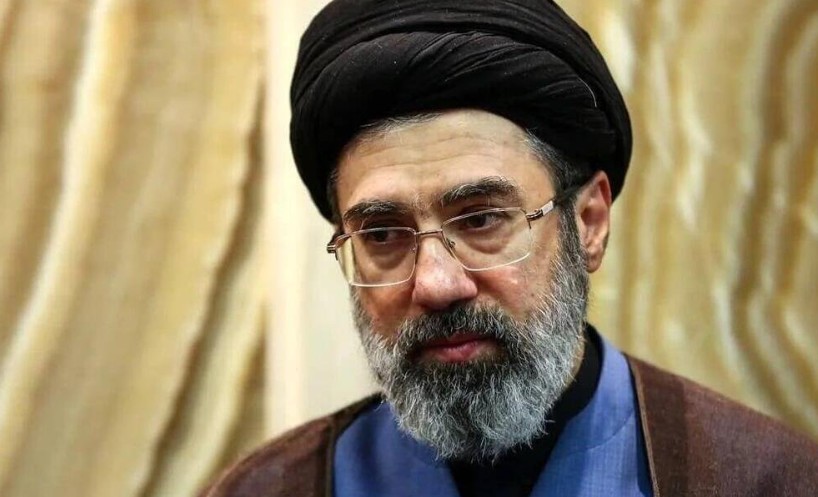
Iran has appointed Mojtaba Khamenei as the country’s new Iranian supreme leader, replacing his father, Ali Khamenei, who was killed during the opening phase of the escalating conflict involving Iran, Israel and the United States. The decision was announced on Monday, 9 March, after a vote by Iran’s Assembly of Experts.
The appointment comes as the U.S.–Israeli war with Iran enters its tenth day, triggering missile and drone exchanges across the Middle East and sending global oil prices sharply higher.
Energy markets reacted instantly, with oil surging above $117 per barrel, while Asian stock markets fell amid fears that the conflict could disrupt supply routes through the Strait of Hormuz, one of the world’s most important oil shipping lanes.
For the UK and Europe, the development raises serious concerns about energy prices, economic stability and wider geopolitical tensions.
Who is Mojtaba Khamenei?
Mojtaba Khamenei, a senior cleric with significant influence inside Iran’s political and security networks, had long been viewed as a leading candidate to succeed his father.
Iran’s Assembly of Experts, an 88-member clerical body responsible for selecting the country’s supreme leader, voted to appoint him following the death of Ali Khamenei, who had led Iran since 1989.
The role of Iranian supreme leader is the most powerful position in the Islamic Republic. The office has ultimate authority over the military, judiciary, government and foreign policy, making the leader the final decision-maker on matters of war, diplomacy and national strategy.
Senior cleric Ayatollah Sadeq Amoli-Larijani publicly supported the decision, saying Mojtaba’s leadership would help maintain political continuity during a time of national crisis.
Iranian institutions, including the defence council and foreign ministry, quickly issued statements pledging loyalty to the new leader as the conflict continued to intensify.
What triggered the sudden leadership change in Iran?
The leadership transition followed a dramatic escalation in the Middle East conflict. Ali Khamenei was killed during one of the early strikes in the ongoing war between Iran and forces aligned with Israel and the United States.
His death created an immediate leadership vacuum at a moment when Iran was already engaged in active military confrontation.
IRAN GOT DANGEROUS SUPREME 🚨
MOJTABA KHAMENEI REPLACED THIS FATHER AS IRAN’S NEW SUPREME LEADER.
SOME PEOPLE ARE CHANTING AGAINST HIM, WHILE OTHERS ARE VOICING SUPPORT.
TRUMP: “THEY DON’T KNOW WHAT THE FUCK THEY’RE DOING.”
TRUMP MAY ELIMINAT…Show more https://t.co/68hyKJYuKb pic.twitter.com/lnyMa7HUyA
— Money Ape (@TheMoneyApe) March 9, 2026
The conflict has now spread across several countries in the region, with reports of:
- Israeli airstrikes targeting militant infrastructure in Beirut
- Drone and rocket attacks near U.S. diplomatic and military facilities in Iraq
- Intercepted drones over Saudi territory
- A drone strike damaged infrastructure near a major oil refinery in Bahrain
These incidents underline the growing risk that the conflict could evolve into a wider regional war involving multiple countries.
Iran’s defence council issued a statement pledging full support for the new leadership, declaring that the military would continue to follow the supreme leader during the conflict.
How has Donald Trump responded to Iran’s new leader?
U.S. President Donald Trump had previously voiced opposition to Mojtaba Khamenei becoming Iran’s next supreme leader.
In remarks to American media, Trump suggested that Washington should have influence over Iran’s future leadership during the ongoing conflict.
He also indicated that ending the war would require coordination between the United States and Israeli Prime Minister Benjamin Netanyahu.
After Mojtaba Khamenei’s appointment was confirmed, Trump declined to comment in detail, saying only that the situation remained fluid and that developments would unfold in the coming days.
Why are oil prices surging after the Iranian supreme leader announcement?
Energy markets reacted strongly to fears that the conflict could disrupt global oil supply.
Oil prices jumped more than 25% in a single day, reaching their highest levels since 2022. Brent crude climbed to roughly $117 per barrel, while U.S. benchmark West Texas Intermediate rose to around $116 per barrel.
The surge is largely driven by concerns about the Strait of Hormuz, a narrow maritime corridor that handles around 20% of global oil and liquefied natural gas shipments.
Reports of attacks on commercial vessels in the area have forced some tankers to delay or reroute journeys, reducing the amount of oil reaching global markets.
At the same time, several Middle Eastern energy exporters have reduced production or halted shipments due to security risks.
Analysts warn that if disruptions continue, the world could face a significant supply shortage, pushing oil prices even higher in the weeks ahead.
How are global markets reacting to the conflict?
Financial markets across Asia reacted quickly to the surge in oil prices and the growing uncertainty surrounding the conflict.
Japan’s Nikkei index fell 5.8%, while South Korea’s stock market dropped 6.5%, reflecting investor concerns about rising energy costs and potential economic instability.
Several governments are now considering emergency measures to stabilise energy markets. Finance ministers from the Group of Seven (G7) are expected to discuss a possible coordinated release of oil from strategic reserves through the International Energy Agency.
Countries that rely heavily on Middle Eastern oil, particularly in Asia, are already preparing contingency plans in case shipping disruptions worsen.
Calls for peace from global leaders
Religious and political leaders have warned that the conflict risks escalating into a humanitarian crisis if fighting continues.
During a prayer gathering in St Peter’s Square, Pope Leo warned that the violence could become “a tragedy of enormous proportions” if dialogue does not resume.
He urged all sides to stop the fighting and open diplomatic channels to prevent further loss of life across the region.