
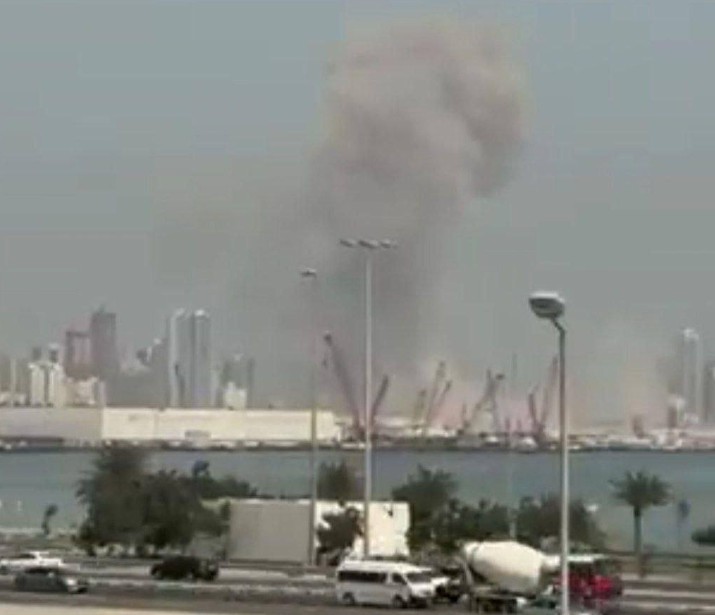
An apparent Iran strikes near a US naval facility in Bahrain has intensified concerns about regional stability and potential economic fallout.
The explosion reportedly occurred close to the base of the United States Navy Fifth Fleet early Saturday morning, sending a cloud of smoke into the air and prompting alarm among bystanders.
Video footage circulating online shows the moment of the blast, with passengers in a nearby vehicle shouting in shock as debris appears to scatter across the road.
No casualties have been confirmed, and authorities have not yet disclosed the extent of any damage. However, the incident comes amid growing geopolitical tensions between Tehran and Western powers.
For the UK, developments in the Gulf carry indirect but meaningful implications, particularly around energy security and maritime trade.
What exactly happened in Bahrain?
Reports indicate the explosion struck an area close to the US naval installation in Manama, Bahrain’s capital.
The Fifth Fleet oversees maritime security across the Persian Gulf and surrounding waters, playing a strategic role in protecting shipping lanes used for global commerce.
Eyewitness footage shows:
- A sudden explosion near roadside buildings
- A large plume of dark smoke is rising skyward
- Sounds of distress from passengers in a nearby vehicle
- Debris flying outward from the blast zone
💥🚨IRAN STRIKES BACK AT US BASES: WAR SPREADS TO GULF – OIL SURGES!
Fresh photos from Bahrain’s US Naval Support Activity
base in the Persian Gulf – explosions and smoke rising.‼️Iran confirms direct ballistic missile strikes on US bases:
– Al Dhafra Air Base (UAE) hit –… pic.twitter.com/5ycn1v805i— Andrew Leverage (@Mr_LeverageX) February 28, 2026
Authorities have yet to confirm whether the strike targeted military assets or infrastructure. Regional security analysts suggest it may form part of retaliatory actions linked to broader tensions between Iran and the United States.
Why Bahrain matters in the Middle East security landscape
Bahrain hosts one of the most important Western naval hubs in the region. Alongside the US base, the UK maintains a permanent naval presence at HMS Jufair, a facility supporting Royal Navy operations in the Middle East.
These installations allow allied forces to monitor shipping routes and respond to security threats in the Gulf. The Persian Gulf itself remains vital to global energy markets, handling a significant share of worldwide oil exports.
Any disruption in this region can ripple through international markets, influencing fuel prices and economic conditions far beyond the Middle East.
Could the Iran strikes affect the UK?
Direct consequences for Britain are unlikely in the short term, but indirect risks exist:
- Energy prices: Global oil markets react quickly to geopolitical shocks. Higher prices can feed into petrol and household energy costs.
- Market volatility: Investors often respond to uncertainty, which may influence stock markets and currency movements.
- Trade routes: The Gulf is a critical corridor for maritime commerce. Prolonged instability could raise shipping costs.
- Security concerns: UK personnel stationed in Bahrain may face heightened precautions.
The UK Government typically monitors such developments closely and coordinates with international partners to maintain stability.