


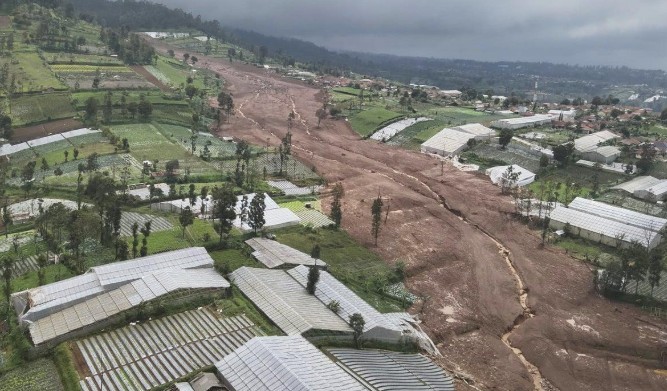
A deadly Indonesian landslide struck the country’s main island of Java in the early hours of Saturday, killing at least eight people and leaving more than 80 others missing, Indonesian authorities have confirmed.
The disaster unfolded before dawn in West Java after days of torrential rain destabilised hillsides, sending mud, rocks, and trees crashing into residential areas.
The landslide has drawn international attention because it highlights the growing risks posed by extreme weather in densely populated regions, an issue closely monitored by UK emergency planners, aid organisations, and climate experts.
What happened during the Indonesia landslide in West Java?
The landslide hit Pasir Langu village, located in the West Bandung district of West Java province, at around 3am local time.
Residents were asleep when rain-soaked soil gave way on the surrounding hills, unleashing a torrent of debris that swept through several mountain hamlets.
According to Indonesia’s National Disaster Management Agency (BNPB), the collapse buried at least 34 houses under thick layers of mud and rubble.
This morning, large landslide material from the foothills of Mount Burangrang swept into the settlement, damaging and carrying away several homes.
📍Pasirlangu Village, Cisarua District, West Bandung Regency (KBB), West Java, Indonesia.
Several people were injured, and around… pic.twitter.com/8zheIoDs6k
— Weather Monitor (@WeatherMonitors) January 24, 2026
Emergency teams later confirmed that eight bodies had been recovered from the worst-affected area of Pasir Kuning hamlet, while 82 residents remain unaccounted for and are feared trapped beneath the debris.
Abdul Muhari, a spokesperson for the agency, said rescue teams are working under extreme pressure.
“Rescuers are searching for 82 residents feared buried under heaps of mud and debris,” he said.
Why did heavy rain trigger the landslide?
Days of relentless rainfall caused nearby rivers to overflow and saturated the surrounding hillsides.
Once the soil reached the breaking point, entire sections of land collapsed, sending mud and uprooted trees downhill with little warning.
West Java is particularly vulnerable to this type of disaster because many villages sit close to steep slopes, while seasonal rains between October and April regularly weaken soil stability.
Teten Ali Mungku Engkun, head of West Java’s Disaster Management Office, warned that conditions remain dangerous.
“Unstable soil and continuing rainfall are making rescue operations extremely difficult,” he said.
Authorities moved quickly to evacuate families living within 100 metres of the landslide zone, fearing further collapses.
How are rescue efforts unfolding on the ground?
Search and rescue teams were deployed within hours of the landslide, but progress has been slow. Thick mud has turned roads, rice fields and footpaths into deep sludge, making it difficult for heavy equipment to reach the area.
Television footage broadcast across Indonesia shows exhausted rescue workers and local residents digging through debris by hand, while rain continues to fall.
Emergency shelters have been set up nearby to house displaced families, and medical teams remain on standby.
How common are landslides like this in Indonesia?
Landslides and floods are a recurring threat in Indonesia, an archipelago of more than 17,000 islands where millions of people live in mountainous or low-lying regions.
In December last year, catastrophic flooding and landslides in Sumatra killed at least 1,200 people and injured more than 7,000, according to BNPB figures.
Earlier in the year, torrential rains in Central Java caused floods and landslides that claimed more than 20 lives.
Climate experts warn that heavier rainfall linked to climate change is increasing the frequency and severity of such disasters across Southeast Asia.
What warnings have authorities issued to residents?
Indonesian officials have urged people living in landslide-prone areas to remain alert, especially during prolonged rainfall.
Residents have been advised to evacuate immediately if they hear rumbling noises, notice soil movement, or see water levels rising rapidly near slopes.
Local governments continue to monitor weather conditions while emergency teams assess damage across the region.
Why does this Indonesian landslide matter to the UK?
Although the disaster occurred thousands of miles away, it holds relevance for the UK. British humanitarian organisations frequently operate in Indonesia during major emergencies, and the UK government has previously provided disaster relief funding to the region.
More broadly, the tragedy reinforces global concerns about climate resilience, a challenge the UK also faces as extreme weather events become more common at home and abroad.