


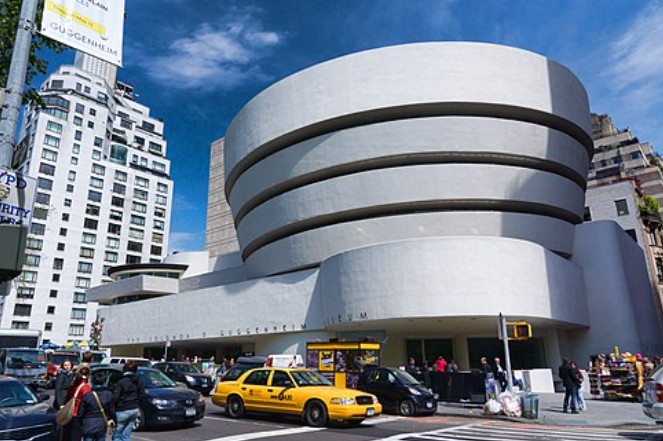
The Guggenheim Museum has unveiled a brand-new international art prize worth $50,000 (around £40,000), marking a fresh chapter in how one of the world’s most influential art institutions supports contemporary artists.
The new Jack Galef Visual Arts Award will be given every two years and is designed to recognise artists whose work shows depth, originality, and bold thinking, qualities increasingly prized in today’s global art scene.
What is the Guggenheim’s new Jack Galef Visual Arts Award?
The Jack Galef Visual Arts Award is a biennial prize funded through a private gift from the Jack Galef Estate. Unlike previous Guggenheim awards, it focuses less on celebrity status and more on long-term artistic inquiry and innovation.
Key facts at a glance:
- Prize value: $50,000 (approx. £40,000)
- Frequency: Every two years
- Funding source: Jack Galef Estate
- Selection process: Juried panel led by Guggenheim curators
- Eligible artists: International contemporary artists
The initiative comes three years after the Guggenheim ended the Hugo Boss Prize, a high-profile $100,000 award that ran from 1996 to 2020.
Why did the Guggenheim replace the Hugo Boss Prize?
The museum has not framed the change as a replacement, but as a shift in values.
The Hugo Boss Prize was known for its scale and brand association. The new award, however, is positioned as more research-focused and reflective, aligning with wider conversations in the art world around sustainability, labour, and environmental impact.
A senior Guggenheim representative said in a statement: “This award supports artists whose practices show sustained inquiry, intellectual rigour and a commitment to engaging with the world as it is.”
Who is Catherine Telford Keogh, the inaugural Guggenheim winner?
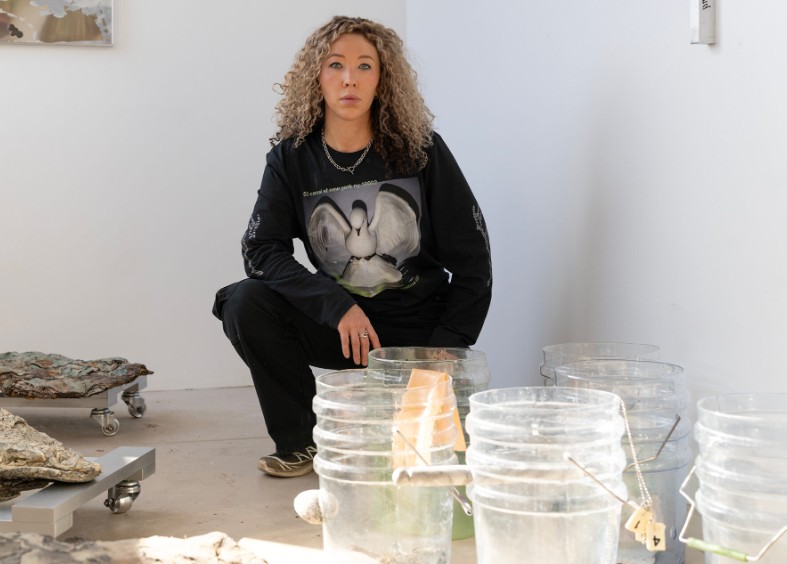
- Born: Toronto, Canada
- Undergraduate studies: Studio Art and Gender Studies, University of Waterloo
- Postgraduate degrees: Sculpture and Gender Studies, Yale University
- Current base: New York City
- Academic role: Faculty member at Parsons School of Design
Her work blends sculpture, research, and environmental observation, often using overlooked or discarded materials to question how society assigns value.
Why was Catherine Telford Keogh selected?
According to the Guggenheim’s curatorial panel, Telford Keogh stood out for her analytical approach and her ability to connect art, science, and environmental ethics.
The museum’s Director and CEO praised her work, stating: “Her practice demonstrates an exceptional ability to explore systems of value, waste, and survival with clarity and imagination.”
How does this award reflect wider challenges in the arts sector?
In an email interview, Telford Keogh acknowledged that the award arrives at a difficult moment for arts education.
At Parsons School of Design, where she teaches, nearly 40% of full-time faculty have reportedly been offered early retirement or buyouts following budget pressures, an issue mirrored across many UK and global institutions.
She noted that sustained funding for artists and educators is becoming increasingly rare, making initiatives like the Guggenheim’s especially meaningful.
What will the prize money be used for?
Telford Keogh plans to use part of the award to research microbial life in polluted industrial environments, focusing on the Gowanus Canal Superfund Site in New York.
She explained: “I’m interested in life that exists despite neglect, organisms that challenge our ideas of worth and visibility.”