
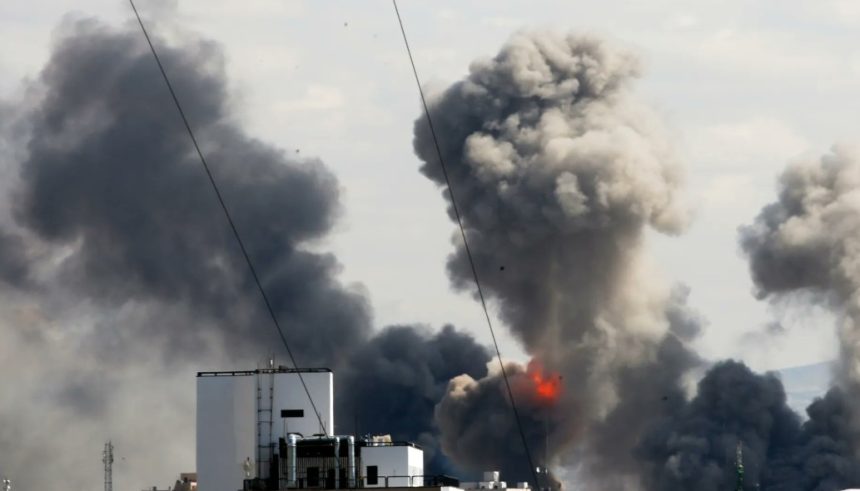
European stocks are set to open sharply lower on Monday after the United States and Israel launched major strikes on Iran over the weekend, escalating tensions across the Middle East.
Markets in London, Frankfurt, Paris, and Milan reacted swiftly, with investors pulling back amid fears of wider conflict, oil supply disruption, and global economic fallout.
The attacks, which took place on Saturday, reportedly killed Iran’s Supreme Leader and triggered immediate retaliation from Tehran.
By early Monday morning in London, traders were already bracing for heavy losses across major European indices.
How far are European stocks expected to fall?
According to market data from IG, the opening calls suggest:
| Index | Expected Opening Move | Country |
|---|---|---|
| FTSE 100 | -0.6% | United Kingdom |
| DAX | -1.5% | Germany |
| CAC 40 | -1.4% | France |
| FTSE MIB | -1.2% | Italy |
Germany’s DAX appears set for the steepest fall, reflecting concerns over energy exposure and industrial demand.
Futures markets across the US also tumbled overnight, while Asia-Pacific markets closed firmly in negative territory. Airline stocks were hit particularly hard due to airspace closures and flight disruptions across the Middle East.
Why are markets reacting so sharply?
The large-scale assault began after Iran refused US demands to curb its nuclear programme. Diplomatic talks last Thursday reportedly collapsed without agreement. By Saturday, coordinated strikes were launched on key Iranian targets.
Iran has since carried out retaliatory attacks on US military bases in the region. Reports confirm that three US service members were killed.
Investors are worried about three key risks:
- A broader regional war
- Disruption to global oil supplies
- A spike in inflation driven by higher energy costs
Crude oil prices jumped more than 8% on Sunday, marking one of the sharpest single-day rises this year. Higher oil prices typically push up transport and manufacturing costs across Europe, which can weigh heavily on economic growth.
What does this mean for the UK economy?
The UK remains vulnerable to energy price shocks. While Britain sources oil and gas globally, global pricing sets the cost consumers ultimately pay.
If crude remains elevated:
- Petrol and diesel prices could rise within days
- Household energy bills may face upward pressure later this year
- Inflation could tick higher after months of cooling
In 2022, when oil surged following Russia’s invasion of Ukraine, UK inflation climbed above 11%. Economists fear a prolonged Middle East conflict could reignite price pressures.
The Bank of England will now face fresh scrutiny as markets assess whether interest rate cuts could be delayed.
How are European companies responding?
Earnings updates are due today from:
- Bank of Ireland Group
- Smith & Nephew
- Galp Energia
Energy companies may benefit from higher oil prices, but airlines and manufacturing firms are likely to struggle if fuel costs remain elevated.
German retail sales data and Italian GDP figures are also expected, which could provide further insight into how resilient Europe’s economy remains amid global uncertainty.
Could an oil supply disruption worsen the situation?
Iran sits near the Strait of Hormuz, a critical shipping route through which roughly a fifth of global oil passes daily. Any threat to shipping lanes could send crude prices even higher.
First, let’s talk about oil!
Iran sits right next to the Strait of Hormuz, a narrow stretch of water through which 21% of the world’s entire oil supply flows every single day
And Iran has decided to block it, and oil prices will shoot up now!
— SMC Global (@smcglobal) March 2, 2026
Analysts warn that if supply disruption becomes prolonged, European stock markets may face continued volatility this week.
Financial strategist Mark Reynolds told BBC Radio 4: “Markets dislike uncertainty more than anything else. When geopolitical risk rises suddenly, investors reduce exposure quickly.”