


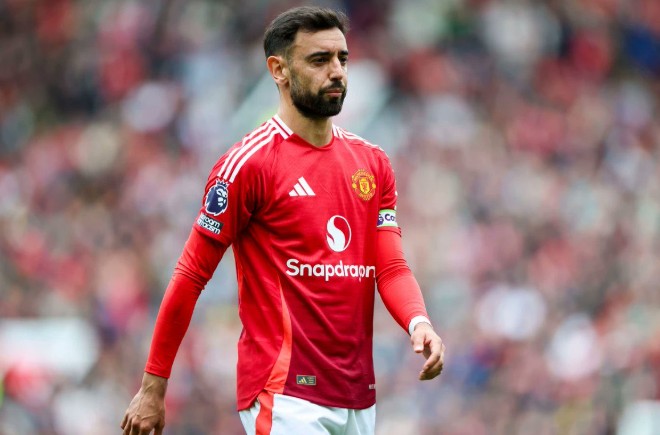
Manchester United captain Bruno Fernandes has fallen victim to a social media hack just hours after the club’s FA Cup exit, forcing United to release a late-night public statement urging fans not to engage with the posts.
The incident capped off a difficult Sunday for the Red Devils, who were knocked out of the FA Cup following a 2–1 defeat to Brighton at Old Trafford.
What exactly happened to Bruno Fernandes’ social media account?
Bruno Fernandes’ verified X (formerly Twitter) account, which has around 4.5 million followers, was hacked late on Sunday evening following Manchester United’s FA Cup loss.
The Portuguese midfielder, 31, played the full 90 minutes against Brighton. Shortly after the final whistle, a series of unauthorised and bizarre posts appeared on his account.
The first post read: “Join Macclesfield FC. Excited for the future.” The timing raised eyebrows, coming a day after sixth-tier Macclesfield stunned FA Cup holders Crystal Palace.
Further posts followed, including comments targeting Manchester United’s co-owners INEOS, controversial football takes, and offensive X-rated material.
Why did Manchester United release an official statement?
With confusion spreading quickly online, Manchester United intervened at 11:30pm on Sunday night, publishing a warning to supporters.
The club stated, “Bruno Fernandes’s X account has been hacked. Supporters should not engage with any of the posts or direct messages.”
Bruno Fernandes’s X account has been hacked.
Supporters should not engage with any of the posts or direct messages.
— Manchester United (@ManUtd) January 11, 2026
Despite the warning, the account continued posting replies, confirming it was still compromised at the time. All original posts were later deleted, though two reposts remained visible as of 6am Monday morning.
What kind of posts were shared during the hack?
The hacked account shared a mix of football-related and inappropriate content, including:
- Calls to “get rid of INEOS”, echoing protests from sections of the Old Trafford crowd
- Offensive remarks aimed at public figures, including footballers and internet personalities
- Crude jokes involving England cricket’s recent Ashes defeat
- Random challenges to other sports stars and influencers
The nature of the posts strongly indicated a malicious third-party takeover, rather than a simple prank.
How common are social media hacks involving footballers?
High-profile footballers are increasingly targeted due to their massive online followings. In the UK alone, players with verified accounts represent valuable targets for hackers seeking attention, influence, or disruption.
Bruno Fernandes’s X account right now. Yikes. https://t.co/Or9F95wFtK pic.twitter.com/JdssxxFKOT
— Leigh Kimmins McManus (@LeighMcManus1) January 11, 2026
According to UK cybersecurity firms, account takeovers often occur due to:
- Weak or reused passwords
- Phishing emails disguised as sponsorship or media requests
- Lack of two-factor authentication
While Manchester United has not confirmed how the breach occurred, the club acted quickly to limit further damage.
How does this incident reflect Manchester United’s wider struggles?
The hacking came at a particularly low moment for the club. Sunday’s defeat means United have now exited both the FA Cup and Carabao Cup at the first hurdle this season.
As a result, United are now set to play just 40 matches this campaign, their fewest since the 1914–15 season, which was cut short by World War I.
Caretaker manager Darren Fletcher did not hide his frustration post-match, telling reporters: “They have to dig in, show they want to be part of Manchester United’s future, learn from this. If you’re not, then I don’t think you should be here or will be here.”
What does this mean for Bruno Fernandes and Manchester United fans?
For Fernandes, the priority will be restoring full control of his account and reassuring supporters. For fans, the episode serves as a reminder not to engage with suspicious posts, even from verified profiles.
Manchester United, meanwhile, face growing pressure on and off the pitch, with supporter unrest, ownership scrutiny, and now digital security issues all colliding during a disappointing season.