
Today marks 30 years since the Dunblane massacre, the deadliest school shooting in UK history, when a gunman killed 16 children and their teacher at Dunblane Primary School in Scotland.
On 13 March 1996, the Dunblane massacre claimed the lives of 16 innocent children and their teacher, Gwen Mayor. For the rest of the world, Dunblane became a name synonymous with tragedy.
But for the people who live there, including a nine-year-old boy named Andy Murray, who was hiding under a desk in the headmaster’s office that morning, the story of Dunblane has become one of resilience and recovery.
As the UK observes this 30th anniversary, the narrative is no longer just about the horror of the past, but about the “Dunblane Roar” that replaced it.
Led by the sporting triumphs of Sir Andy Murray and his brother Jamie, the town has spent thirty years reclaiming its identity, moving from a place of mourning to a beacon of community strength.
What happened in the Dunblane massacre?
To understand the weight of this anniversary, one must look back at the sheer scale of the 1996 event.
On 13 March 1996, gunman Thomas Hamilton entered Dunblane Primary School armed with four legally owned handguns, carrying out what became known as the Dunblane massacre, the deadliest school shooting in modern British history.
Sir Andy Murray has rarely spoken of the day in detail, but when he has, the memories are “patch impressions.”
He recalls being in a classroom singing songs to drown out the noise, unaware that just metres away, a man his family knew, a man who had been a passenger in his mother Judy Murray’s car, was committing an atrocity.
30 years ago today:
On 13 March 1996, Thomas Hamilton walked into Dunblane primary school and opened fire on a class of five- and six-year-olds. In the space of just a few minutes, 16 children and one teacher were killed. Dunblane remains the UK’s deadliest mass shooting. 🏴💔 pic.twitter.com/Rrlfq7bbaF
— James Melville 🚜 (@JamesMelville) March 13, 2026
The immediate aftermath saw a community in paralysis, but it also sparked the Snowdrop Campaign. Led by bereaved parents, this movement resulted in 750,000 signatures and forced the UK Parliament to enact the 1997 Firearms (Amendment) Acts.
The campaign led to the 1997 Firearms (Amendment) Acts, passed by the UK Parliament, which effectively banned private handgun ownership across Great Britain and created some of the strictest gun control laws in the world.
How Did Tennis Help Andy Murray Cope After the Dunblane Tragedy?
For the Murray brothers, the trauma of 1996 was compounded by the divorce of their parents shortly after and Jamie’s departure to a tennis academy.
In the 2019 documentary Resurfacing, Sir Andy admitted that his “mercurial” and often frustrated on-court persona was a release valve for emotions he had “bottled up” since childhood.
“Tennis was an escape for me. All of these things are stuff that I have bottled up… we don’t talk about these things,” Murray explained.
The transformation of Dunblane’s global image is closely tied to the success of the Murray brothers, Andy Murray and Jamie Murray, who went on to become two of Britain’s most successful professional tennis players.
- 2012: Andy Murray wins Olympic gold at the London Games and his first Grand Slam title at the US Open.
- 2013: He becomes the first British man in 77 years to win Wimbledon.
- 2016: He reaches World Number One and wins a second Wimbledon title.
Each victory was celebrated in Dunblane with a fervour that felt like a collective exhale. The “Gold Postbox” on the High Street became a site of pilgrimage, not for tragedy, but for triumph.
As local residents often note, they can now travel abroad and tell people they are from Dunblane and be met with a smile and a mention of tennis, rather than a look of pity.
What Role Does Andy Murray Play in Dunblane Today?
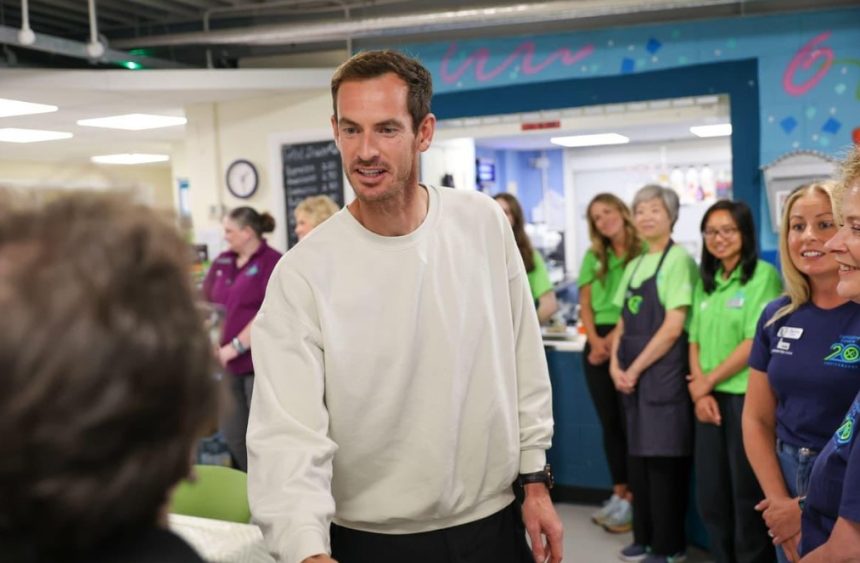
After retiring from professional tennis, Andy Murray has remained closely connected to his hometown through his role as a patron of the Dunblane Centre. Instead, he has stepped into a more formal role as a Patron of the Dunblane Centre.
The Centre itself is a physical manifestation of the world’s empathy, built using the millions of pounds in donations that flooded into the town after the shooting.
Under Murray’s patronage, the facility has expanded its mission, focusing on youth mental health and providing a “safe harbour” for the next generation of Stirlingshire’s children.
On this 30th anniversary, Scotland’s First Minister John Swinney and other leaders have paid tribute to the “quiet dignity” and resilience shown by the Dunblane community.
At Dunblane Cathedral, where a memorial stone stands inscribed with the names of the lost, the atmosphere today is one of respectful remembrance rather than fresh grief.
Why Does the Story of Dunblane Still Matter 30 Years Later?
The legacy of Dunblane is twofold. Legally, it is a testament to what a nation can achieve when it prioritises public safety over the right to bear arms.
Personally, through the lens of Sir Andy Murray’s career, it is a reminder that while trauma may shape a person, it does not have to define them.
As Sir Andy transitions from a global sports icon to a community leader, his story and that of his hometown remain intertwined, a journey from the darkest of mornings to a future defined by service, sport, and a steadfast refusal to forget those who were lost.