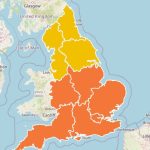



An exceptional UK heatwave across May and June 2026 has potentially caused more than 2,700 heat-related deaths.
Driven by an intense atmospheric heat dome made worse by climate change, temperatures shattered historical records, peaking at a staggering 37.7°C in Lingwood, Norfolk, and triggering a rare Met Office red extreme heat warning.
- Record Temperatures: The UK witnessed its warmest June on record in England, with temperatures hitting 37.7°C at Lingwood, Norfolk, alongside an unprecedented May high of 35.1°C at Kew Gardens.
- Severe Excess Mortality: Early modeling from Imperial College London and the London School of Hygiene and Tropical Medicine indicates that over 2,700 people may have died from heat-related complications.
- Critical Infrastructure Strain: High humidity and persistent tropical nights (overnight lows remaining above 20°C) placed massive stress on localized public services, utilities, and emergency transport corridors.
What Caused the Unprecedented May and June Temperature Spikes?
The meteorological trajectory of 2026 has defied historical precedents. The first severe spike arrived on May 26, when the mercury reached 35.1°C at Kew Gardens, eclipsing a May record that had stood since 1922.
This was swiftly followed by a prolonged, punishing system in mid-to-late June. A trapped block of high pressure, known colloquially as a heat dome, stalled directly over Western Europe. On June 26, the village of Lingwood in Norfolk reached 37.7°C. This smashed the previous June maximum of 35.6°C, set in 1957.
The primary danger during this period was the unique humidity profile accompanying the air mass.
High wet-bulb conditions meant human sweat could not easily evaporate to cool the body, transforming the weather into what epidemiologists classify as a silent killer.
Furthermore, consecutive tropical nights, where temperatures failed to fall below 20°C, denied vulnerable populations a critical overnight window to recovery.
How is the Heatwave Affecting Local Councils, NHS Trusts, and Transport Hubs?
The human and financial toll of the weather has created immediate pressures across municipal lines. According to mathematical projections using localized death records from previous heat events, the estimated 2,700 fatalities represent an escalating health crisis that is unevenly distributed.
Mirroring the spatial distribution of the Met Office red warnings, the highest excess mortality clustered heavily within urban care settings and densely populated regions across England and Wales.
This environmental shock triggered cascading operational emergencies for local authorities and critical networks:
- NHS Trusts Under Pressure: Hospitals faced surging admissions due to heatstroke and severe cardiovascular strain. A lack of specialized cooling infrastructure forced several facilities to declare critical incidents as ward conditions became unsafe. Modeling from the University of Birmingham suggested that thousands of surgeries risked cancellation due to staff shortages and unsafe clinical environments.
- Utility Networks Under Siege: Increased water demand combined with infrastructure failure left roughly 18,000 properties across Kent dealing with severe water supply disruptions, as localized suppliers like South East Water battled failed pumping arrays.
- Transport Grid Lock: Extreme surface temperatures on asphalt and steel led to strict speed restrictions across National Rail lines to prevent track buckling. Concurrently, major arterial routes including sections of the M25 orbital motorway experienced significant delays due to heat-related vehicle breakdowns and localized tarmac melting.
- Aviation Disruption: High-altitude atmospheric instability sparked by the collapsing edge of the heat dome generated severe thunderstorms, leading to hundreds of flight cancellations and prolonged delays at London Heathrow and Gatwick airports.
What Do Public Health Experts and Ministers Say About the Crisis?
“The heat we have seen this summer is only possible because of the climate change we have had to date, due to the burning of fossil fuels. Climate change added between 3°C and 4°C to the maximum temperatures recorded in May and June.” Dr Friederike Otto, Professor of Climate Science at Imperial College London
“If by putting out these estimates we highlight to people how dangerous it is and they change their behaviour next time there’s a heatwave, and our estimates turn out to be high, I will be thrilled.
These are big numbers, and we don’t want to see this many people dying.” Dr Clair Barnes, Extreme Weather Expert at Imperial College London
In response to the growing operational gridlock, representatives from the UK Health Security Agency (UKHSA) emphasized that coordinated action across the National Health Service (NHS) and social care sectors helped suppress the absolute worst-case outcomes.
However, officials from the Department for Environment, Food and Rural Affairs (DEFRA) and the Department for Transport (DfT) have reportedly initiated internal reviews to determine how statutory climate adaptation frameworks must evolve to protect basic public services during high-humidity scenarios.
When Will the Extreme Heat Ease?
Though the extreme red alert thresholds have since been scaled back, long-range modeling suggests that the UK’s historical relationship with seasonal weather has fundamentally shifted.
Meteorologists warn that on our current emissions trajectory, northern European heat-related deaths could rival winter cold-related mortality statistics within the next two decades.
The heat continues this week, and it may be enough to spark off some thunderstorms ☀️🌡️⚡
Here’s what you need to know 👇 pic.twitter.com/tK7Y5ioKpY
— Met Office (@metoffice) July 12, 2026
What is the Long-Term Outlook?
The immediate outlook for the remainder of July indicates the potential arrival of a third, though noticeably weaker, high-pressure system.
While it is unlikely to recreate the record-shattering 37.7°C peaks or the dense humidity of late June, yellow heat-health alerts are expected to remain active across southern and central England.