


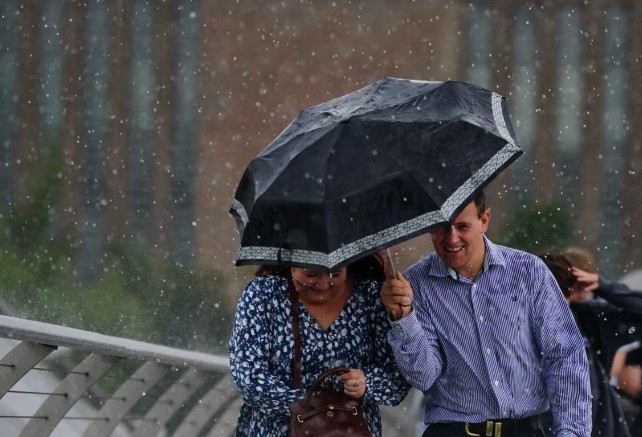
The United Kingdom is bracing for a dramatic atmospheric tug-of-war as the Early May Bank Holiday weekend arrives.
After a week that saw the mercury soar to a staggering 27°C in parts of the South East, rivaling Mediterranean hotspots, a cold front is now sweeping across the British Isles.
For millions of Brits planning coastal trips or garden parties, the latest forecast from the Met Office suggests that while Saturday may offer a reprieve, Sunday could bring a sharp, thundery reality check.
The transition from unseasonably warm, humid air to a more unsettled maritime flow is currently underway. This shift marks the end of the warmest start to May in recent years, with temperatures expected to plummet by as much as 12°C in some regions by Bank Holiday Monday.
Why has the Mini-Heatwave ended so abruptly?
The week leading up to this long weekend was dominated by an amplified jet stream, which drew a plume of warm air from North Africa and the Continent. This culminated on Friday, May 1, with Kew Gardens in London and parts of Norfolk recording highs of 27°C.
However, as of Saturday morning, this high-pressure system has begun to drift east, allowing a series of Atlantic low-pressure systems to make inroads.
Heading outside for the bank holiday weekend? ☀️🌧️
Here’s the forecast to help you plan 👇 pic.twitter.com/ZJ4IxPWSvi
— Met Office (@metoffice) May 1, 2026
Met Office experts have confirmed that the humid air mass is being displaced by a cold front, which acts as a trigger for the heavy rain and potential thunderstorms currently tracking across the country. This clash of air masses is a classic setup for turbulent UK spring weather.
Which UK regions face the highest risk of rain?
The washout risk is not uniform across the UK, with a distinct southeast-to-northwest divide.
- Southern England & The Midlands: These areas are in the crosshairs for the most significant disruption. Nine counties in the South East and East Anglia are currently under a watch for thundery bursts.
- Northern England & The North East: Cities like Newcastle and Durham enjoyed a scorcher of a Friday but will see a return to cloudier skies. Saturday remains the best day for outdoor plans here, with highs of 19°C before the cloud thickens on Sunday.
- Scotland & Northern Ireland: These regions are already feeling the fresher air. Temperatures in Edinburgh and Belfast are struggling to climb past 13°C, with persistent showers moving in from the Atlantic.
-
Wales: Western coastal areas like Aberystwyth and Cardiff are seeing a blustery transition, with wind speeds picking up and temperatures falling back toward the May average of 14°C.
Is there a genuine risk of Bank Holiday thunderstorms?
While no formal Yellow Weather Warning has been issued across the entire UK yet, meteorological models have highlighted a small risk of thunderstorms, particularly for the South East and parts of the Home Counties.
The primary driver is the latent heat trapped in the atmosphere after Friday’s 27°C peak. As the cooler air moves in, it forces the warm, moist air to rise rapidly, creating the classic conditions for cumulonimbus clouds. This could lead to localized torrential downpours, lightning, and even small hail, particularly on Sunday afternoon and evening.
What do official sources say about travel safety?
Expert analysis from the Met Office and local transport authorities indicates a significant cooling trend and potential travel hazards: By Friday, conditions were expected to become more unsettled.
Ahead of this, it felt warm and humid, but into the Bank Holiday weekend, the weather looks more changeable with showers at times, stated a leading Met Office spokesperson.
National Highways has also issued a travel advisory. With an estimated 14 million leisure journeys expected over the weekend, the combination of heavy rain and spray on motorways like the M25, M6, and M1 could lead to significant travel delays.
Transport for London (TfL) has mirrored these concerns, advising passengers to check for localized flooding impacts on the London Underground network and surface rail.
How will this affect UK events and the public?
The Impact on the Public is multifaceted, ranging from travel disruption to the retail sector:
- The Barbecue Indicator: Saturday morning remains the optimal window for outdoor activities in England and Wales. By Sunday, the risk of rain increases to 70% for central areas.
- Travel Disruptions: The RAC warned that Sunday evening could be the most difficult time for drivers as holidaymakers return home amidst the heaviest rainfall.
- High Street Impact: Retailers in coastal towns like Brighton and Bournemouth reported record footfall on Friday; however, the shift to cooler weather is expected to drive consumers toward indoor shopping centres and cinemas by Sunday.
- Health Alerts: The UK Health Security Agency (UKHSA) noted that the humid-to-cool transition can trigger asthma and hay fever (sometimes referred to as thunderstorm asthma), advising vulnerable residents to keep medication at hand.
What is the long-range outlook for the rest of May?
Once the Bank Holiday Monday has passed, the UK will settle into a fresher and more typical spring pattern.
- Tuesday, May 5: High pressure begins to build from the west, leading to drier but cooler conditions. Highs of 14-15°C will be the norm.
- Mid-May: Long-range signals suggest that the second week of May will be changeable, with a flow from the north or northwest bringing a risk of overnight frosts in rural Scotland and Northern England.
- The Wintry Risk: While highly unlikely for the south, some wintry showers (sleet) could still appear on the highest peaks of the Cairngorms as polar maritime air filters south.