


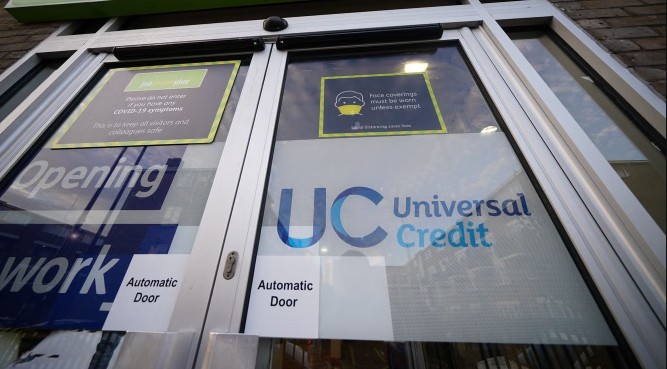
A seismic shift in the United Kingdom’s welfare landscape has officially commenced this week. Following the 2025 Autumn Budget, the Department for Work and Pensions (DWP) has enacted a series of reforms to Universal Credit (UC) that represent the most significant “rebalancing” of social security in a decade.
For the 6.4 million claimants across England, Scotland, and Wales, the changes bring a complex mix of financial boosts and structural cuts.
While the government has scrapped the controversial two-child limit, a move hailed by anti-poverty campaigners, it has simultaneously halved the health-related support available to new claimants, aiming to save the Treasury £1 billion annually.
What are the key changes to Universal Credit in April 2026?
The 2026 reform package is built on three main pillars: an above-inflation increase to the standard allowance, a reduction in disability-related payments for new applicants, and the abolition of the sibling “tax” (the two-child cap).
1. The 6.2% Standard Allowance “Uplift.”
In a move to “narrow the gap” between working-age benefits and pensioner standards, the government has increased the Universal Credit standard allowance by 6.2%.
This is particularly evident for single claimants facing an income gap due to rising rental and utility costs that the standard uplift does not fully cover.
This is significantly higher than the 3.8% inflation-linked rise applied to other benefits like PIP and Carer’s Allowance.
- Single claimants (over 25): Monthly rates rise to £424.90 (approx. £98 per week).
- Couples (over 25): Monthly rates rise to £666.97 (approx. £154 per week).
2. The Halving of the Health Element for New Claimants
The most contentious change is the “reweighting” of support for those with limited capability for work.
- New Claimants: The health element has been cut from £429.80 per month to £217.26. This lower rate is now frozen in cash terms until 2029.
- Existing Claimants: Those already receiving the health top-up are protected and will continue to receive the higher rate, which will see a modest 1.5% increase to ensure their total award keeps pace with inflation.
- The “Severe Disability Group”: A small percentage of new claimants with the most life-limiting, permanent conditions will still qualify for the higher rate.
3. Scrapping the Two-Child Benefit Cap
After years of pressure, the UK government has officially removed the limit that prevented parents from claiming UC for more than two children.
This change is expected to benefit 560,000 families, with the Office for Budget Responsibility (OBR) projecting it will lift 450,000 children out of relative poverty by the end of the decade.
Which UK regions and cities are most affected?
While the policy is national, its impact is geographically concentrated based on local demographics and health statistics.
- Northern England and the Midlands: Cities such as Birmingham, Liverpool, and Manchester have some of the highest numbers of families previously affected by the two-child cap. Local authorities in these areas anticipate a significant boost to household disposable income, estimated at an average of £4,100 per year for large families.
- South Wales and North East England: These regions have historically higher rates of health-related UC claims. While existing claimants in towns like Merthyr Tydfil and Sunderland are protected, new applicants with health conditions will face a much harder financial transition under the new £217 monthly rate.
- London: Despite the 6.2% increase, charities in the capital warn that the health element cut could exacerbate the risk of homelessness, as the lower rate may not cover the high cost of living for those unable to enter the workforce immediately.
Government vs. Analysts
The rollout has sparked intense debate between the Treasury and economic think tanks.
Sir Stephen Timms, Minister for Social Security and Disability: “The welfare system we inherited has for too long locked disabled people out of work. Laws coming into force today will change that…
Simultaneously boosting the standard allowance and investing £3.5 billion in employment support means we’re creating a welfare system that backs people to work.”
Matthew Oulton, Resolution Foundation/IFS Analyst: “The government is shifting support away from those with health conditions and towards those with large families.
While the standard allowance rise is welcome, the cut to the health element for new claimants will take decades to fully roll out, eventually affecting 2.4 million families.”
Who are the ‘Winners’ and ‘Losers’ of the 2026 reforms?
The 2026 changes create a stark divide in how households will experience the benefits system:
| Group | Financial Impact | Details |
| Large Families (3+ Children) | Major Gain | Can now claim approximately £3,514 per year for each additional child previously capped. |
| Standard UC Claimants | Modest Gain | A 6.2% rise provides roughly £295 extra per year for a single person over 25. |
| New Health Claimants | Significant Loss | Will receive £2,500 less per year than they would have under the 2025 rules. |
| Existing Health Claimants | Neutral/Protected | Higher rates are maintained through “transitional protection” but frozen or capped at 1.5% growth. |
What steps should claimants take next?
As the DWP moves toward a “Work First” approach, claimants should be aware of several upcoming developments:
- The £3.5bn Employment Package: New claimants on the lower health rate will be offered “voluntary employment support.” The DWP has already targeted 65,000 people for tailored help to move back into work.
- Updating Household Details: Families with three or more children born after April 2017 should ensure their “Children and Other People” section on the UC portal is up to date to trigger the new payments.
- The “Move to UC” Acceleration: Those still on legacy benefits (like old ESA) will be migrated to Universal Credit faster throughout 2026. Experts recommend seeking advice from Citizens Advice or StepChange before making a voluntary move, as the “transitional protection” rules are strict.
FAQ
How much is the Universal Credit standard allowance now?
As of April 6, 2026, the standard allowance is £424.90 per month for a single person over 25 and £666.97 for a couple where at least one partner is over 25.
I am starting a new claim for health reasons. How much will I get?
If you are assessed as having limited capability for work (LCWRA) after April 6, 2026, you will likely receive the new lower rate of £217.26 per month, unless you meet the “severe disability” criteria or are terminally ill.
Is the two-child cap officially gone for everyone?
Yes, for Universal Credit claimants. You can now receive the child element for all children you are responsible for, regardless of their birth date. However, the overall Benefit Cap (the maximum total amount a household can receive) still applies in many cases.
Will my existing health-related payments be cut?
No. If you were already receiving the LCWRA element before April 2026, your payment level is protected. However, it will not see the full 6.2% uplift; it is instead uprated by a smaller margin (around 1.5%) to keep your total award in line with inflation.
Disclaimer: Benefit rules are subject to change and individual circumstances. For definitive advice, visit GOV.UK or contact a qualified welfare advisor.