

The United Kingdom is facing a defining moment in the ongoing cost-of-living crisis as fuel prices decouple from historical norms.
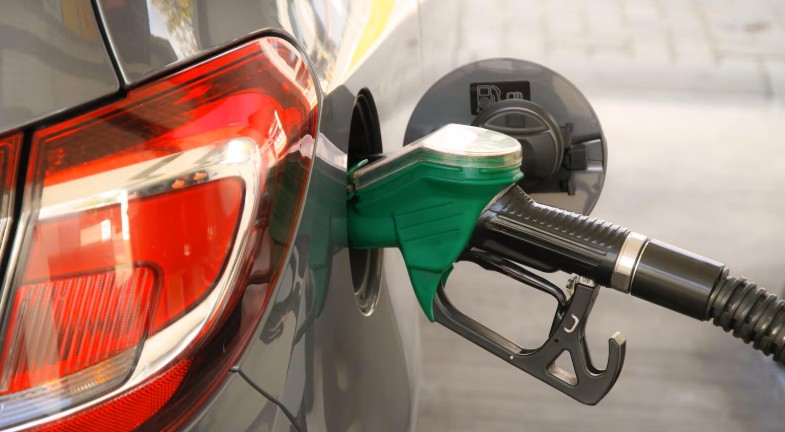
On Sunday, the average price of a litre of diesel at British forecourts surged to 179.9p, creating a staggering 28.5p gap over petrol, which currently sits at 151.4p.
This represents the widest price disparity recorded in the UK since at least 2003, and potentially the largest in history.
As the conflict in the Middle East enters its fifth week, Prime Minister Sir Keir Starmer has summoned the titans of the energy, shipping, and banking sectors to 10 Downing Street.
With Brent Crude climbing past $117 a barrel on Monday morning, the government is scrambling to prevent a total logistical shutdown and potential fuel shortages.
Why has the price of diesel hit a record 23-year high?
The current crisis is a “perfect storm” of geopolitical instability and structural weakness in the UK’s energy infrastructure. Unlike petrol, which the UK is relatively efficient at refining, Britain is a net importer of diesel.
The primary catalyst is the ongoing war in the Gulf. Iran’s strategic stranglehold on the Strait of Hormuz, a chokepoint through which 20% of the world’s oil passes, has effectively throttled supply.
On Monday, oil prices rose another 3% following a missile attack by Iranian-backed Houthi rebels, further spooking global markets.
Steve Gooding, director of the RAC Foundation, warned that the disparity isn’t going away: “If oil prices remain at this level, the impact on the forecourt could be felt for weeks, if not months.”
Which UK regions and transport sectors are being hit hardest?
While the price hike is a national issue, the pain is not distributed equally.
- Logistics Hubs: Cities like Wolverhampton, Birmingham, and Manchester, which serve as the backbone of the UK’s haulage network, are seeing immediate inflationary pressure.
- Rural Connectivity: In regions such as Cornwall, Cumbria, and the Scottish Highlands, where residents are almost entirely dependent on diesel vehicles for daily life, the 179.9p price tag is becoming prohibitive.
- Public Services: Transport for London (TfL) and local councils across the South East are facing massive budget deficits as the cost of running diesel bus fleets and refuse trucks spirals.
In Wolverhampton today, Sir Keir Starmer acknowledged the “uncertain” backdrop of the May 7 local elections, noting that voters are watching their screens with “worry” as infrastructure is blown up abroad and prices rise at home.
What was discussed at the Downing Street Emergency Summit?
The Prime Minister’s meeting this afternoon involves a “who’s who” of global trade. The guest list includes:
- Energy Giants: CEOs from Shell and BP.
- Shipping & Insurance: Leaders from Maersk and Lloyd’s of London.
- Finance: Executives from HSBC and Goldman Sachs.
The meeting was also briefed by Major General Richard Cantrill, the UK’s maritime operations commander, on the safety of British tankers.
The core objective is to coordinate a response to Donald Trump’s suggestion of military operations against Iran’s Kharg Island, which has sent shockwaves through the energy market.
Is the UK facing an imminent fuel shortage?
Despite the government’s insistence that there is “no need for fuel rationing,” industry experts are sounding the alarm.
Ellen Fraser, an energy expert at Baring, spoke on Sunday with Laura Kuenssberg: “There is a real risk of the UK effectively running short. We don’t hold huge stocks in the UK… those can run down reasonably quickly.”
Data reveals that fuel spending jumped 11% in the week following the start of the conflict, suggesting that many motorists are “panic-topping” their tanks, which could exacerbate any temporary supply delays.
How will this impact the ‘Cost of Living’ for the average Briton?
The fuel pump is just the beginning. The Federation of Small Businesses (FSB) has warned that a 15% increase in diesel costs for tradespeople using vans will inevitably be passed on to the consumer.
Conservative leader Kemi Badenoch has accused Chancellor Rachel Reeves of being “oblivious” to this reality.
While the Chancellor recently claimed costs were coming down, Badenoch dismissed the statement as “managerial mush,” arguing that the average family is facing a “cost stack” of rising fuel, energy, and tax burdens.
The Political Battle
The crisis has reignited the debate over the UK’s long-term energy strategy.
- The Conservative Plan: Travelling to Aberdeen today, Kemi Badenoch is calling for a “Cheap Power Plan” that involves more North Sea drilling and scrapping “green taxes” to save households £200.
- The Expert Rebuttal: Dr Simon Cran-McGreehin of the Energy and Climate Intelligence Unit argues that more drilling would have “little if any impact” on prices, as the UK remains tied to volatile international markets. He advocates for a faster shift to British renewables to “unplug” from the global system.
What are the next steps for the Starmer Government?
As Sir Keir Starmer kicks off the local election campaign with the slogan “This is not our war,” he faces a delicate balancing act.
He must reassure the public that Britain will not be “dragged into” a conflict with Iran, while simultaneously managing an economy that is being held hostage by it.
Expected Developments:
- Supply Monitoring: The government may implement more frequent reporting on national fuel reserves.
- Pressure on Retailers: Pressure will mount on supermarkets to lower their margins on diesel to match the relative stability of petrol.
- Local Election Fallout: The May 7 polls will serve as a referendum on the government’s handling of this “energy shock.”
Visualising the Crisis: Data and Projections
| Category | Sunday Price | Trend |
| Average Diesel (UK) | 179.9p | ▲ Up 28.5p vs Petrol |
| Average Petrol (UK) | 151.4p | ▬ Stable |
| Brent Crude Oil | $117.00 | ▲ Up 3% today |
| Diesel Vehicles | 16.2m | ▬ Impacted Sector |
FAQ
Why is there such a big difference between diesel and petrol prices?
The UK produces a surplus of petrol but relies on imports for diesel. Because the conflict in the Middle East has specifically targeted shipping routes and refineries used for diesel exports, the wholesale cost of diesel has surged while petrol remains more insulated.
Will the UK start fuel rationing like in the 1970s?
Currently, the Government says there are no plans for rationing. However, experts warn that if the Strait of Hormuz remains closed for months, and UK reserves are not replenished, “voluntary” reductions or temporary limits at certain forecourts could become necessary.
Does drilling in the North Sea lower my petrol price?
It is a point of contention. While it increases UK energy security, oil is traded on a global market. Most experts agree that domestic drilling won’t significantly lower the price you pay at the pump because UK oil is sold at global rates.
How much of the 179.9p price is tax?
Fuel duty and VAT typically make up more than 50% of the price of a litre of fuel. There are growing calls from the RAC and opposition parties for the Chancellor to implement a “stabiliser” cut to fuel duty to offset the record-high wholesale costs.