


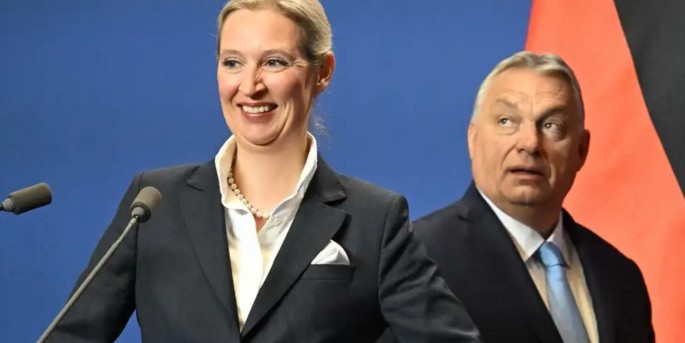
The 2026 Hungarian general election has shifted from a predictable victory for Viktor Orbán into a frantic battle for survival as the youth-backed Tisza party takes a commanding lead in the polls.
For the United Kingdom, this “inflection point” threatens to disrupt £8.9 billion in bilateral trade and reshape the geopolitical stability of the FTSE 100’s key European partners.
Why the City is Monitoring Budapest?
The political landscape in Budapest has been upended. Recent polling indicates that Péter Magyar’s Tisza party now commands significant support among the general population, creating a staggering gap between the challengers and Orbán’s Fidesz-KDNP coalition among decided voters.
For the UK, which saw total trade with Hungary rise to £8.9 billion in the year ending Q3 2025 (per GOV.UK data), this volatility is a major concern for the City of London.
British firms, particularly in the services sector, have significantly increased their footprint in Hungary. UK service exports jumped by 18.6% to £2.2 billion recently, making Hungary a vital “near-shore” hub for London’s financial and tech sectors.
A Tisza victory could potentially stabilise the Forint and lower the operational costs for British giants like GSK and AstraZeneca, which maintain substantial regional interests.
From the Danube to the Docklands
The tremors of the April 12 vote are already being felt in specific UK pockets. In West London boroughs like Ealing and Hounslow, home to significant Hungarian expat communities, the local economy is highly sensitive to Budapest’s stability.
Any post-election civil unrest could trigger a “flight to safety” in capital markets, temporarily strengthening the Pound but increasing borrowing costs for UK companies with Hungarian subsidiaries.
Furthermore, Canary Wharf institutions that manage Hungarian sovereign debt are bracing for a potential “regime change” premium.
The Department for Business and Trade notes that Hungary is the UK’s 35th largest trading partner; however, for the UK automotive sector, it is even more critical.
UK exports of vehicles and machinery to Hungary totalled over £780 million in 2025. Any disruption to the ruling party’s grip could lead to temporary supply chain friction at UK ports if customs alignments shift during a transition of power.
The Expert Voice on Hungary’s Split
Whitehall observers are noting a distinct demographic fracture that mirrors the UK’s own recent electoral history. Experts suggest we are seeing a significant collapse of the Fidesz brand among the under-30s.
“While Orbán retains a lead among retirees due to pension supplements, the youth support for Magyar is overwhelming.
This isn’t just an election; it’s a generational rejection of the ‘illiberal’ model that has defined Hungary since 2010. If Magyar wins, the UK gains a pro-Western ally in the Council of Europe, potentially easing the ‘veto-fatigue’ that has plagued NATO-UK security discussions.”
How 2026 Differs from the 2022 Defeat?
In 2022, Orbán crushed a fragmented six-party opposition coalition. The 2026 contest is fundamentally different.
Péter Magyar, a 45-year-old former Fidesz insider, has successfully “nationalised” the opposition under the Tisza banner.
Unlike previous challengers, Magyar supports the government’s stance against sending weapons to Ukraine but sharply diverges on domestic corruption and EU alignment.
The “Unique Insight” for UK investors is the Services vs. Goods divergence. While UK goods exports to Hungary fell by 6.7% in late 2025, service exports soared.
This indicates that the UK-Hungary relationship is becoming increasingly “virtual” and professional, sectors that are ironically the most vulnerable to the “hybrid regime” labels currently assigned to Hungary by international monitors.