


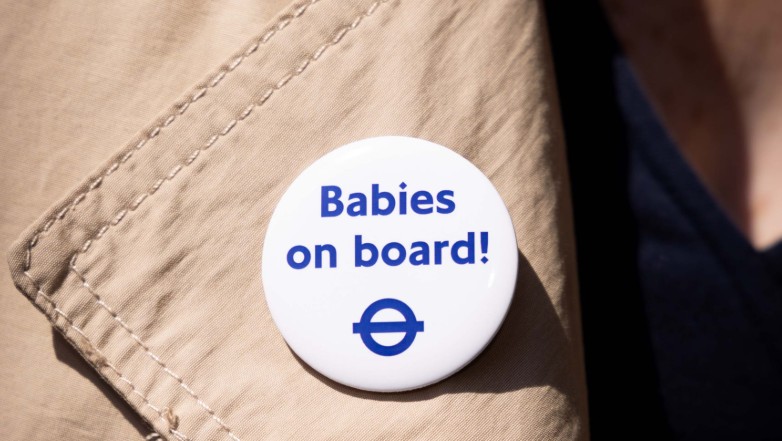
In a major update to London’s transport etiquette, Transport for London (TfL) has officially launched a brand-new “Babies on Board” badge.
Specifically designed for expectant parents carrying twins, triplets, or more, this initiative aims to tackle the unique physical challenges faced by those with multiple pregnancies on the UK’s busiest travel network.
Marking the 20th anniversary of the iconic “Baby on Board” design, the new pluralized version is a direct response to calls from parents and health charities for better visibility.
With tens of thousands of badges issued annually, this expansion ensures that the “invisible” struggle of a high-risk or multi-baby pregnancy is recognized by fellow passengers from the London Underground to the Elizabeth Line.
Why has TfL introduced a specific badge for ‘Babies’?
The decision to move beyond the singular “Baby on Board” stems from a growing understanding of the physical toll of multiple pregnancies.
Research conducted during the original badge launch in March 2006 revealed that pregnant women on the Tube were often forced to stand for an average of five stops before being offered a seat.
For those carrying multiples, the risks, including extreme fatigue, fainting, and morning sickness, are significantly magnified.
By changing the text to “Babies on Board,” TfL provides a clear visual cue to commuters that the wearer may be experiencing a higher-risk pregnancy or greater physical strain than is immediately apparent.
This “nudge” in social behavior is designed to make the daily commute safer and less anxiety-inducing for thousands of Londoners.
Where can you find the new badge across the London network?
The rollout is comprehensive, covering every corner of the capital’s transport infrastructure. Whether you are commuting from Reading on the Elizabeth Line or navigating the Northern Line during rush hour, the badge is your “passport” to a seat.
Key Collection Points and Availability:
- Online Orders: Expectant parents can request a free badge via the official TfL website, with delivery typically taking standard UK postal times.
- Major Transport Hubs: Physical badges are available at TfL Visitor Centres located at:
- King’s Cross St. Pancras
- Victoria Station
- Liverpool Street
- Paddington
- Piccadilly Circus
- Retail Partnerships: In a unique collaboration, the badges are also distributed through partners like John Lewis and Uniqlo, reaching parents where they shop for maternity essentials.
Why Visibility Matters?
To understand the necessity of this launch, we must look at the statistics that have defined London commuting for expectant parents over the last two decades.
The following data highlights the scale of the network and the historical challenges that the “Babies on Board” badge seeks to mitigate.
Transport and Accessibility Statistics (UK/TfL)
| Metric | Statistic | Impact Context |
| Annual Badges Issued | 80,000+ | Highlights the massive demand for pregnancy visibility on London transport. |
| Avg. stops stood before a seat offer | 5 Stops | Based on 2006 baseline data, the goal is to reduce this to zero for high-risk pregnancies. |
| Women were never offered a seat | 35% | Over a third of pregnant passengers still struggle to find seating without a badge. |
| Network Coverage | 272 Tube Stations | Coverage spans all 11 Underground lines plus the Elizabeth Line and DLR. |
| Bus Network Scale | 9,000+ Buses | The badge is equally vital for bus travel, where standing is often more hazardous. |
Analysis: These figures demonstrate that despite the success of the original 2006 campaign, a significant gap remains. The introduction of a specific “multiples” badge targets the most vulnerable group within this 35%, who are currently overlooked.
What do UK officials and health experts say about the move?
The launch has been praised as a vital step in “inclusive infrastructure.” Seb Dance, Deputy Mayor for Transport, emphasized that the badge is about more than just a piece of plastic; it’s about a culture of kindness.
“Asking Londoners to be mindful of those who may need a seat more than them is key to making public transport as accessible as possible,” Dance stated.
Shauna Leven, CEO of Twins Trust, highlighted the medical necessity of the badge: “For those pregnant with twins, triplets or more, life can be more challenging as they might face a high-risk pregnancy, extreme tiredness, and morning sickness. We are thrilled that these parents now have a way to be ‘seen’ and supported.”
Are there other badges for non-visible disabilities?
Yes. The “Babies on Board” badge joins a suite of accessibility tools managed by TfL. If you see a passenger with a “Please Offer Me a Seat” badge or badge-holder, they may have a hidden disability, chronic illness, or mental health condition that makes standing difficult.
This latest update reinforces TfL’s “Priority Seating” policy, which mandates that certain seats must be vacated for those with badges or visible needs.
What are the next steps for TfL’s accessibility strategy?
The introduction of the badge comes at a busy time for the network. While accessibility remains a priority, passengers should stay informed about wider TfL transport disruptions that could affect journey times and the availability of seating.
Looking ahead to the remainder of 2026, TfL is expected to:
- Expand Step-Free Access: Continued investment in lifts at stations like Northolt and Leyton.
- Digital Integration: Exploring “Digital Badges” within the TfL Go app to allow passengers to subtly alert staff if they require assistance.
- Educational Campaigns: New signage across the bus network specifically highlighting the “Babies on Board” variant to ensure bus passengers are as compliant as Tube riders.
FAQ
How much does the ‘Babies on Board’ badge cost?
The badge is completely free. TfL does not charge for any of its accessibility badges or cards.
Do I need a medical certificate to apply?
No. To keep the process accessible and stress-free, TfL does not require a doctor’s note or proof of pregnancy. You can simply request one online or pick one up.
Can I use the badge on National Rail trains?
While the badge is an official TfL product, it is widely recognized and respected by commuters on National Rail services (such as Southern, Southeastern, and Great Western Railway) that operate within the London travel zones.
Is there a badge for partners or companions?
Currently, the badge is intended only for the expectant parent to ensure they are the ones prioritized for a seat.