
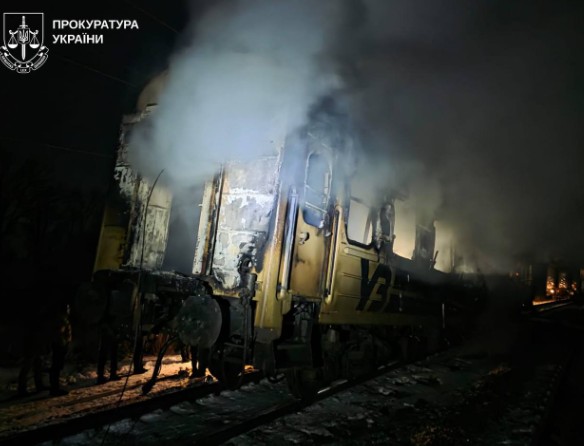
A major Ukraine strike unfolded overnight from Friday, 6 February, into Saturday, 7 February, after Russian forces launched a combined wave of drones and missiles across Ukraine.
The attack hit several cities, including areas in western Ukraine, and caused widespread disruption to the country’s energy supply.
In response to the heightened threat near the border, Poland temporarily suspended airport operations in Lublin and Rzeszów, both close to Ukraine.
The strike matters because it targeted key infrastructure during winter, leaving parts of Ukraine without power and raising fresh security concerns for neighbouring countries and NATO members.
What happened during the overnight Ukraine strike?
Ukraine reported that Russia carried out a large-scale attack using both drones and cruise missiles, triggering air raid warnings across the country.
According to Ukraine’s military monitoring updates during the night:
- By around 10:30pm Kyiv time, drones were spotted over multiple regions, including Chernihiv, Sumy, Poltava, Mykolaiv, and Odesa.
- Around 2:30am, officials reported roughly 200 drones operating over Ukraine’s airspace.
- Later, Russian forces reportedly launched Kalibr cruise missiles from the Black Sea.
- By around 3:13am, Ukraine issued a nationwide air alert after missile activity increased.
As the night progressed, missiles moved towards western areas, including Khmelnytskyi and Ivano-Frankivsk, causing explosions and emergency warnings in several regions.
This latest Ukraine strike appears to have been designed to overwhelm Ukraine’s air defence systems through sheer volume and timing.
Which Ukrainian regions were hit the hardest?
Several Ukrainian cities reported explosions, including:
- Burshtyn (Ivano-Frankivsk region)
- Vinnytsia
- Rivne
- Kharkiv
- Kropyvnytskyi
In the west, officials in the Volyn region said repeated drone attacks damaged critical infrastructure.
In Kharkiv, the city’s mayor confirmed a drone impact in the Kholodnogirskyi district, highlighting that Russia continues to strike both frontline and non-frontline regions.
The number of explosions reported overnight suggests the strike targeted multiple areas at once, rather than focusing on one city.
Why did Russia target Ukraine’s energy infrastructure again?
Ukraine reported that the strike disrupted power supply across wide areas, after Russia targeted energy infrastructure and key facilities.
Energy attacks have become one of Russia’s main tactics since the war began, especially during winter, when Ukrainians rely heavily on electricity for heating, water systems, and basic services.
🚨🇺🇦 The approximate route of russian missiles and UAVs over Ukraine during the combined attack tonight.
❗Preliminarily, this strike was one of the most massive during the entire full-scale war in terms of the number of Shahed launched. pic.twitter.com/j0HyVL91UM
— Molo44 🇮🇹🇺🇦 (@MoloWarMonitor) February 7, 2026
These attacks often aim to:
- Weaken public morale
- Disrupt military logistics
- Pressure Ukraine economically
- trigger emergency shortages
For ordinary Ukrainians, the impact is immediate; homes lose heating, transport systems face delays, and hospitals must rely on backup generators.
Why did Poland suspend flights at Lublin and Rzeszów airports?
Polish authorities temporarily halted operations at Lublin Airport and Rzeszów Airport, both located in eastern Poland, close to Ukraine.
The decision came after missile and drone activity increased in western Ukraine, raising concerns that the conflict could spill over near Poland’s border region.
Yes, according to reports from February 7, 2026, the airspace over southeastern Poland, including the airports in Lublin (Lublin Airport) and Rzeszów (Rzeszów-Jasionka Airport), has been temporarily closed due to “unplanned military activity”. The US Federal Aviation… pic.twitter.com/4eD6HeSd23
— Jarl Finland (@jalle51) February 7, 2026
While Poland did not confirm any direct breach of its airspace, the closures were seen as a precautionary security move to protect passengers and aviation staff.
Rzeszów Airport is especially important because it has become a key travel and logistics hub near Ukraine since the war began. Flights later resumed once the immediate threat eased.
Did the strike affect Moldova as well?
Yes. Moldovan authorities reported the discovery of an unidentified drone on Moldovan territory, near the village of Sofia in the Drochia district, close to Ukraine’s border.
Police secured the area and deployed bomb disposal specialists to examine the object.
Moldova’s foreign ministry condemned the incident, describing it as a serious concern that could threaten civilian safety and violate national sovereignty.
Officials said it was the third drone discovery in Moldova since the beginning of the year, raising concerns that the war’s aerial activity is increasingly spilling into neighbouring airspace.
What does this latest Ukraine strike suggest about Russia’s strategy?
Security analysts have repeatedly pointed to a pattern: Russia increases attacks during winter, often using drones first to drain air defence systems before launching missiles.
The reported use of Kalibr cruise missiles, combined with possible high-speed missile activity, suggests Russia may have attempted to test Ukraine’s defences in multiple regions at once.
This kind of strike also sends a political signal, not only to Ukraine, but to nearby NATO countries like Poland, which must stay on high alert whenever attacks move towards the western border.
What are officials saying about the Moscow general incident?
Ukraine’s Foreign Minister Andrii Sybiha denied any involvement in the reported injury of Russian General Vladimir Alekseyev in Moscow.
He suggested that Ukraine had no knowledge of the incident and indicated it could be linked to an internal Russian conflict rather than Ukrainian action.
This statement comes at a time when Russia faces increasing internal security tensions, while continuing its military campaign in Ukraine.