


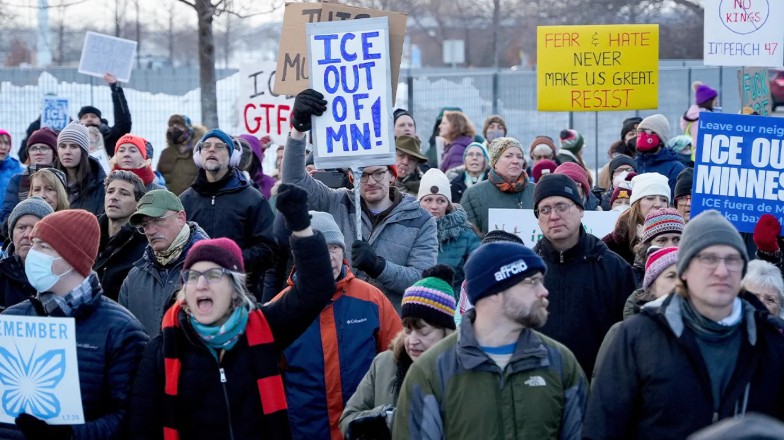
Violent confrontations linked to Minnesota ICE protests have raised fresh concerns about public safety in the United States, after a protest industry insider warned that some unrest may be fuelled by outside money rather than grassroots anger.
The warning comes as tensions rise around immigration enforcement operations in and around Minneapolis, with US federal agents, protesters and local communities all caught in the middle, following unrest that has already led to mass business shutdowns across parts of the state.
What happened, why does it matter, and who is affected?
Over recent days, protests targeting US Immigration and Customs Enforcement (ICE) operations have intensified in Minnesota, particularly in the Twin Cities area.
Demonstrations have included blocked roads, confrontations with federal officers and online harassment of agents and their families, with tensions already running high after protests erupted following the shooting of a nurse during an ICE operation in Minneapolis.
The situation matters because it highlights how immigration enforcement can quickly escalate into public disorder, putting both law enforcement and civilians at risk.
While this is a US issue, it draws attention in the UK due to ongoing debates around protest policing, public order laws and immigration enforcement closer to home.
Paid and organized ICE protest is taking place in Portland, Oregon
A local immigrant rights group called Portland Contra las Deportaciones organized this protest
None of this is organic. This same group has organized many more protests and rallies in Oregon
You see the protest… pic.twitter.com/8QuqLBAaZG
— Wall Street Apes (@WallStreetApes) January 26, 2026
Those affected include ICE officers, local residents, protesters, and political leaders now facing pressure to calm the situation.
Who is behind the Minnesota ICE protests?
Adam Swart, the chief executive of Crowds on Demand, a US-based company that organizes paid-for demonstrations, claims that not all protesters are acting independently.
Speaking to US media, Swart said he believes some of the most aggressive actions come from individuals backed by what he described as “shadowy interests” who benefit from disorder.
“Many of the most aggressive and unlawful actors are not organic protesters,” Swart said, adding that chaos and confrontation often attract outside funding.
Swart stressed that his company refused to be involved in the Minnesota demonstrations, calling the unrest “illegal chaos” and too dangerous to intervene in.
How have protests escalated into confrontation?
According to Swart and law enforcement accounts, protests have moved beyond peaceful assembly. Reported incidents include:
- Blocking federal vehicles during ICE operations
- Personal threats aimed at officers
- Doxxing, where private details of ICE staff and their families are shared online
Swart warned that this behaviour creates a vicious circle. “When activists threaten agents or block their cars, officers respond more aggressively. That response then fuels more anger from protesters,” he said.
This back-and-forth, he argues, increases the risk of serious injury or worse.
Why are US authorities worried now?
The White House has confirmed that Tom Homan, often described as the US “border czar”, has been sent to Minnesota to oversee immigration enforcement and review the unrest.
This signals federal concern that the situation could spiral further. Historically, flashpoints involving ICE have drawn national attention, particularly during election periods or policy shifts on immigration.
For context, ICE is responsible for enforcing immigration law inside the US, including arrests and deportations. Its role is controversial, especially in cities that limit cooperation with federal immigration authorities.
What solutions are being suggested to calm tensions?
Swart has called on President Donald Trump, who remains highly influential in US immigration debates, to encourage a “cease-fire posture” in Minnesota.
He insists this would not mean abandoning immigration enforcement, but instead lowering the temperature on the streets.
His recommendations include:
- Focusing deportation efforts on individuals with criminal convictions
- Allowing undocumented migrants without criminal records to report crimes without fear
- Making sanctuary city rules clearer to the public
- Requiring ICE officers to wear clearly marked uniforms and use identifiable vehicles
- Limiting ICE involvement in crowd control situations
Swart also acknowledged that, in some cases, ICE officers have used force that appears disproportionate, warning that continued escalation could turn Minnesota into a long-term hotspot.
How does this relate to the UK?
While ICE does not operate in Britain, the Minnesota ICE protests resonate with UK audiences familiar with debates over:
- Protest rights versus public order
- Policing tactics at demonstrations
- Immigration enforcement and community trust
Recent UK protests, from environmental activism to asylum policy demonstrations, show how quickly tensions can rise when trust breaks down between authorities and protesters.