


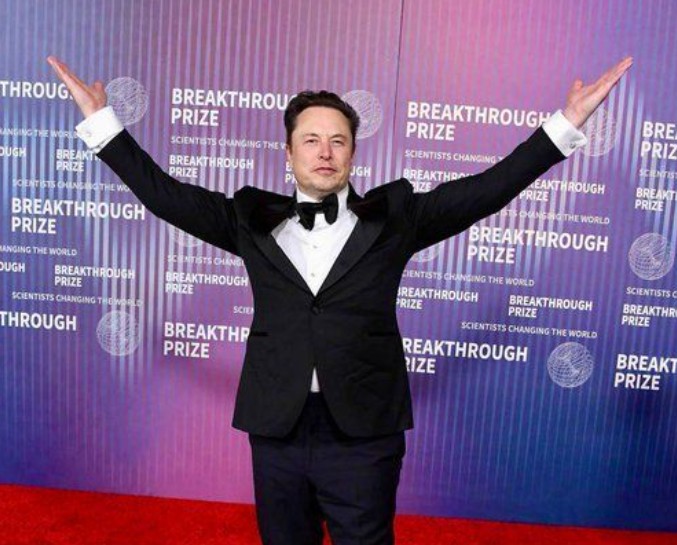
Elon Musk stunned delegates at the World Economic Forum (WEF) in Davos, Switzerland, on Thursday, after turning up in person despite years of publicly mocking the elite global summit.
The Tesla and SpaceX boss joined a high-profile panel alongside BlackRock chief executive Larry Fink, marking his first appearance at Davos as the world’s richest person.
The move matters because Musk has long dismissed the event as out of touch, yet now finds himself influencing major global debates that directly affect the UK and Europe.
Musk confirmed his appearance minutes before going on stage with a post on his social media platform X, asking followers what he should say.
Why did Elon Musk attend Davos after years of mocking it?
For several years, Elon Musk has criticised Davos as elitist and unaccountable, often calling it “boring” and branding the WEF an unelected body with too much influence. His sudden appearance, therefore, signals a clear shift in approach.
On X, Musk wrote shortly before the session: “Speaking @wef in 20 mins. What should I say?”
Speaking @wef in 20 mins.
What should I say? 🤭
— Elon Musk (@elonmusk) January 22, 2026
The casual tone contrasted sharply with his past attacks on the forum and drew immediate global attention.
What did Elon Musk say about Tesla and self-driving cars in Europe?
During the panel, Musk focused heavily on technology, particularly Tesla’s self-driving software. He told delegates he expects regulatory approval for the system in parts of Europe as early as next month.
This matters for the UK because Britain is actively reviewing autonomous vehicle rules, with the government aiming to support self-driving technology while maintaining road safety standards.
Musk said he remains “hopeful” regulators will approve Tesla’s system, though he acknowledged Europe’s tougher safety framework compared with the US.
How did Musk respond to Donald Trump’s recent foreign policy moves?
Musk also made light of US President Donald Trump’s recent comments about Greenland and Venezuela, joking about the idea of a new “Board of Peace”.
He told the audience: “I heard about the formation of the peace summit, and I was like, is that p-i-e-c? You know, a little piece of Greenland, a little piece of Venezuela.”
He added: “All we want is peace.” The remarks came a day after Trump addressed Davos himself, where he argued that the US is the only country capable of securing Greenland.
What did Elon Musk say about tariffs and clean energy?
Musk used the platform to criticise US trade policy, particularly tariffs on solar panels.
He said: “Unfortunately, in the U.S., the tariff barriers for solar are extremely high.”
According to Musk, this artificially inflates costs because China produces most of the world’s solar panels and technology.
For the UK, the comment feeds into ongoing debates about energy costs, renewable supply chains, and how global trade decisions affect domestic green targets.
Why does Musk’s political influence worry governments and regulators?
Musk’s appearance comes as he plays an increasingly powerful role in global politics and communications:
- SpaceX supplies Starlink satellite internet in conflict zones
- X (formerly Twitter) shapes public debate through its moderation policies
- xAI’s chatbot Grok has faced criticism over controversial image generation
His close relationship with President Trump has only increased scrutiny, especially as Musk’s businesses overlap with defence, space, AI, and communications, all areas of direct interest to the UK and European governments.
How does Nato’s Greenland discussion affect the UK?
Following Trump’s Davos speech, NATO Secretary-General Jens Stoltenberg confirmed talks on a potential framework involving Greenland.
Rutte said Nato allies, including the UK, would need to increase their presence in the Arctic, with senior commanders expected to finalise details within months.
This could affect UK defence planning, Arctic security commitments, and Nato spending priorities.