


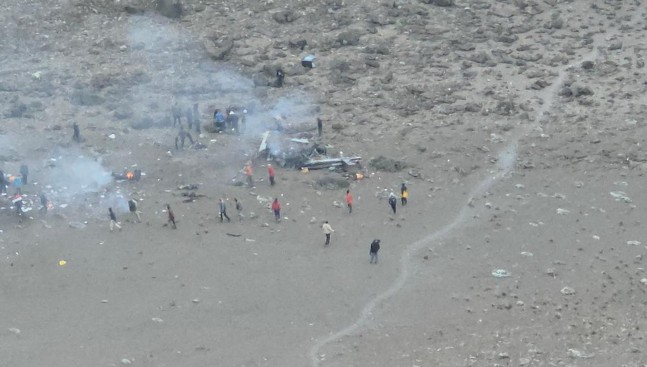
A helicopter crash on Tanzania’s Mount Kilimanjaro has killed five people after the aircraft went down during a medical evacuation on the mountain’s upper slopes, according to the country’s civil aviation authority.
The incident has attracted international attention, including in the UK, where Mount Kilimanjaro remains one of the most popular long-haul trekking destinations for British climbers and adventure tourists.
What happened during the Mount Kilimanjaro helicopter crash?
The crash occurred between Barafu Camp and Kibo Summit, a critical stretch of the final ascent route used by climbers attempting to reach the summit.
Officials said the helicopter was flying at an altitude of more than 4,000 metres (around 13,100 feet) when it went down.
Police confirmed the aircraft was carrying out a rescue operation, attempting to evacuate patients who had fallen ill while climbing.
This route is frequently used by emergency helicopters due to its proximity to summit camps, but it is also one of the most exposed and technically difficult areas to fly.
Authorities have not yet confirmed whether weather, altitude conditions or mechanical issues played a role.
Who were the victims?
Officials said all five people on board were killed in the crash. The victims included two foreign nationals, a Tanzanian doctor, a tour guide, and the pilot. Their identities and nationalities have not yet been released publicly.
UK authorities are awaiting further details to establish whether any British citizens were among those involved.
Why are helicopter rescues used on Mount Kilimanjaro?
Mount Kilimanjaro rises to 5,895 metres (19,341 feet), making it Africa’s highest peak and a serious altitude challenge for climbers.
Many trekkers develop altitude-related illnesses, particularly during the final ascent, where oxygen levels are significantly reduced.
Helicopter evacuations are often used when ground rescue would be too slow or dangerous. However, aviation experts note that flying at such extreme altitudes presents major risks.
Thin air reduces engine performance and lift, while sudden weather changes and narrow mountain corridors limit visibility and manoeuvrability.
How rare are aviation accidents on Mount Kilimanjaro?
Aircraft accidents on Mount Kilimanjaro are extremely uncommon. The last recorded fatal aviation incident on the mountain occurred in November 2008, when four people died in a helicopter crash.
The long gap between incidents underlines how unusual Thursday’s tragedy is, despite the mountain seeing tens of thousands of climbers each year.
What are the authorities saying about the investigation?
The Tanzania Civil Aviation Authority (TCAA) confirmed that a full investigation has begun under international aviation safety rules.
A helicopter crashed on Tanzania’s Mount Kilimanjaro, killing five people pic.twitter.com/6uddjXF4yh
— Breaking News (@ModernMazdoor) December 25, 2025
Tanzania Civil Aviation Authority: “Investigations have commenced in line with international aviation safety regulations to determine the circumstances and probable cause of the accident.”
Such investigations typically examine flight planning, aircraft condition, pilot experience, weather conditions and altitude performance. Given the location of the wreckage, the process may take several weeks.
Why does this incident matter to the UK?
Mount Kilimanjaro is a bucket-list destination for many UK climbers, with British tour companies running expeditions year-round.
UK travel firms often rely on helicopter evacuation as a key safety measure, particularly for clients affected by altitude sickness.
While this incident is unlikely to deter most travellers, it may prompt renewed scrutiny of rescue flight protocols and reinforce the importance of proper acclimatization, medical screening and insurance coverage for UK trekkers.