


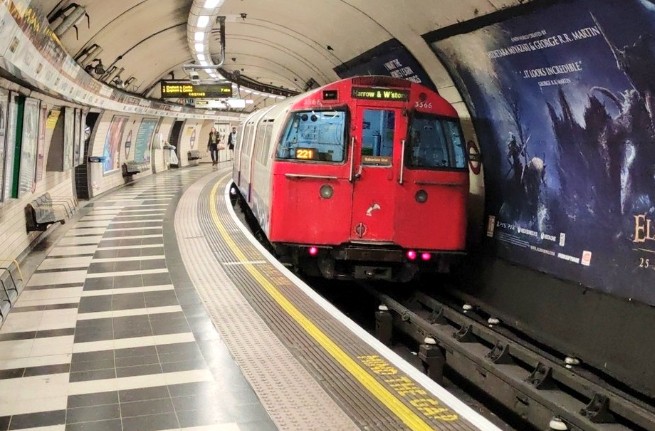
Londoners are set for higher travel costs next year as TfL prepares to raise Tube, Overground and Elizabeth line fares by 5.8%. The rise comes at a time when many households are already feeling the pressure of stretched budgets.
While the rest of the country will benefit from a national freeze on regulated rail fares, London is moving in the opposite direction due to TfL’s funding agreement with the Government.
Here’s a quick look at why fares are going up, what the changes mean, and how Londoners are reacting.
Why are Tube fares heading up in 2026?
In a move that’s set to hit many commuters, the fare for Transport for London (TfL) services, including the London Underground (Tube), Elizabeth line and London Overground, will rise by around 5.8% from next March.
This increase comes despite a nationwide freeze on many other rail fares elsewhere in the UK.
The reason? As part of a £2.2 billion capital-investment agreement with central Government, TfL must raise fares by “RPI + 1%”, that is, inflation plus one extra percentage point. With the July 2025 Retail Prices Index (RPI) at 4.8%, the fare rise works out to 5.8%.
TfL says the extra revenue will help fund essential upgrades, from new trains on lines like the Piccadilly to improvements in signalling and network maintenance.
How much more will typical journeys cost?
Here’s a snapshot comparing current fares with the projected new charges once the rise kicks in:
| Journey (Zones + Time) | Current fare | Estimated fare after 5.8% rise |
|---|---|---|
| Zone 1 → Zone 2 (off-peak) | £2.90 | ~ £3.10 |
| Zone 1 → Zone 2 (peak) | £3.50 | ~ £3.70 |
| Zone 1 → Zone 6 (off-peak) | £3.80 | ~ £4.05 |
| Zone 1 → Zone 6 (peak) | £5.80 | ~ £6.15 |
Because TfL tends to adjust fares only in increments of 5p or 10p, some passengers may see a change slightly above or below the 5.8% average, depending on their route and time.
Travelcards (season or zone-based) covering both TfL and national rail services within London will also see a similar rise.
Can Londoners expect a fares freeze like the rest of the country?
Not this time. Earlier this winter, the UK Government announced a freeze on many regulated national rail fares, the first in about 30 years. That decision covers long-distance and commuter routes outside London. But it does not apply to TfL services.
Because the long-term funding deal for TfL requires fare increases in return for investment, city-level transport in London is diverging from the pattern elsewhere. As the mayor put it, “what the Government didn’t announce was individual cities freezing their fares.”
So while many rail passengers outside London may benefit from a freeze, Tube and London rail commuters are being asked to pay more.
What are people saying about the backlash and the justification?
The announcements have sparked plenty of reaction and resentment, especially among regular commuters and lower-income Londoners. On Reddit, one commuter summed up a common sentiment: “5.8 is a big jump… Especially when this is growing like compound interest.”
Many fear the extra cost will disproportionately affect those who depend on public transport, with no real improvement in reliability or journey experience.
On the other hand, supporters argue it’s a fair trade-off: better funding for overdue transport infrastructure. New trains, upgraded signalling, improved safety, and smoother services across the network are what the fare hike is meant to support.
Beyond the fare rise itself, London’s transport system has already been under strain in recent months.
Earlier this year, industrial action was set to hit the capital hard, with a major Tube strike expected to cost more than £230 million and bring travel across key routes to a standstill.
What difference could this make to everyday Londoners?
- More pressure on budgets: For commuters using the Tube daily, even a small fare rise adds up, especially when combined with rising living costs across housing, energy, and food.
- Cost per journey may feel small, but recurring: A 20–35p increase per trip may seem modest, but regular travellers could end up spending significantly more over a week or month.
- Mixed outcomes: For those travelling seldom or off-peak, the impact may be minimal. But for daily commuters relying on Travelcards or frequent zone-crossing, the burden could increase noticeably.
- Paying for upgrades, but with caveats: The extra funds are earmarked for new trains, signalling improvements, and expansion projects (including extensions of rail lines and station upgrades). Whether those translate to smoother commutes and better service remains to be seen.
Still unclear what Londoners should watch out for?
- TfL hasn’t yet published full price tables for March 2026; some fares may round slightly differently due to the 5p/10p increment rule.
- The rise only affects tube/rail fares; bus and tram fares may remain unchanged under the current policy.
- Long-term impact uncertain: if inflation stays high or further fare increases follow under the same “RPI + 1%” rule, cost-of-living pressures on commuters could grow.
- Whether improved investment actually delivers better reliability or reduced overcrowding, or just higher fares, remains to be judged by users in the months to come.
Watch out for what the Mayor and TfL say
In this video, Mayor Sadiq Khan explains that the fare increase is part of a broader funding deal, and argues that it’s a “fair contribution” from Londoners in return for major upgrades to the transport network.
London’s fare rise shows how city-level transport funding can diverge sharply from national rail policy. For many, it will be a bitter pill, a noticeable increase in daily costs.
For others, it’s a necessary step to keep the Tube, Overground and Elizabeth line running smoothly into the future.