


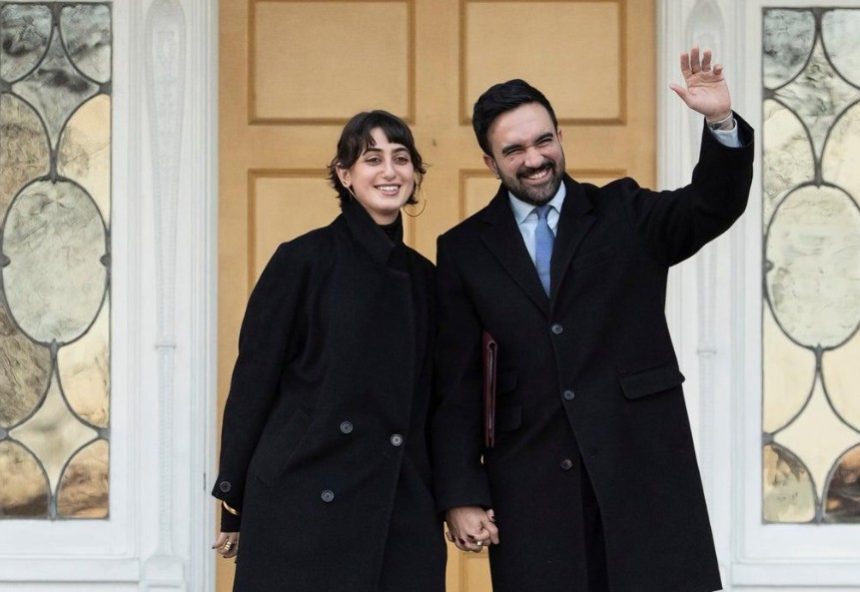
New York City Mayor Zohran Mamdani has formally moved into Gracie Mansion, the city’s historic mayoral residence, alongside his wife, Rama Duwaji.
The relocation marks a striking change from the couple’s previous one-bedroom flat in Queens and has sparked discussion about political symbolism, personal values and the realities of holding high public office.
For a UK audience familiar with debates around privilege, housing and political image, Mamdani’s move offers a recognisable tension between ideals and responsibility.
What kind of residence is Gracie Mansion?
Gracie Mansion is an 18th-century townhouse on Manhattan’s Upper East Side, overlooking the East River.
Since 1942, it has served as the official residence of New York City mayors, functioning both as a home and a civic space for public events.
The property spans roughly 11,000 square feet and includes formal reception rooms, a ballroom and full-time staff. It is also designed to meet the security demands placed on the mayor of a city with more than eight million residents.
Almost every mayor in modern New York history has lived there at least part-time, making Mamdani’s move more of a tradition than a novelty. What makes it noteworthy is the sharp contrast with his previous living situation.
How does this compare with Mamdani’s former home?
Before becoming mayor, Zohran Mamdani lived in Astoria, Queens, a diverse and predominantly working- to middle-class neighbourhood.
His flat reportedly cost $2,300 (£1,800) a month, lacked basic amenities such as a washer and dryer, and had suffered flooding due to a burst pipe.
Astoria is often associated with grassroots politics and multicultural life, earning it the nickname “the People’s Republic of Astoria” because of its strong support for progressive politicians.
Mamdani represented the area while serving in New York’s state legislature and won it comfortably in the mayoral election.
The move to the Upper East Side, one of the city’s wealthiest and least diverse districts, could hardly be more different in tone.
What did the mayor say about the move?
Speaking during a press conference held on the mansion’s lawn as removal vans arrived, Mamdani addressed the symbolism directly.
“Today, Rama and I feel lucky to participate in a ritual that so many New Yorkers have experienced at meaningful moments in their lives: beginning a new chapter,” he said.
Rama and I feel lucky to be starting a new chapter the way so many New Yorkers have, by moving to a new part of the city. We’re grateful for the welcome to the UES and humbled to be tenants of Gracie Mansion, a home that belongs to the people. pic.twitter.com/1fPZ59Qzel
— Mayor Zohran Kwame Mamdani (@NYCMayor) January 13, 2026
He acknowledged that relocating to such a grand residence may appear at odds with his promise to lead a government that reflects the everyday lives of ordinary people.
However, he stressed that the decision was largely driven by security requirements, which are difficult to meet in a private rented flat.
Is this a political contradiction?
Mamdani, a 34-year-old democratic socialist, has built his political identity around housing affordability, wealth inequality and public accountability. Critics have questioned whether living in an 18th-century mansion undermines that message.
The mayor appears keenly aware of this perception. He has said he intends to open Gracie Mansion to the public, particularly to New Yorkers who would never normally step inside such a building.
He has also played down plans for major changes, joking that his main ambition is the installation of bidets rather than luxury upgrades.
This approach echoes strategies used by some UK politicians who seek to soften institutional privilege through openness and accessibility rather than rejecting tradition outright.
What is the political and social context of the new neighbourhood?
The Upper East Side is among New York’s richest areas and is significantly less ethnically diverse than Astoria.
Nearly three-quarters of residents are white, and voting patterns in the last mayoral election leaned towards Mamdani’s rival, former governor Andrew Cuomo.
Despite that, local reaction has been relatively calm. Long-time resident Zoe Cuddy described the area as “the suburbs of Manhattan” and suggested that neighbours would warm to the mayor over time.
“I think we’ll grow to be happy to have him here,” she said.
Why does Mamdani’s personal background matter?
Mamdani spent part of his childhood in university-subsidised housing in Manhattan, connected to Columbia University, where his father is a professor.
His political career has been shaped by urban housing issues, particularly the pressures faced by renters.
These experiences underpin his appeal to younger voters and renters, a demographic with clear parallels in UK cities struggling with affordability and supply.