
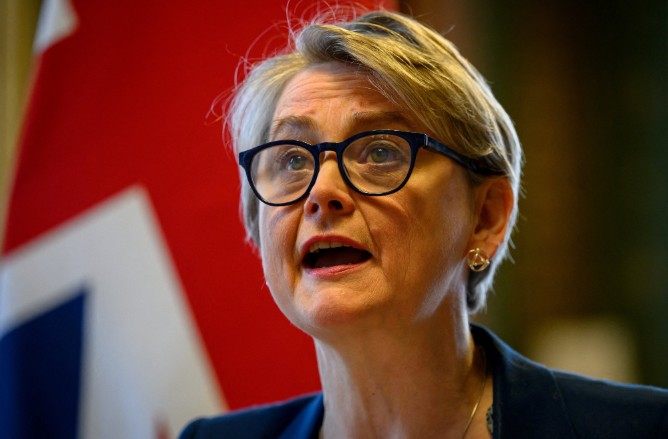
UK Foreign Secretary Yvette Cooper has delivered a scathing ultimatum to Tehran, asserting that the international community will not allow Iran to “hijack” the Strait of Hormuz or turn the vital shipping lane into a private “toll booth.”
Speaking following a high-level summit of over 40 nations on April 2, 2026, Ms. Cooper warned that the illegal blockade and proposed transit fees are holding the global economy “hostage.”
The crisis, which has seen shipping traffic through the world’s most critical energy chokepoint plummet from triple digits to single digits daily, is now directly hitting British households.
With a fragile ceasefire between the US and Iran under immense pressure, the UK government is leading a diplomatic charge to prevent a permanent “Ayatoll-booth” from crippling global trade.
What triggered the 2026 Strait of Hormuz crisis?
The current emergency erupted on March 2, 2026, following a massive military escalation involving the United States, Israel, and Iran.
In retaliation for strikes on its infrastructure, Iran effectively closed the Strait, through which 20% of the world’s oil and liquefied natural gas (LNG) flows.
Unlike previous maritime disputes, this crisis is defined by Iran’s attempt to formalise its control. Tehran has demanded “transit fees”, reportedly as high as $2 million per vessel, for passage.
Yvette Cooper has been firm: “This is an international transit route through the high seas. It cannot be allowed to apply tolls and restrictions to that route as it reopens.”
Why is the UK “Deeply Troubled” by the current ceasefire?
While a conditional two-week ceasefire was brokered earlier this week with the help of Pakistan, the deal is already fraying. A major point of contention for the UK is the exclusion of Lebanon from the current pause in hostilities.
Yvette Cooper expressed her “deep concern” over continuing Israeli strikes in Lebanon, which have resulted in mass displacement and high casualty rates.
🚨 UK Foreign Secretary Yvette Cooper SLAMS Israel’s “escalating” ATTACKS on Lebanon and DEMANDS an immediate ceasefire!
“Deeply troubled” by the latest Israeli strikes, Cooper is pushing for the US-Iran ceasefire to be extended to Lebanon right now. pic.twitter.com/sqJwM3tBYK
— J Stewart (@triffic_stuff_) April 9, 2026
The UK’s position is clear: for any ceasefire to be sustainable and for the Strait to truly reopen, the peace deal must be regional, not just bilateral between Washington and Tehran.
Where is the crisis felt most in the UK?
The effects of the [Iran Strait of Hormuz crisis] have rippled across the British Isles, impacting infrastructure and the cost of living:
- UK Forecourts: Petrol prices rose by an average of 14p per litre between February and late March 2026. Diesel saw an even sharper spike of 29p per litre.
- The City of London: Shipping insurance premiums have surged by 400%, affecting the UK’s massive maritime services sector.
- Aviation Hubs: Heathrow and Gatwick are monitoring jet fuel supplies, with prices doubling in some international markets, threatening summer holiday bookings.
- The Supermarket Aisle: The National Farmers’ Union (NFU) has warned that food prices are likely to rise as the blockade halts fertilizer exports from the Gulf to Africa and Europe.
“Freedom of Navigation means navigation must be free.”
The Foreign, Commonwealth & Development Office (FCDO) and Prime Minister Sir Keir Starmer have pivoted to a “diplomacy-first” strategy, avoiding the more escalatory rhetoric used by the Trump administration.
- The 40-Nation Summit: Cooper convened a virtual meeting on April 2 with over 40 countries to coordinate economic and political pressure on Iran.
- International Maritime Organisation (IMO): The UK is working with the London-based IMO to secure the release of thousands of sailors and ships currently trapped or idling near the Strait.
- Rejecting the “Toll”: The UK has rejected Donald Trump’s suggestion of a “joint venture” toll system, with Cooper stating maritime freedoms must not be “sold off to individual bidders.”
The Economic Impact:
The House of Commons Library and the Bank of England have both issued warnings regarding the “second-round effects” of the crisis.
| Metric | Impact Level | UK Context |
| Wholesale Gas | +75% Increase | Driving up the expected July Ofgem Price Cap. |
| CPI Inflation | 3.0% – 3.5% | Revised upwards due to energy volatility. |
| Global Oil | 20m barrels/day | Roughly 10% of global production is affected. |
What happens next for UK energy security?
The UK is moving on three fronts to mitigate the [Iran Strait of Hormuz crisis]:
- Diplomatic Snapback: The UK, along with France and Germany, has discussed triggering the “snapback” mechanism to reinstate UN sanctions if the Strait remains closed.
- Accelerating Clean Power: The government is using the crisis to justify a faster rollout of domestic wind and solar projects to reduce “fossil fuel dependency on volatile global markets.”
- The “Hormuz Convoy” Proposal: Experts are discussing the possibility of internationally-protected maritime corridors, though this remains a high-risk military option that the Starmer government is currently treating as a last resort.