

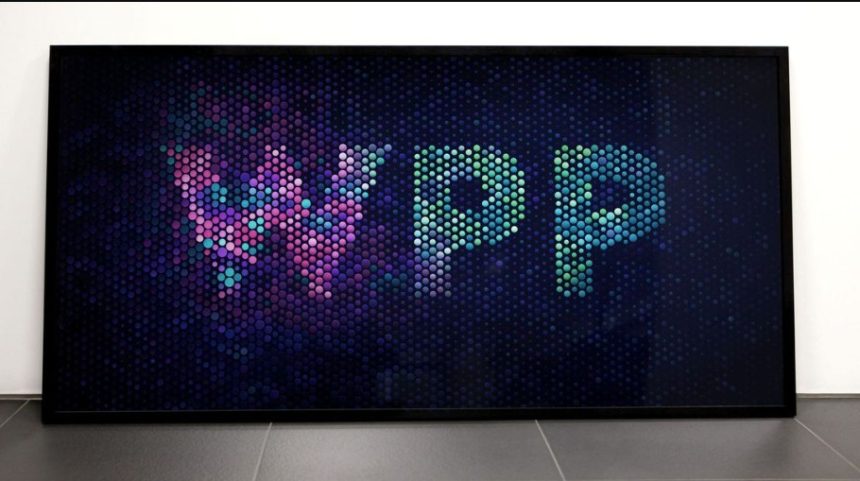
Advertising mammoth WPP is set to leave the FTSE 100 after further than 27 years, according to preliminary results from FTSE Russell. The change reflects the challenges faced by traditional advertising groups in an evolving environment.
The company, which owns well-known agencies such as Ogilvy and VML, has seen its share price fall by 63% this year.
In October, WPP lowered its guidance for a second time, prompting CEO Cindy Rose to caution that the company’s turnaround “would take time.”
The announcement sent shares tumbling as much as 16% in a single day, closing at 304.50 pence, giving the firm a market capitalisation of £3.27 billion ($4.30 billion).
WPP’s Long Spell in FTSE 100 Comes to an End
Having been a mainstay of the FTSE 100 since June 1998, WPP’s departure marks the end of an era for one of the UK’s top-flight companies.
Investors and market watchers see this as a sign of how swiftly the composition of the FTSE 100 index can change when companies struggle to maintain their market value or earnings growth.
British Land Set to Join FTSE 100 as a Replacement
WPP is expected to be replaced by British Land Co., the property group behind retail centres and office-led campuses in Central London and across the UK.
British Land has had a strong time, with shares rising 6.05% and better earnings in the first half of 2025, driven by high residency rates and active leasing.
The property establishment was the last part of the FTSE 100 between October 2024 and March 2025, pressing the fluid nature of top-flight indicator companies.
The sanctioned result of the FTSE 100 indicator review will be verified on Wednesday, 3 December, based on the previous day’s ending prices.
The FTSE 100 tracks the 100 largest companies listed on the London Stock Exchange. Companies ranked 111th or lower are automatically removed from the top-flight indicator, while those rising to 90th or over are promoted, keeping the indicator a dynamic reflection of request capitalisation and investor sentiment.
For UK investors and market observers, WPP’s exit is a reminder of how challenging it can be for long-standing companies to maintain their position in one of the country’s most-watched share indices.