

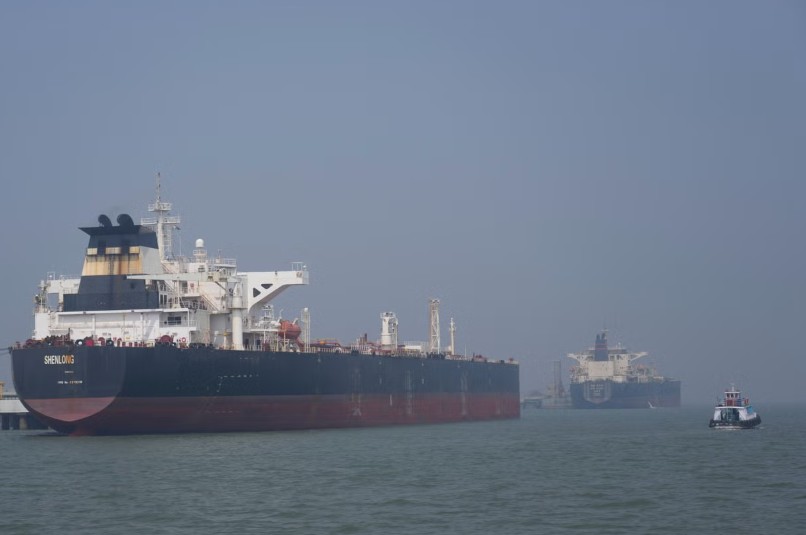
The United Kingdom has entered a “critical planning phase” in the Middle East as the world’s most vital maritime artery, the Strait of Hormuz, remains effectively sealed by Iranian forces.
With Brent crude oil prices surging by 7% to $114 per barrel following reported Israeli strikes on the South Pars gas field, the British government is facing an economic and security crisis not seen since the 1980s.
A specialist team of UK military planners has arrived at US Central Command (CENTCOM) in Tampa, Florida.
Their mission: to architect a multinational response to a blockade that threatens to plunge the UK into a winter of record-breaking energy costs.
Why has the UK sent Military Planners to Florida now?
The arrival of British officers at MacDill Air Force Base marks a significant shift from diplomatic rhetoric to operational readiness.
While the UK has maintained a presence in the Gulf via Operation Kipion for decades, the current threat is qualitatively different.
The primary concern for the MoD is the reported presence of sophisticated naval mines. Unlike the tethered contact mines of the 20th century, modern Iranian “smart mines” can be triggered by specific acoustic or magnetic signatures, making standard commercial shipping impossible.
The UK team is there to integrate Royal Navy mine-hunting expertise, widely considered the best in the world, into a broader American-led strike and clearance plan.
How is the Crisis Affecting UK Towns and Energy Hubs?
While the conflict is 3,500 miles away, the “economic frontline” is domestic. The closure of the Strait doesn’t just affect oil; it halts the flow of Liquefied Natural Gas (LNG).
- South Hook, Pembrokeshire: As one of Europe’s largest LNG terminals, this Welsh facility is a vital entry point for Qatari gas. A total blockade of the Strait essentially cuts off this supply line, forcing the UK to rely on more expensive Norwegian imports or depleting North Sea reserves.
- The ‘Petrol Pump’ Effect: From Manchester to London, UK motorists are already seeing price boards change. Analysts suggest that if the blockade holds for another week, petrol could exceed £1.85 per litre at UK forecourts.
- Logistics Hubs: Major distribution centres in the Midlands (the “Golden Triangle”) are bracing for a secondary inflation spike as the cost of HGV transit rises alongside fuel prices.
What is the Official Stance from Westminster and the MoD?
The rhetoric from the UK government is a delicate balance of support for allies and a desperate attempt to avoid “mission creep.”
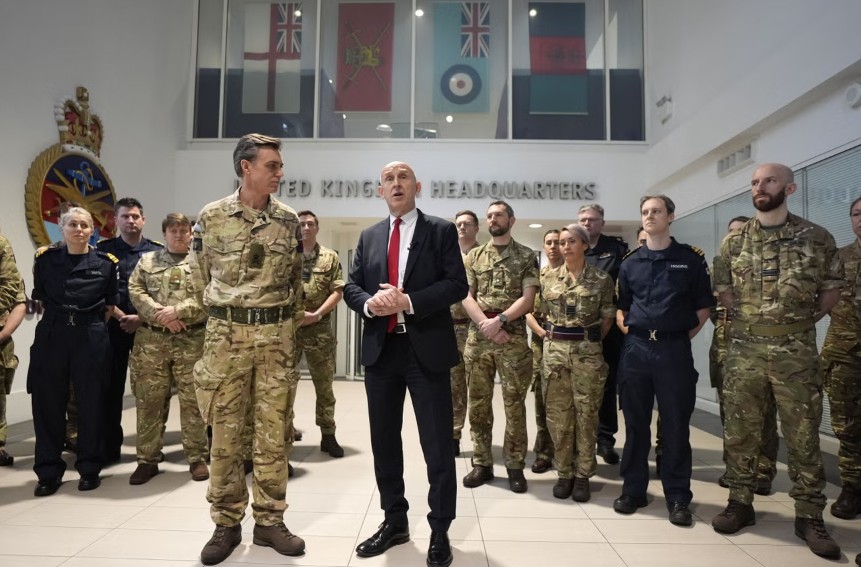
Armed Forces Minister Al Carns warned that the scale of the challenge is historic: “In 1987, it took 30 warships to escort shipping through the Strait.
Today, we face fast attack craft, ballistic missiles, and drones in the air and under the waves. This isn’t just a clearance mission; it’s a high-intensity combat environment.”
Defence Secretary John Healey has been in constant contact with European “Quad” partners. The UK will not act alone.
Whitehall is wary of Donald Trump’s recent Truth Social posts, where he suggested the US might “finish off” the Iranian threat and then leave the “non-responsive allies” (referring to the UK and Europe) to manage the messy aftermath.
Donald Trump has been trying to get other countries to help the USA deal with the Strait of Hormuz.
So far, not much success.
But now it looks like he’s saying the US might just finish off the regime and leave the Strait to other countries to sort out. pic.twitter.com/SfMfz2MFDg— Brian Lilley (@brianlilley) March 18, 2026
How Does the Iranian ‘A2/AD’ Strategy Threaten the Royal Navy?
In military terms, Iran is employing an Anti-Access/Area Denial (A2/AD) strategy. This makes the Strait a “kill zone” for traditional warships.
| Threat Type | Impact on UK Assets |
| Swarm Boats | High-speed IRGC boats can overwhelm the defensive batteries of a lone Destroyer. |
| Ballistic Missiles | Shore-based batteries in Iran can target vessels entering the 21-mile-wide narrowest point. |
| UUVs (Underwater Drones) | These “ghost” drones make mine-sweeping operations incredibly dangerous for human crews. |
The HMS Dragon, a Type 45 Destroyer currently moving past Gibraltar, is equipped with the Sea Viper missile system, designed to counter these exact threats. However, one ship cannot hold the Strait alone.
Why are Oil Prices Hitting $114 and What Does it Mean for Inflation?
The 7% spike overnight is a “fear premium.” Markets are reacting to the reality that the South Pars gas field, the world’s largest, is now a kinetic target. For the UK, this is an inflationary time bomb.
The Bank of England has been attempting to stabilise interest rates, but an energy shock of this magnitude typically leads to a “pass-through” effect.
This means everything from the price of a loaf of bread in Tesco to the cost of heating a home in Glasgow is set to rise as transport and manufacturing costs escalate.
What are the Possible Scenarios for ‘What Happens Next’?
Military analysts suggest three likely paths for the coming weeks:
- The ‘Armilla’ Reboot: A return to the 1980s style of “Tanker War” where UK and US warships provide close-proximity escorts for individual commercial vessels.
- Surgical Neutralisation: A US-led strike on Iranian coastal radar and missile batteries to “clear the air” before mine-sweeping vessels move in. This carries the highest risk of a wider regional war.
- The Diplomatic Pivot: Sir Keir Starmer’s preferred route, a negotiated settlement where Iran reopens the Strait in exchange for eased sanctions or a new nuclear framework.
Is the UK Prepared for a ‘Wider War’?
At PMQs, the Prime Minister insisted he would not allow British forces to be drawn into a “wider war.” However, the deployment of planners to Tampa suggests the UK is preparing for the worst-case scenario.
If a Royal Navy vessel is targeted by an Iranian drone or mine, the UK’s involvement would transition from “planning” to “active combat” instantly.
Currently, RAF pilots have already logged over 650 hours on Middle East operations, and British forces have intercepted more than 40 drones. The transition to a naval conflict in the Strait would be a massive escalation of this existing commitment.