


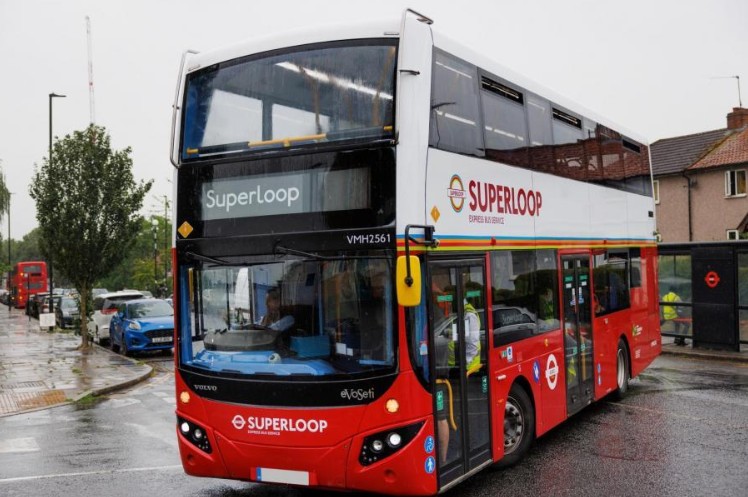
The landscape of South London transport is set for a major overhaul as Transport for London (TfL) moves forward with the SL15 Superloop, a high-frequency express bus service.
Connecting Clapham Junction to Eltham, the route is a centrepiece of Mayor Sadiq Khan’s commitment to improving orbital connectivity in outer London.
With a confirmed launch window of 2027, the SL15 will provide a vital link across the A205 South Circular, slashing journey times for thousands of daily commuters.
How Will the SL15 Change Your Daily Commute?
Following an extensive public consultation period that concluded in late 2025, TfL published its official consultation report on March 10, 2026.
The report confirms that the SL15 will be the latest addition to the “Superloop” family, a network of limited-stop express routes designed to make outer London travel as efficient as the Underground.
The SL15 is not just another bus route; it is a strategic intervention to bridge “transport deserts” in South London.
Currently, travelling between Clapham Junction and Eltham requires multiple changes and can take upwards of 90 minutes.
The SL15 aims to complete this journey in approximately 72 to 75 minutes, even during peak congestion on the South Circular.
Key Operational Details:
- Service Frequency: Every 12 minutes during Monday to Saturday daytimes and every 15 minutes during evenings and Sundays.
- Operating Hours: Daily from 05:00 to 00:30.
- Fleet Specification: Due to a low railway bridge on Thurlow Park Road (Tulse Hill), the route will exclusively use high-capacity single-decker electric buses rather than the iconic double-deckers seen on other Superloop routes.
Where Will the New Express Service Stop?
The SL15 route primarily tracks the A205 South Circular, serving a string of major transport hubs and town centres that have historically lacked a direct, fast connection.
The route serves eight rail stations, creating new interchanges with the Northern line, London Overground, and National Rail services.
The Confirmed 18 Stops
Following public feedback, TfL added two new stops to the original proposal to improve local access. The confirmed stops are:
- Clapham Junction (Falcon Road/St John’s Road)
- Clapham South (Northern Line interchange)
- Clarence Avenue
- Streatham Place
- Christ Church, Streatham (New addition following petition)
- Tulse Hill (Gyratory)
- Croxted Road
- Wood Vale
- Forest Hill (Overground interchange)
- Kilmorie Road
- Catford & Catford Bridge (National Rail interchange)
- Catford Town Centre
- Torridon Road, Hither Green (New addition)
- Baring Road (Interchange with SL4)
- St Mildred’s Road
- Eltham Road
- Well Hall Road
- Eltham Station
What Are the Official Plans for the Network?
The project has received strong backing from City Hall and transport advocacy groups, balanced by careful logistical planning from TfL.
Sadiq Khan, Mayor of London, stated: “The Superloop is making a real difference in improving public transport in Outer London. The SL15 will be a game-changer for South Londoners, linking key town centres and hospitals while providing a sustainable alternative to the car.”
A new Superloop express route has been given the green light 🚦
The SL15 bus between Clapham Junction and Eltham will be introduced following strong public support. It will boost connections between South West and South East London and make journeys quicker.… pic.twitter.com/98bh0duvjN
— Mayor of London, Sadiq Khan (@MayorofLondon) March 11, 2026
Transport for London (TfL) Spokesperson: “Following the consultation, we have listened to residents by adding stops at Christ Church and Torridon Road. This ensures that while the SL15 remains an express service, it serves the communities that need it most. We are on track for a 2027 launch.”
London TravelWatch, the independent watchdog, welcomed the route but raised concerns regarding the reliability of the South Circular.
A spokesperson noted: “While we support the SL15, the South Circular is notoriously congested. For this route to succeed, TfL must work with local councils to implement robust bus priority measures.”
How Will the Public and Local Businesses Benefit?
The SL15 is expected to have a profound impact on several fronts:
- Orbital Connectivity: Many South Londoners currently travel “in and out” of Zone 1 to move “across” South London. The SL15 allows for orbital travel, reducing pressure on the Northern and Victoria lines.
- Economic Growth: Areas like Catford, Forest Hill, and Eltham will see increased footfall as they become more accessible to residents in Southwest London.
- Accessibility Improvements: The new fleet will be fully electric and zero-emission, contributing to London’s goal of a net-zero transport network by 2030. Every bus will feature step-free access and dedicated wheelchair spaces.
However, many residents remain concerned about the broader state of the network. While this bus expansion offers a long-term solution, commuters are still facing immediate challenges, including upcoming London Tube strikes, which continue to disrupt weekend travel.
The SL15’s introduction in 2027 is seen as a necessary step toward making the outer London network more resilient to such disruptions on the central rail lines.
Why Are Single-Decker Buses Being Used Instead of Double-Decker Buses?
A significant point of discussion during the consultation was the vehicle type. Unlike the SL1 or SL2, the SL15 will use single-decker buses.
This is due to a physical constraint: the low railway bridge on Thurlow Park Road near Tulse Hill station.
While TfL is pushing ahead with modernising its surface fleet, other parts of the network face separate timelines, such as the new Piccadilly line trains, which have also seen recent schedule updates.
TfL investigated rerouting the service to allow for double-deckers, but determined that any detour would significantly increase journey times and reduce the “express” nature of the service. Instead, they will deploy “high-capacity” 70-passenger single-deckers to manage demand.
What Happens Next Before the 2027 Launch?
While the route is confirmed, several “enabling works” must take place:
- Infrastructure Changes at Clapham Junction: TfL plans to move eight existing bus routes to different stops in the Clapham Junction area to create a dedicated stand for the SL15.
- Tulse Hill Enhancements: Changes to the SL6 route will also be implemented to ensure a seamless interchange with the SL15 at the Tulse Hill gyratory.
- Procurement: TfL will soon begin the tendering process for the bus operator.