


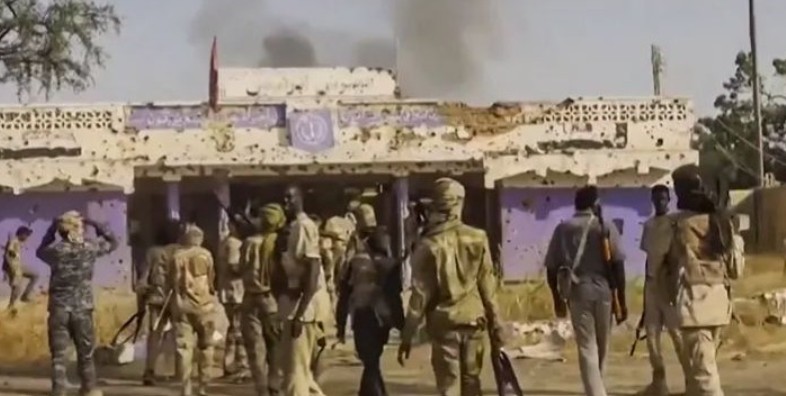
The latest Sudan Darfur attacks have forced more than 3,000 people to flee the town of Misteriha in North Darfur, after paramilitary fighters launched a deadly assault earlier this week.
At least 28 people were killed and 39 wounded, according to a Sudanese doctors’ group, with the true toll expected to be higher. The violence comes as Sudan’s civil war approaches its third year, deepening one of the world’s worst humanitarian crises.
The Sudan Doctors Network confirmed on Thursday that families escaped during the night with no belongings, food, or shelter.
Most of those displaced are women and children, including pregnant women, now facing what medics describe as “extremely severe” health conditions.
What happened in Misteriha during the Sudan Darfur attacks?
Fighters from the paramilitary Rapid Support Forces (RSF) intensified their offensive on Misteriha before seizing control of the town on Monday.
The area is known as a stronghold of Arab tribal leader Musa Hilal, who belongs to the Rizeigat tribe, the same tribal background as many RSF members.
The Sudan Doctors Network stated: “The initial toll stands at 28 killed and 39 wounded, but the real number is likely higher.”
The RSF has not publicly responded to the allegations, and the motive behind the attack remains unclear. However, analysts say consolidating control over towns in North Darfur would strengthen the RSF’s grip on the wider region.
How does this fit into Sudan’s wider civil war?
The war between the RSF and Sudan’s armed forces erupted in April 2023. What began as a power struggle in Khartoum has spiralled into nationwide violence, with Darfur among the hardest-hit areas.
According to the World Health Organization, the conflict has killed at least 40,000 people and displaced around 12 million since 2023.
Aid organisations caution that the real death toll could be significantly higher, as fighting in remote regions blocks access to reliable data.
Last October, RSF forces overran El-Fasher, the capital of North Darfur, following an 18-month siege.
UN-backed experts reported that more than 6,000 people were killed over just three days between 25 and 27 October. They said the scale and pattern of killings bore “the hallmarks of genocide”.
The takeover of Misteriha appears to further entrench RSF control across Darfur, reducing the Sudanese army’s remaining footholds in the region.
Why are civilian deaths rising sharply in 2025?
The Office of the United Nations High Commissioner for Human Rights has documented a steep rise in civilian killings this year.
Its data shows that recorded deaths in 2025 are more than two and a half times higher than during the same period last year. Thousands of people also remain missing or unidentified.
Speaking at the Human Rights Council in Geneva, UN High Commissioner Volker Türk said, “This war is ugly. It’s bloody.
And it’s senseless. If much of the international community continues to act as a passive bystander, then something is fundamentally wrong with our collective moral compass.”
His comments underline growing international concern that diplomatic efforts to broker peace have repeatedly failed.
What conditions are displaced families now facing?
Medical sources on the ground say families who fled Misteriha arrived in surrounding areas with nothing but the clothes they were wearing.
Many lack access to clean water, shelter, or basic healthcare. Clinics in North Darfur already struggle with shortages of medicine and staff after nearly three years of conflict.
The Sudan Doctors Network has called for “immediate and urgent assistance”, warning that pregnant women and young children face the highest health risks. Malnutrition and preventable disease remain serious threats as aid access shrinks.
Why does this matter to the UK?
The UK Government has previously pledged humanitarian support to Sudan through international agencies. As violence escalates in Darfur, pressure may grow on ministers to strengthen diplomatic efforts and expand aid commitments.
The conflict also has wider implications for regional stability in East Africa. Neighbouring countries such as Chad are already hosting large numbers of refugees, increasing the strain on fragile economies.
Any further deterioration could deepen displacement and intensify calls for international intervention.
For UK policymakers, the crisis raises difficult questions about foreign policy priorities, aid funding, and the limits of global influence in protracted conflicts.