


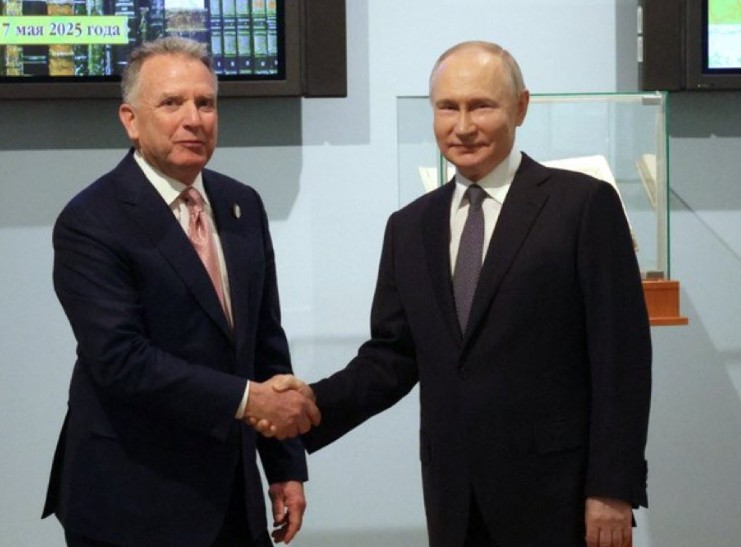
White House envoy Steve Witkoff is in Moscow this week for high-stakes addresses with Russian President Vladimir Putin, following a weekend of ferocious negotiations with Ukrainian officers aimed at securing a peace agreement.
Witkoff, along with former presidential counsel Jared Kushner, has been working to finalise a 19-point peace offer designed to bring both sides near to an end to the conflict.
The political drive represents the most significant attempt at resolving the war since Russia’s full-scale invasion of Ukraine in 2022. But despite the flurry of exertion, major obstacles remain.
crucial controversies over territorial control, Ukraine’s long-term security guarantees, and the terms of any ceasefire are still undetermined. officers say the coming round of meetings will largely depend on Putin’s amenability to compromise.
Before sweats included a 28-point plan brokered by Witkoff and Russian envoy Kirill Dmitriev. Kyiv rejected that interpretation as exorbitantly favourable to Moscow, egging the US and Ukrainian officers to go back to the delineation board.
posterior meetings in Geneva and Florida allowed both sides to trim the plan and hammer out fresh details.
US Diplomatic Push for Ukraine Peace: Steve Witkoff Leads Talks
Speaking after the weekend discussions, Secretary of State Marco Rubio described the meetings as “very productive and useful,” while former President Donald Trump expressed cautious optimism, stating: “There’s a good chance we can make a deal.”
Indeed, with progress, the two sides are still far piecemeal on several core issues. Russia continues to contend that Ukraine can not join NATO, despite Ukraine amending its constitution to make NATO membership a public matter.
Ukraine faces a hard choice: a rushed deal or a resilient peace.
WSJ: Steve Witkoff and Jared Kushner now fly to Moscow for direct talks. They run a private channel outside the State Department and drive the pace of U.S.–Russia negotiations themselves.
— Tymofiy Mylovanov (@Mylovanov) December 2, 2025
On troop figures, Russia originally demanded a cap of 600,000 reconciliation forces, while Ukraine and European officers suggested 800,000.
Presently, Ukraine fields roughly 880,000 soldiers, a significant increase from the 209,000 it had before the invasion.
For the UK anthology, it’s clear the accommodations are a delicate balancing act, with both sides trying to cover public interests while avoiding a full-scale escalation.
Steve Witkoff’s 19-Point Proposal Faces Major Obstacles
The biggest sticking point remains territorial concessions. An earlier draft suggested recognising Crimea and large areas of the Luhansk, Donetsk, Kherson, and Zaporizhzhia regions as effectively under Russian control, an offer Kyiv has forcefully defied.
Complicating matters further, Ukrainian President Volodymyr Zelenskyy’s chief of staff and lead moderator, Andriy Yermak, resigned following a corruption disquisition.
Only days earlier, Yermak had told The Atlantic: “Not a single sane person today would sign a document to give up territory.”
At the end of November, Putin expressed readiness for “serious” talks but insisted Russia holds the upper hand.
“If they don’t withdraw, we will achieve this by force,” he warned, referencing territories recaptured by Ukrainian forces.
Limited Options for Washington if Talks Stall
Judges note that Washington still has some regulators to pull if the addresses hit an impasse. These include tensing warrants on Moscow or adding military backing to Ukraine.
Still, numerous of the most important measures, similar to penalties on Russian energy and fiscal sectors, are already in place, and the US has supplied Ukraine with billions of dollars in military aid since 2022.
Trump has expressed frustration at the slow pace of diplomacy, saying a resolution “should have happened a long time ago.”
Nonetheless, US officers continue to pursue accommodations, hoping Witkoff’s charge in Moscow can nudge the addresses forward.
For the UK followership, the crucial takeaway is that while Witkoff’s political charge is ambitious, the path to peace remains fraught with challenges, and any advance will bear significant concessions from both sides.