
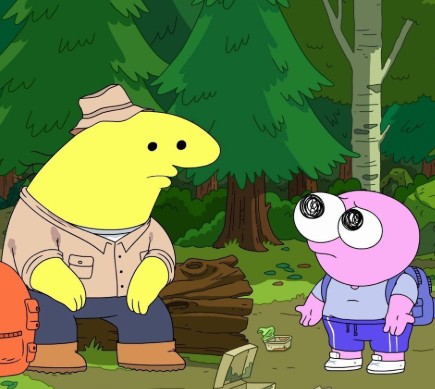
Adult animated hit Smiling Friends will officially end after three seasons, its creators have confirmed. On Thursday night, Michael Cusack and Zach Hadel announced they will conclude the series, citing burnout and a feeling of creative finality.
The news came via an audio message shared on Adult Swim in the United States, leaving fans across the UK shocked and disappointed.
The announcement matters because Smiling Friends has become one of the most talked-about adult animation series since its debut, building a loyal UK fanbase through streaming platforms and social media discussions.
Two final episodes are set to premiere in April, likely marking the end of the show’s current run.
Why are the Smiling Friends creators ending the series now?
Michael Cusack and Zach Hadel explained that they felt “burnt out” and believed the story had reached a natural stopping point.
In their audio statement, they suggested that continuing beyond three seasons would risk stretching the concept too far.
While they did not provide exact viewing figures, the show has consistently ranked among Adult Swim’s most-streamed animated series since its launch.
⚠️ SMILING FRIENDS oficialmente ha TERMINADO:
Así lo acaban de anunciar los creadores, Zach Hadel y Michael Cusack.
No fue una cancelación, fue decisión suya. pic.twitter.com/TEEalxueST
— Cartoons On The Moon (@CartoonsOTMoon) February 26, 2026
Burnout in animation production is not uncommon. Producing adult animation involves long writing cycles, voice recording sessions, storyboarding, and the demands of international distribution.
Industry analysts often note that smaller creative teams can face intense pressure once a show becomes a breakout success.
However, the creators reassured fans they are not ruling out future projects in the same universe.
What made Smiling Friends so popular with UK audiences?
Since its debut, Smiling Friends has built a strong following among British adult animation fans. Many viewers compared its chaotic humour and surreal storytelling to Rick and Morty, though the shows differ in tone and structure.
The series follows employees at a company tasked with bringing happiness to troubled clients. Its simple premise allowed for bizarre, fast-paced storytelling that resonated strongly online.
In the UK, the show gained traction through:
- Streaming availability on major platforms
- Viral TikTok and X (formerly Twitter) clips
- Reddit fan discussions
- Memes are shared widely among younger viewers
The animation style, intentionally rough and unpredictable, also stood out in a crowded market. That originality helped it cut through against bigger-budget productions.
How have fans reacted to the three-season ending?
The response has been immediate and emotional. Online threads across UK-based Reddit communities and X have seen thousands of posts within hours of the announcement.
Many fans describe the ending as “too soon”, while others praise the creators for choosing to end the series on their own terms.
This pattern reflects a broader trend in television. Several successful shows in recent years have opted for shorter, tighter runs instead of extended multi-season arcs.
Could Smiling Friends return in the future?
Cusack and Hadel did not shut the door completely.
They hinted that they may revisit the characters if inspiration returns. In television terms, that leaves open the possibility of:
- A one-off special
- A streaming-exclusive revival
- A feature-length animated film
Entertainment experts often point to revival culture as a growing force in modern media. Shows once considered finished frequently return years later due to streaming demand. For now, though, the creators appear comfortable with their decision.
What does this mean for adult animation more broadly?
The adult animation market remains strong globally and within the UK streaming ecosystem. While the genre has expanded significantly over the past decade, creators increasingly speak about creative exhaustion and production pressures.
By ending Smiling Friends after three seasons, Cusack and Hadel follow a path chosen by several respected showrunners: finish strong rather than fade out.
For UK viewers, the ending highlights how global streaming has blurred geographic boundaries. Although produced in the US, the show’s cultural impact travelled quickly across British social platforms.