
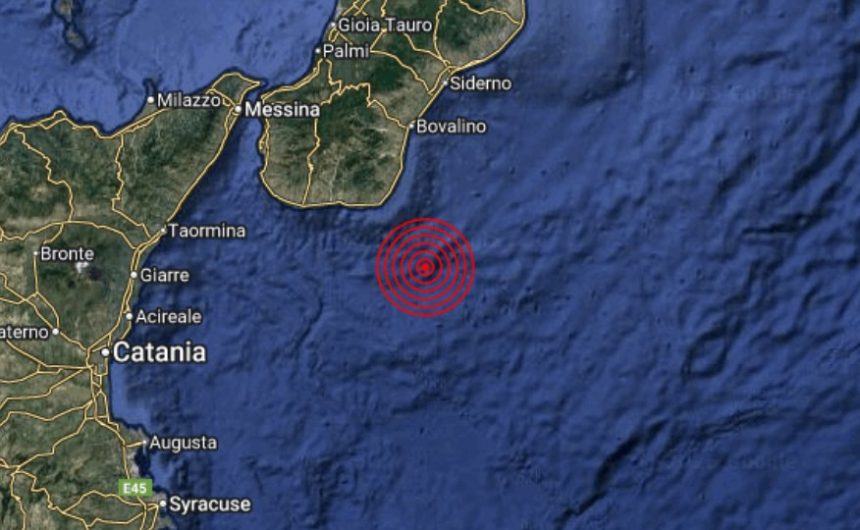
A 5.1 magnitude earthquake has struck off the coast of Reggio Calabria in southern Italy, sending strong tremors across parts of Italy and Malta in the early hours of the morning.
The quake caused widespread fear, with many people reporting they were shaken awake, but no injuries or major damage have been reported so far.
The Reggio Calabria earthquake occurred shortly before 6am local time (5am UK time), with its epicentre located in the Ionian Sea, according to official seismic data.
What do we know about the Reggio Calabria earthquake so far?
Italy’s National Institute of Geophysics and Volcanology (INGV) confirmed the earthquake measured 5.1 on the Richter scale and struck at a depth of around 65 kilometres beneath the seabed.
While deeper earthquakes often cause less surface damage, they can be felt over much wider areas, which explains why shaking was reported across southern Italy and Malta.
Residents in Reggio Calabria, parts of Sicily, and coastal towns described sudden shaking lasting several seconds, enough to wake people from their sleep.
Why did the earthquake cause so much fear?
Although a 5.1 magnitude quake is classed as moderate, timing played a key role. The tremor struck during the early morning when most people were asleep, increasing panic and confusion.
Social media quickly filled with reports from residents sharing their experiences and concerns.
#Terremoto di magnitudo ML 5.1 registrato da @INGVterremoti alle ore 5:53 sulla Costa Calabra Sud Orientale nella provincia di #ReggioCalabria: NESSUNA richiesta di soccorso né segnalazioni di danni sono giunte al momento alle sale operative dei #vigilidelfuoco [#10gennaio 6:30] pic.twitter.com/6dcl1ezke7
— Vigili del Fuoco (@vigilidelfuoco) January 10, 2026
Domenico Costarella, head of the Calabria Region’s Civil Protection Department, told Sky TG24: “The earthquake was felt clearly by residents.
There was a lot of fear and many calls to our operations room, but inspections have confirmed there is no damage.”
Emergency teams carried out immediate checks in areas closest to the epicentre, particularly along the Ionian coastline.
Were there any reports of damage or injuries?
At this stage, authorities have confirmed there are no injuries and no significant structural damage. Buildings, roads and key infrastructure remain operational, and no evacuations have been ordered.
In Malta, local media reported that people across the island felt noticeable shaking, with some describing beds and furniture moving. However, officials have also confirmed there is no cause for concern.
How common are earthquakes in southern Italy?
Southern Italy lies near the boundary between the African and Eurasian tectonic plates, making it one of Europe’s more seismically active regions.
Calabria, in particular, experiences regular small-to-moderate tremors, many of which occur offshore.
While destructive earthquakes are rare, the region’s geology means shaking can be felt frequently, especially when quakes occur beneath the sea.