
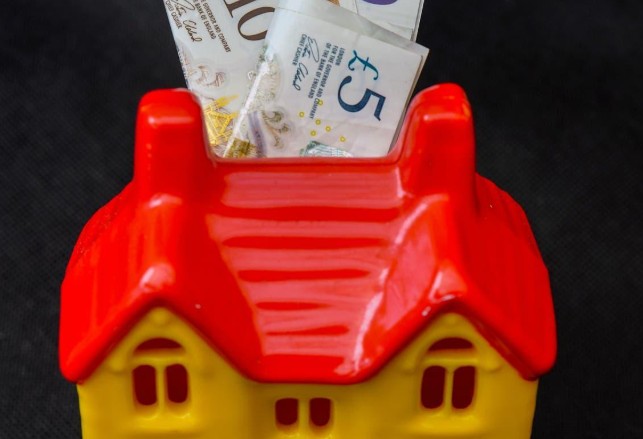
The UK housing market has hit a significant roadblock this spring as a stark mortgage cost warning sends ripples through the property sector.
After a brief period of recovery in early January, the latest data from the Royal Institution of Chartered Surveyors (RICS) and Halifax suggests that the “cautious optimism” previously felt by homeowners has been replaced by a “marked shift” toward hesitation.
Rising borrowing costs, fueled by geopolitical instability in the Middle East and stubborn domestic inflation, have pushed average fixed-rate mortgages back above the 5% mark.
For the average British household, this represents a major blow to affordability, leading to the weakest buyer demand levels seen since the summer of 2023.
What is Driving the Current Mortgage Cost Warning?
The primary driver of this recent instability is the “macro fallout” from global events. While the UK had been preparing for a series of interest rate cuts from the Bank of England (BoE), a spike in global oil prices has reignited inflationary fears.
According to the March 2026 RICS Residential Market Survey, a net balance of -39% of property professionals reported a fall in new buyer inquiries.
This is a sharp deterioration from the -29% recorded in February. The consensus among surveyors is that the market is losing momentum as the “cost of staying on the ladder” becomes as much of a concern as getting on it in the first place.
The volatility has become so pronounced that lenders have been forced to pull products with little notice, similar to when UK mortgage rates topped 5% during previous periods of fiscal uncertainty.
Which UK Regions Are Most Affected by the Slowdown?
The impact of the mortgage cost warning is not uniform across the United Kingdom. Data shows a widening gap between the expensive southern markets and more resilient northern regions.
1. The South East and London: The “Affordability Trap”
In areas like London, the South East, and East Anglia, the price-to-income ratio remains at historic highs. As mortgage rates climb, buyers in these regions are the first to pull back. London reported a price sentiment balance of -40%, indicating significant downward pressure on valuations.
2. The “North-South” Divide
While the south struggles, Scotland and Northern Ireland continue to report rising prices. Northern Ireland, in particular, has outperformed the rest of the UK by a wide margin, with annual price growth nearly four times faster than the national average.
3. Midlands and the North West
Cities like Manchester and Birmingham occupy a middle ground. While buyer inquiries have dipped, the chronic undersupply of semi-detached and terraced homes is keeping a “floor” under prices, preventing the sharp falls seen in the capital.
What Does the Bank of England Say About Future Rates?
As of April 2026, the Bank of England base rate stands at 3.75%. While Governor-led communications had previously hinted at a “glide path” toward 3.25%, the recent mortgage cost warning stems from the fact that lenders are preemptively raising rates.
Official Statement from Amanda Bryden, Halifax Analyst: “The recent slowdown reflects wide uncertainty… Concerns about higher energy prices have pushed up inflation expectations, which in turn led to a rise in mortgage rates, dampening the initial momentum seen at the start of the year.”
Experts from Moneyfacts suggest that even with a temporary ceasefire in the Middle East, mortgage rates are unlikely to “snap back” to the lower levels seen in February. Instead, the market is bracing for a “higher for longer” environment.
How is the Rental Market Reacting to High Mortgage Costs?
One of the most concerning side effects of the mortgage slowdown is the mounting pressure on the UK rental sector. As first-time buyers find themselves priced out of homeownership, they are forced to remain in rented accommodation.
- Demand vs. Supply: RICS reports that tenant demand remains positive (net balance +2%), while landlord instructions have plunged to -27%.
- Impact: This mismatch is driving private rental growth, with +20% of surveyors expecting rents to rise further over the next three months.
- The “Locked-Out” Generation: For many in the UK, the mortgage cost warning translates directly into higher monthly rent, making it even harder to save for a deposit.
How Can Homeowners Mitigate Rising Costs?
For those already on the property ladder or those determined to buy, experts suggest a more “active” approach to debt management.
Jinesh Vohra, CEO of Sprive, recommends:
- Overpayments: Even small monthly overpayments can significantly reduce the total interest paid over the life of a loan.
- Rate Locking: With volatility expected to continue, locking in a rate six months in advance of a deal expiring is becoming standard practice for savvy borrowers.
- Product Transfers: Many lenders now offer better rates to existing customers than to new ones; don’t assume the “open market” is always cheaper.
What Happens Next?
Looking ahead to the remainder of 2026 and into 2027, the UK housing market is expected to remain “broadly stagnant.”
- House Price Growth: Most major indices (Halifax, Nationwide, Zoopla) have revised their 2026 forecasts down to a modest 1% to 2% growth.
- Transaction Volumes: Sales activity is expected to remain sluggish until at least the autumn, as buyers wait for clearer signals from the Bank of England.
- Supply Levels: The average number of unsold properties on estate agents’ books has risen to 47, up from 45 at the start of the year, suggesting a move toward a “buyer’s market” in terms of choice, if not cost.
FAQ
1. Are UK house prices going to crash in 2026?
No. While there is a significant mortgage cost warning in place, most experts expect a “soft landing.” Chronic undersupply and strong wage growth are preventing a 2008-style crash.
2. Is now a bad time to buy a house in the UK?
It depends on your region. In London, you may have more negotiating power as demand drops. However, in Scotland or Northern Ireland, competition remains fierce.
3. What is the “SONIA” rate and why does it matter?
The Sterling Overnight Index Average (SONIA) is the rate lenders use to price fixed-rate mortgages. When SONIA rates rise due to global uncertainty, mortgage deals usually get more expensive within days.
4. How long should I fix my mortgage for in 2026?
Many brokers are currently suggesting 2-year or 3-year fixes to provide short-term security while leaving the door open to refinance if the Bank of England eventually cuts rates in 2027.