


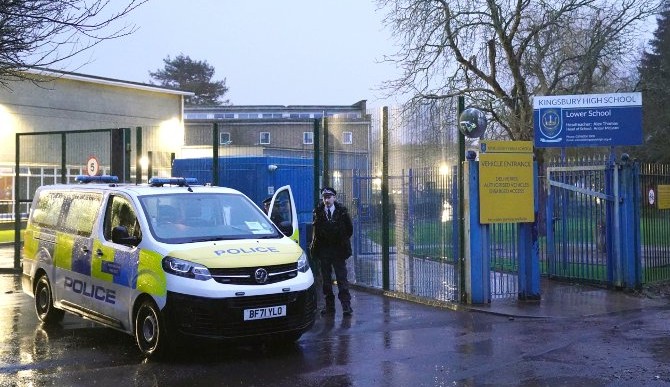
A 13-year-old boy has been charged with two counts of attempted murder following a knife attack at Kingsbury High School in Brent, north-west London, police have confirmed.
The incident happened on Tuesday, leaving two pupils aged 12 and 13 seriously injured, though both are now said to be in a stable condition.
The Kingsbury High School stabbing has sparked renewed concern over school safety in the capital, as the teenager is also accused of carrying a knife on school grounds and attacking another child with insect spray.
The boy, who cannot be identified for legal reasons, is due to appear at Westminster Magistrates’ Youth Court on Thursday morning.
What happened in the Kingsbury High School stabbing?
According to the Metropolitan Police, the 13-year-old is accused of stabbing two pupils during an incident at Kingsbury High School in Brent.
Emergency services rushed to the school on Tuesday, and both injured children were taken to the hospital. Police confirmed that one victim was taken to a major trauma centre, indicating the seriousness of their injuries at the time.
Authorities later confirmed both children are now in a stable condition, though the full extent of their injuries has not been made public.
The incident has shaken parents and local residents, particularly due to the age of those involved.
Who has been charged and what offences are being alleged?
Police say the suspect has been charged with:
- Two counts of attempted murder
- Assault, after allegedly spraying insect spray into the face of a third child
- Possession of a bladed article on school premises, without lawful authority or good reason
Because the suspect is under 18, UK law prevents media outlets from naming him.
The charges mean prosecutors believe there is enough evidence for the case to proceed through the courts.
What have the police said about the knife attack in Brent?
Detective Chief Superintendent Helen Flanagan, from Counter Terrorism Policing London, described the allegations as extremely serious.
“These are extremely serious charges against a young boy, and we continue to support the victims and their families, as well as the wider school community following this shocking incident.”
🚨 London school stabbing: Teen suspect shouted “Allahu Akbar” while attacking two boys at Kingsbury High.
A 13-year-old outsider entered with a concealed knife, stabbed a 13-year-old in the neck/back and a 12-year-old, leaving both critical.
Counter-terror police now probing… pic.twitter.com/5BFEDpQB5z
— Brutal Truth (@sarkarstix) February 11, 2026
She added that the investigation remains active. “While we have now charged the boy with these offences, our investigation is ongoing, and detectives will continue to carry out enquiries in the local area.”
Police also said they are working closely with local officers in Brent and praised the school and community for supporting the investigation.
Why is Counter Terrorism Policing involved?
Some members of the public may question why Counter Terrorism Policing London is involved in a school stabbing case.
In the UK, counter-terrorism teams often assist in major violent incidents, even when they are not treated as terrorism. They may support investigations involving serious harm, public safety risks, or incidents with complex evidence needs.
At this stage, police have not publicly stated that the incident is being treated as terrorism.
When will the boy appear in court?
The boy is scheduled to appear at:
- Westminster Magistrates’ Youth Court
- Thursday morning
Youth courts in England and Wales usually deal with serious cases involving minors, and reporting restrictions are strict.
The court hearing will likely cover the formal reading of charges and early legal steps, including decisions about bail or custody.
What has the CPS said about the case?
A spokesperson for the Crown Prosecution Service (CPS) said prosecutors worked to ensure the case met legal standards for charging.
“Our prosecutors have worked to establish that there is sufficient evidence to bring this case to court and that it is in the public interest to pursue criminal proceedings.”
They also issued a warning to the public about online speculation. “It is vital that there should be no reporting, commentary or sharing of information online which could in any way prejudice these proceedings.”
This warning reflects UK laws designed to protect a defendant’s right to a fair trial, especially when a child is involved.
Why does the Kingsbury High School stabbing matter to families across the UK?
Although this incident happened in Brent, it raises wider national concerns about knife crime among young people and the safety of pupils in schools.
Many parents will see this case as another reminder of how quickly violence can happen in places that should feel secure.
Schools across London and other major UK cities have increased security measures in recent years, including:
- Staff patrols at school gates
- Bag searches in some schools
- Police-linked youth engagement teams
- Anti-knife crime education programmes
However, serious incidents continue to occur, often involving children both as victims and suspects.
How do schools respond after serious violence?
In past UK school incidents involving serious assaults, schools often respond by:
- Bringing in extra safeguarding staff
- Providing counselling for pupils and families
- Reviewing entry systems and supervision during breaks
- Offering reassurance meetings with parents
In many London boroughs, headteachers also work closely with the Metropolitan Police Safer Schools Officers, who act as a link between education and policing.
Kingsbury High School is expected to continue safeguarding support students and staff following the incident.
What should the public avoid doing online?
Legal experts frequently warn that sharing rumours or naming suspects can cause serious consequences, particularly when court proceedings are active.
In UK cases involving children, the law places strict limits on:
- Identifying minors involved in criminal cases
- Posting “suspect names” online
- Sharing photos of children connected to the case
- Publishing unverified allegations
The CPS has made clear that public commentary could risk harming the fairness of the trial process.