


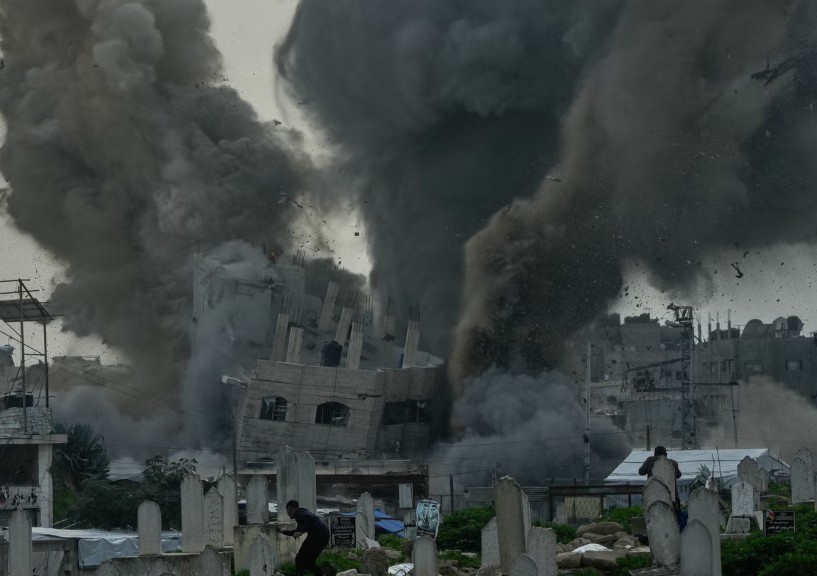
Photos taken in Gaza have captured the exact moment an Israeli strike hit a building, showing the explosion unfolding in split-second detail.
The images, taken on Friday afternoon in Gaza City, show a bomb dropping through the air, a massive fireball erupting on impact, and the building collapsing within moments.
The strike matters because it highlights both the intensity of the ongoing war and the risks faced by civilians and journalists who remain inside Gaza.
It also adds to growing international attention around how airstrikes are carried out and what happens on the ground immediately after warnings are issued.
What happened during the Israeli strike in Gaza City?
An Israeli airstrike hit a building in Gaza City after the Israeli military issued an evacuation warning to residents in the surrounding area.
A photographer on the ground, Jehad Alshrafi, captured a rare sequence of images showing the attack from the seconds before impact through to the building’s destruction.
The photographer said he rushed to the location after seeing the warning online and positioned himself at a nearby cemetery, keeping a safe distance due to the risk of flying debris.
He described the blast as extremely violent and far louder than expected. “The explosion was loud and strong beyond imagination. It was incredibly violent,” he said.
The photos show civilians reacting instantly, turning and running as the bomb falls.
What do the photos show in split-second detail?
The image sequence provides a clear visual timeline of the strike.
A photo shows the scale and intensity of Israeli bombardment on civilian homes in the Gaza Strip.#GazaHolocaust #GazaGenocide #GazaUnderAttack #GoldenGlobes #Gaza pic.twitter.com/ZdbCtKb8TZ
— Ahlam Shaladan🌸🤍🌸 (@Ahlam_Shala96) February 6, 2026
It captures:
- The bomb suspended in the air just before impact
- People near the site are turning to flee
- A huge burst of flames and thick smoke rising from the building
- Debris is shooting upwards as the structure collapses
- The building was visibly buckling before crumbling down
The images show how quickly a strike can unfold, even when warnings are issued beforehand.
Why did Israel say it carried out the strike?
An Israeli military spokesperson claimed the building targeted in the strike was being used by Hamas militants.
Israel has repeatedly stated that it targets militant infrastructure, including command sites, weapons storage areas, and tunnels.
However, it remains difficult for independent observers to confirm the military use of specific buildings immediately after an attack.
As with many incidents in the war, both sides often issue competing claims, while journalists and aid organisations try to assess what happened on the ground.
How dangerous was the strike for civilians nearby?
The photographer chose a cemetery location partly because it gave him a view of the building while keeping a distance from the strike zone. Even so, the photos highlight the risk to anyone within range.
Israel’s warning advised people to stay at least 300 metres away, around 980 feet, due to the strength of the blast and flying debris.
In the images, civilians appear close enough to see the bomb falling and react in real time, suggesting the situation remained extremely dangerous even after the evacuation message.
Why do these images matter beyond Gaza?
War photography plays a major role in shaping how the public understands conflicts. While official military statements often describe strikes in technical language, photos like these show the real-world impact in a way words cannot.
The images also highlight the challenges faced by journalists in Gaza, who often work under constant risk, limited medical support, and restricted movement.
The photos may also influence global debates about airstrike tactics, civilian safety, and international pressure on governments involved in the conflict.
What does this mean for the UK public?
The UK public continues to follow the Israel-Gaza war closely, with strong views across political and community lines.
For Britain, images like these can affect:
- Public opinion on UK foreign policy
- Pressure on MPs over humanitarian aid decisions
- Debate over arms export controls
- Calls for ceasefire efforts or stronger diplomatic action
Many UK-based charities and aid groups have also warned that civilian life in Gaza remains fragile, with shortages of medical supplies, shelter, and basic services.