


While UK audiences may be more familiar with cultural headlines such as baftas host alan cumming, today’s global news is dominated by escalating conflict in the Middle East.
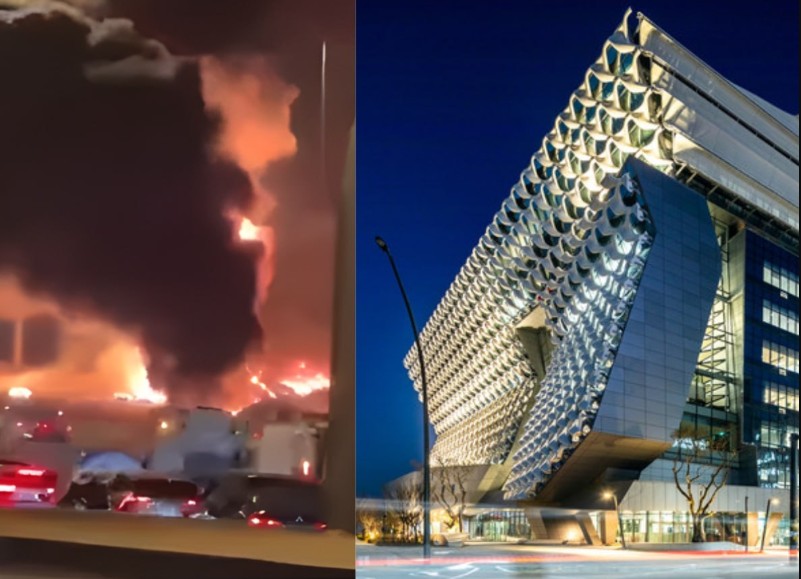
Iran launched a drone strike on the US embassy in Riyadh early Tuesday morning, according to Saudi officials, marking the fourth day of intensifying warfare between Iran, the United States and Israel.
The attack caused minor damage and a limited fire at the embassy in Saudi Arabia’s capital. The strike comes amid widening regional retaliation, rising oil prices and deepening fears that the conflict could stretch on for weeks.
The situation matters to the UK because of its impact on global oil markets, regional stability and British nationals currently in affected countries.
What happened at the US embassy in Riyadh?
Saudi Arabia’s Defence Ministry confirmed that two Iranian drones struck the US embassy compound in Riyadh in the early hours of Tuesday. Officials described the damage as limited and said a small fire broke out but was contained quickly.
The attack follows a similar incident at the US embassy in Kuwait just one day earlier.
The US government has not yet released detailed casualty figures linked to the Riyadh strike. However, the US military confirmed that six American service members were killed in Kuwait earlier in the conflict. All six were Army soldiers assigned to a logistics unit.
US embassy in Riyadh is 🔥
Iran is giving USA a lesson for life
— Akshit Singh 🇮🇳 (@IndianSinghh) March 3, 2026
US Central Command later acknowledged that Kuwait had mistakenly shot down three American fighter jets during an intense wave of Iranian missiles and drones. All pilots ejected safely.
Why has Iran expanded strikes across the Gulf?
Iran says it is retaliating against joint US and Israeli airstrikes inside its territory.
US President Donald Trump signalled that the American campaign could last “four to five weeks”, adding he was prepared to go “far longer”.
US Secretary of State Marco Rubio told reporters: “The hardest hits are yet to come from the US military.”
Meanwhile, Israeli Prime Minister Benjamin Netanyahu claimed Iran was rebuilding underground nuclear sites. He offered no public evidence for the claim.
Iran’s Supreme Leader Ayatollah Ali Khamenei was reportedly killed earlier in the conflict, further intensifying tensions. Tehran has vowed prolonged retaliation.
Which regional targets have been hit?
The violence has spread far beyond Iran and Israel. Recent strikes have reportedly hit:
- Energy facilities in Saudi Arabia and Qatar
- Commercial ships in the Strait of Hormuz
- Two Amazon data centres in the United Arab Emirates
- A drone impact site near infrastructure in Bahrain
The Strait of Hormuz is particularly critical. Roughly 20% of the world’s traded oil passes through it, making it one of the most strategically important waterways globally.
Since the conflict escalated four days ago, global oil and natural gas prices have surged sharply. UK motorists could feel the impact at petrol pumps within weeks if disruption continues.
Are nuclear sites being targeted?
Iran confirmed that airstrikes hit the Natanz nuclear enrichment site on Sunday.
Reza Najafi, Iran’s ambassador to the International Atomic Energy Agency, said: “Their justification that Iran wants to develop nuclear weapons is simply a big lie.”
Iran insists its nuclear programme remains peaceful and claims it has not enriched uranium since June.
Israel maintains that it is targeting Iran’s “leadership and nuclear infrastructure” to prevent it from developing atomic weapons.
Satellite images analysed by international observers reportedly show limited activity at two Iranian nuclear sites before the conflict. Analysts suggest Tehran may have been assessing earlier damage and attempting repairs.
How many casualties have been reported?
Current confirmed deaths include:
- 6 US soldiers in Kuwait
- 3 civilians in the United Arab Emirates
- 1 person in Kuwait
- 1 person in Bahrain
In Israel, three young siblings killed in an Iranian strike were laid to rest at the Mount of Olives in Jerusalem.
Iran’s Foreign Minister Abbas Araghchi claimed more than 160 girls were killed in a strike on a school in Minab, sharing images of graves on X. These claims have not yet been independently verified.
Why should the UK be concerned?
Although the UK is not directly involved militarily, the effects could be significant:
1. Energy prices
Brent crude prices have already climbed sharply. If the Strait of Hormuz remains unstable, UK households could face higher fuel and heating costs.
2. Travel disruption
The US State Department has urged citizens to leave more than a dozen Middle Eastern countries. Several airspaces remain partially closed, leaving travellers stranded.
The UK Foreign Office may issue updated travel advice in the coming days.
3. Wider economic impact
Data centre strikes and attacks on shipping lanes could disrupt supply chains. British businesses that rely on Gulf trade routes may experience delays and rising costs.
What does this mean beyond headlines like Baftas host alan cumming?
While UK readers may be searching for entertainment news such as baftas host alan cumming, this developing war carries far heavier consequences.
The scale of retaliation, the absence of a clear diplomatic exit plan and direct strikes on embassies signal a serious escalation.
President Trump’s suggestion that operations could last more than a month raises fears of a drawn-out regional war.