


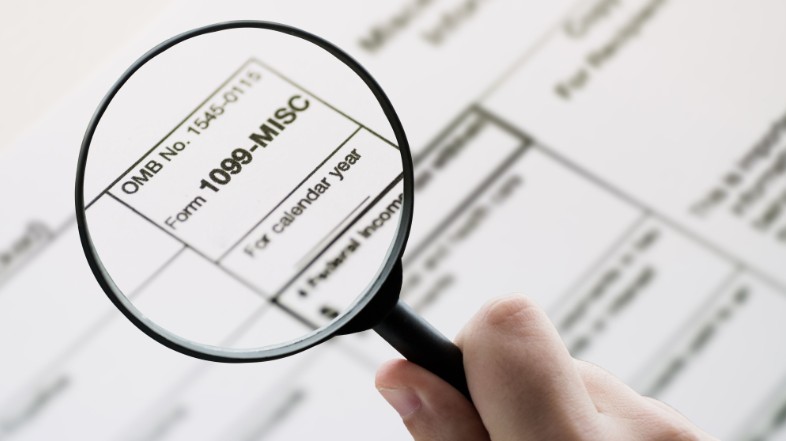
An error on your IRS Form 1099 can cause serious problems, especially for UK residents who earn income from the United States.
If the figure reported to the US tax authorities is higher than what you actually received, the IRS may assume you underreported income, unless you act quickly.
This guide explains what an IRS Form 1099 error means, why it matters, and what steps UK taxpayers should take before filing. It focuses on clarity, accuracy, and real-world action rather than technical jargon.
What is an IRS Form 1099, and why is it important?
An IRS Form 1099 reports income paid to you by a US company or platform when you are not treated as an employee. US businesses must send this form to both you and the IRS, usually by January following the tax year.
The key issue is that the IRS treats the form as reliable evidence of income. If your tax return does not match it, the system may automatically flag your account.
For UK residents, this often affects freelancers, consultants, online creators, and investors with US-based income.
Even if you pay tax in the UK and rely on the UK–US tax treaty to avoid double taxation, US reporting rules still apply.
What should you do if your IRS Form 1099 is wrong?
The most important rule is to act as soon as you spot the error. Waiting until you file your tax return can limit your options.
Your first step should be to contact the payer who issued the form. Explain clearly why the amount is wrong and provide evidence such as invoices or payment records.
In many cases, errors happen because of duplicated payments, currency conversion mistakes, or internal accounting issues.
At this stage, ask the issuer to cancel the incorrect form and issue a correct one. Keep written records of all communication, as this may be vital later.
What is a ‘Corrected’ IRS Form 1099?
If the payer has already sent the incorrect form to the IRS, they cannot simply delete it. Instead, they must issue a Corrected IRS Form 1099, which replaces the original entry in the IRS system.
A corrected form will:
- show the accurate income amount
- clearly mark the form as “Corrected.”
- override the original figure once processed
Most legitimate US companies are familiar with this process and will cooperate when presented with clear evidence.
What if the issuer refuses to correct the IRS Form 1099?
If the payer refuses to help, you still need to deal with the issue on your tax return. Ignoring the incorrect figure is risky and often leads to an IRS notice demanding tax on income you never received.
In this situation, taxpayers usually report the amount shown on the form and then clearly explain the overstatement in an attached statement. The explanation should be factual, simple, and supported by documents.
For example, you would show:
- the income reported on the IRS Form 1099
- the actual amount received
- The difference caused by the reporting error
This approach does not eliminate all audit risk, but it significantly reduces the chance of automatic penalties.
Does an incorrect IRS Form 1099 increase audit risk?
Yes, it can. The IRS relies heavily on information reporting, and mismatches often trigger reviews. However, failing to explain the discrepancy almost guarantees follow-up action.
With just 1 hour left, it’s now or never!
eFile your 1099s, W-2s & 94X with Tax1099 and win the compliance race.https://t.co/7v1ZhFThTR pic.twitter.com/TWmh1IKCzH— Tax1099 (@irsform1099) February 3, 2026
Being open, consistent, and well-documented gives you a stronger position if questions arise later.
Why does this matter for UK taxpayers?
UK residents with US income face added complexity because they must balance US reporting rules with UK self-assessment obligations.
Currency conversion, timing differences, and inconsistent records between countries can all create problems.
An incorrect IRS Form 1099 may:
- delay US tax filings
- complicate UK tax calculations
- increase professional accounting costs
The UK–US tax treaty helps prevent double taxation, but it does not protect you from reporting errors.