


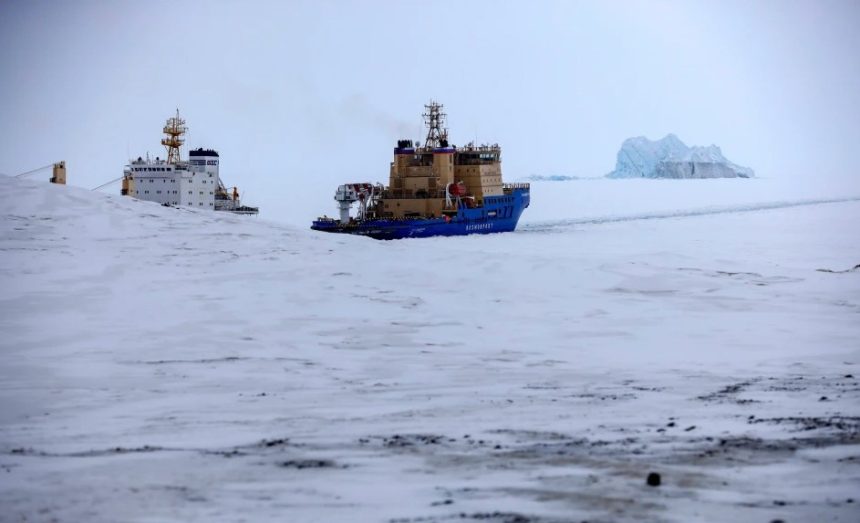
A fast-growing shipping boom in the Arctic is driving a sharp rise in black carbon pollution, a powerful climate-warming soot that speeds up ice melt.
While several countries and environmental groups are pushing for urgent action at international shipping meetings, geopolitical tensions, including renewed disputes around Arctic influence and security, risk slowing down meaningful regulation.
With Arctic sea ice shrinking rapidly, more vessels now travel through waters that were once frozen for most of the year.
That increase in traffic means more emissions, more soot landing on snow and glaciers, and faster melting in a region already warming far quicker than the rest of the planet.
What is black carbon, and why does it matter in the Arctic?
Black carbon is a type of soot released when fuels burn inefficiently. Ships, diesel engines, and industrial fuel use are major sources.
In the Arctic, black carbon becomes especially dangerous because it lands on ice and snow, darkening the surface.
This reduces the ice’s ability to reflect sunlight. Instead of bouncing light back into space, the darkened ice absorbs heat, causing it to melt faster.
Scientists consider black carbon one of the most damaging short-term warming pollutants because it heats the atmosphere quickly and intensifies warming when it settles on frozen surfaces.
This creates a harmful loop:
- More ships release more soot
- More soot darkens snow and ice
- Darker ice melts faster
- More melting opens more shipping routes
Why is Arctic shipping increasing so quickly?
Arctic sea ice is shrinking as global temperatures rise. As a result, shipping routes through the Arctic Ocean have become more accessible, even if only for a few months each year.
For shipping companies, Arctic routes can cut travel time between Europe and Asia. That can mean fewer days at sea, lower fuel costs, and faster deliveries.
But the environmental cost is steep.
More cargo vessels, fishing boats, and cruise ships now operate in Arctic waters, increasing air pollution and raising the risk of oil spills in remote regions where emergency response is limited.
How bad is black carbon Arctic pollution getting?
Shipping activity in Arctic waters has climbed sharply over the last decade.
Between 2013 and 2023:
- The number of ships entering waters north of the 60th parallel increased by 37%
- The total distance travelled by ships increased by 111%
Black carbon emissions from Arctic shipping have also risen.
- In 2019, ships emitted 2,696 metric tonnes of black carbon north of the 60th parallel
- In 2024, emissions rose to 3,310 metric tonnes
Fishing fleets were identified as one of the largest contributors.
These figures show that even as global climate awareness grows, Arctic pollution continues to rise due to increased commercial activity.
What is being proposed to reduce black carbon emissions from ships?
A group of countries, including France, Germany, Denmark, and the Solomon Islands, has proposed a plan to require ships operating in Arctic waters to use cleaner “polar fuels”.
These fuels are lighter and cleaner-burning than the heavy residual fuels still used widely in shipping. Cleaner fuels produce far less black carbon, meaning less soot lands on Arctic ice.
The proposal aims to apply to ships travelling north of the 60th parallel, which covers large areas of Arctic shipping routes.
Environmental groups argue this is the most realistic option because restricting Arctic shipping altogether would be almost impossible due to economic pressure and rising demand.
Why is black carbon regulation moving so slowly?
Despite the clear climate risks, black carbon rules remain weak compared to other shipping emissions.
A ban introduced in 2024 restricted the use of heavy fuel oil in parts of the Arctic, but it has had a limited impact.
Loopholes allow some ships to continue using these fuels through exemptions and waivers, with some exceptions lasting until 2029.
Environmental campaigners say this has watered down the ban’s effectiveness and delayed real emissions reductions.
At the same time, political disputes have taken centre stage. Arctic shipping and climate talks now sit alongside growing arguments over territorial influence, military strategy, and access to resources.
That shift in focus has pushed pollution issues down the agenda.
How are geopolitical tensions affecting climate action in the Arctic?
Arctic policy is no longer just about climate change. It has become a major strategic battleground.
Recent international rhetoric about Arctic territory and security has made climate cooperation harder. Environmental issues often take a backseat when governments focus on defence priorities and economic leverage.
Campaigners fear this could stall international agreements at a time when Arctic warming is accelerating.
One environmental adviser involved in Arctic shipping advocacy warned that black carbon remains largely unregulated in Arctic waters and described the warming impact as a self-reinforcing cycle that grows worse as shipping expands.
Are Arctic countries united on cutting shipping pollution?
Not fully. Even within Arctic nations, internal economic pressures make regulation difficult.
Iceland is often seen as environmentally progressive, particularly due to its renewable energy use and green innovation. However, conservation groups argue that Iceland has struggled to tighten pollution rules at sea.
Fishing remains a powerful sector, and industry leaders often resist costly changes like cleaner fuels or electrified fleets.
This reflects a wider Arctic challenge: many economies rely on shipping, fishing, and resource extraction, making environmental restrictions politically sensitive.
What does this mean for the UK?
The UK is not an Arctic coastal state, but Arctic warming still affects Britain.
A rapidly warming Arctic can influence:
- UK weather extremes
- Changes to the jet stream
- Flood risks linked to sea-level rise
- Global food and energy stability
The UK government has already acknowledged that Arctic climate change affects national security and long-term economic resilience.
If black carbon emissions continue rising, the speed of Arctic ice loss could increase further, and that will likely contribute to wider global climate instability, including impacts felt in the UK.