


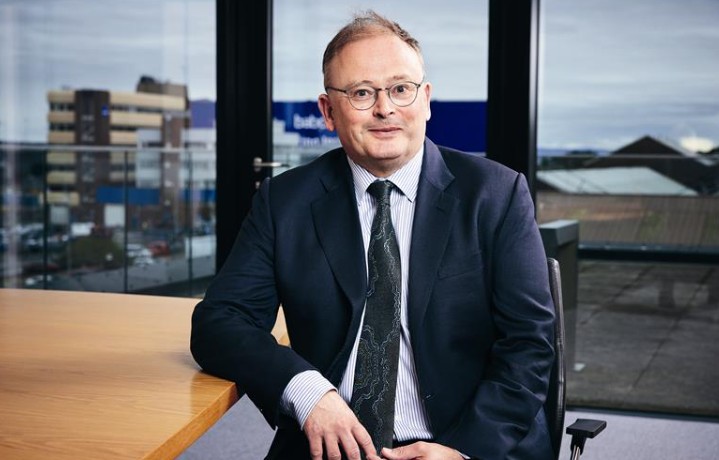
Britain’s defence and engineering firm Babcock International has confirmed that Babcock’s CEO, David Lockwood, will retire by the end of 2026, marking the end of a five-year turnaround at the FTSE-listed company.
The firm has named Harry Holt, currently head of its nuclear division, as his successor.
The announcement came on Friday, from Babcock’s UK headquarters, and matters because the company plays a critical role in Britain’s naval fleet, nuclear submarine programme, and Ministry of Defence contracts.
The decision affects investors, defence workers, and the wider UK security sector at a time of rising global tensions and increased government defence spending.
Why is Babcock’s CEO stepping down now?
David Lockwood said the timing reflects a natural handover after completing a major recovery phase at the business.
“It has been my privilege to lead Babcock through a period that has seen the COVID pandemic, international geopolitical unrest and an increased focus on global security,” Lockwood said in a company statement.
#BAB It’s all going on at Babcock
CEO, David Lockwood to retire
Given the +148% performance of the shares over the last year I’d say he’s earned his retirement👍In addition, the company guides to inline (+ potential for upside if Indian Arrowhead licenses deliver)
Great to see pic.twitter.com/UTVKmUd4oZ— Aston Girl (@reb40) January 23, 2026
Lockwood took over in 2020, when Babcock faced operational problems, weak margins, and investor doubts. Over the past five years, he streamlined operations, focused on core defence work, and rebuilt trust with the UK government.
As a result, Babcock’s share price has risen by nearly 600% during his tenure, helped by higher global defence spending following Russia’s invasion of Ukraine in 2022.
Who is Harry Holt, and why was he chosen?
Babcock said it selected Harry Holt after an extensive internal and external search. Holt currently leads Babcock’s nuclear division, one of its most sensitive and strategically important businesses.
The unit supports:
- Britain’s nuclear submarine fleet
- Nuclear site decommissioning
- Long-term national security infrastructure
Before joining Babcock, Holt worked at Rolls-Royce, a key UK nuclear and defence supplier. Earlier in his career, he served as an officer in the British Army, giving him first-hand experience of defence operations and military procurement.
Babcock said Holt already has strong relationships with key customers, including the UK Ministry of Defence, which accounts for a large share of the company’s revenue.
How has Babcock performed under David Lockwood?
Lockwood’s leadership marked one of the strongest turnarounds in the UK defence sector in recent years.
Key performance highlights (2020–2025):
- Share price up nearly 600%
- Improved cash flow and operating margins
- Refocus on core defence and nuclear services
- Stronger delivery on MoD contracts
- Reduced risk from non-core international projects
The company now maintains much of Britain’s naval fleet, supplies weapons systems, and supports nuclear power and defence projects across the UK.
What role does the nuclear division play in Babcock’s future?
The nuclear business sits at the heart of Babcock’s long-term strategy. It supports the UK’s continuous at-sea deterrent, including submarine maintenance and infrastructure linked to the Trident programme.
It also handles complex nuclear decommissioning work, which can last decades and provides stable, long-term revenue.
Babcock said the improved performance of the nuclear unit played a key role in Holt’s promotion.
Is Babcock confident about future growth?
Yes. Alongside the leadership announcement, Babcock said it remains confident of meeting its growth targets for the 2026 financial year.
The company also flagged possible upside to current forecasts, depending on the timing of international contracts.
One key example is a £4 billion deal with Indonesia, agreed in November, which Babcock leads. The deal focuses on developing maritime capability for Indonesia’s navy and fishing fleets.
Babcock said the exact financial impact will depend on when work formally begins.
Why does this leadership change matter for the UK?
Babcock plays a central role in UK defence readiness, nuclear safety, and naval capability.
With defence spending rising and geopolitical risks remaining high, continuity at the top matters. By naming a successor well ahead of Lockwood’s exit, Babcock aims to reassure:
- UK government clients
- Investors and pension funds
- Defence sector employees
- International partners
The move also signals that defence and nuclear expertise, rather than financial engineering, will guide the company’s next phase.