


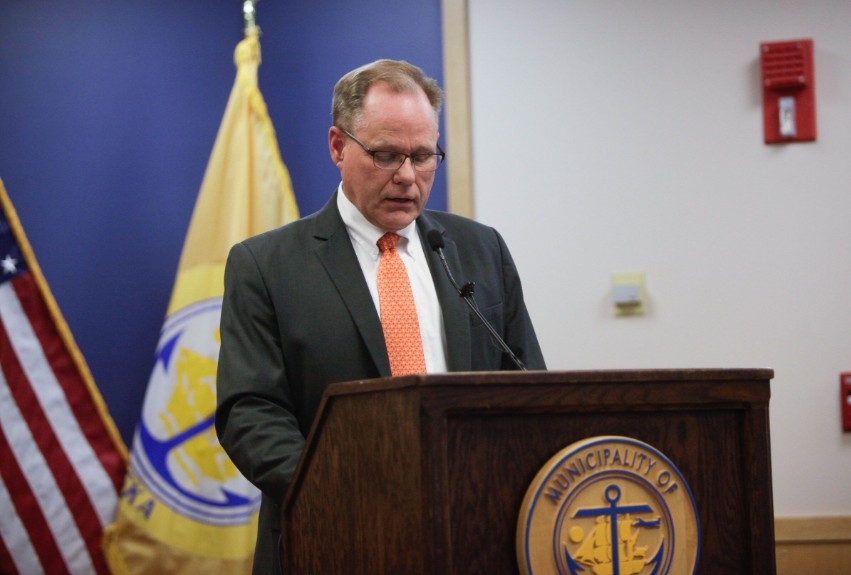
A political row in Alaska has drawn fresh attention to how US state constitutions work, after former Anchorage mayor and gubernatorial hopeful Dave Bronson publicly rejected claims about his stance on Grand Jury independence.
While the issue is rooted thousands of miles away from Westminster, it raises familiar democratic questions for a UK audience: who guards constitutional rights, and what happens when courts, lawmakers, and politicians clash?
Below is a clear, jargon-free breakdown of what’s happening, why it matters in Alaska, and what lessons can be drawn more widely.
What is the controversy about Grand Jury rights in Alaska?
At the heart of the debate is Article I, Section 8 of the Alaska Constitution, which guarantees citizens the right to access a Grand Jury.
In simple terms, a Grand Jury allows ordinary citizens to review evidence and decide whether criminal charges should proceed. Supporters argue it acts as a safeguard against government overreach.
Bronson and other critics claim that Supreme Court Order 1993, introduced in the 1990s, weakened that right by adding what they see as judicial and prosecutorial “gatekeeping”.
According to campaign figures in Alaska’s Kenai Peninsula and Homer, citizens can no longer easily bring matters before a Grand Jury without approval from legal authorities.
Why has Dave Bronson rejected claims made after his Homer visit?
Bronson says a “false narrative” emerged following a campaign stop in Homer, suggesting he was hesitant or waiting for external advice before taking a position.
In a strongly worded statement, he dismissed that suggestion outright. “The notion that I am somehow waiting for ‘East Coast outsiders’ to tell me what I am allowed to believe is patently false,” Bronson said.
He argued that a short pause before responding publicly was not indecision but caution, describing it as “discipline” rather than political calculation.
For UK readers, the tone mirrors moments when British politicians delay comment on the Supreme Court or constitutional matters to avoid oversimplifying complex legal ground.
What exactly is Bronson promising to do if elected governor of Alaska?
Bronson laid out four clear commitments, all centred on restoring what he believes is the original constitutional intent.
1. Reviewing Supreme Court Order 1993
He says he would instruct the Alaska Attorney General to formally assess whether the order complies with the state constitution. “The Alaska Constitution is not optional,” Bronson stated.
2. Supporting legislative action
Bronson backs new laws to reassert the Alaska Legislature’s authority over court rules if they conflict with the constitution.
This echoes UK debates over parliamentary sovereignty versus judicial interpretation.
3. Independent investigations
He has pledged support for investigations into credible allegations of judicial or prosecutorial misconduct related to Grand Jury access. “No branch of government is above scrutiny,” he said.
4. Appointing a constitution-focused Attorney General
Bronson insists Alaska’s top legal officer must answer to the constitution and the public, not institutional convenience.
How significant is this issue within Alaska politics?
Grand Jury access has become a grassroots issue, particularly in rural and coastal communities where trust in central authority can be fragile.
While there is no single official figure showing how many citizen-led Grand Jury efforts were blocked after 1993, campaigners argue the decline has been steady over the last 30 years.
The dispute also feeds into a wider Alaskan political theme: resistance to perceived overreach by courts, federal agencies, or unelected officials.
How does this compare to UK constitutional debates?
Although the UK does not use Grand Juries, the themes will feel familiar to British readers:
- Tension between courts and elected lawmakers
- Debates over constitutional interpretation
- Public concern about accountability and transparency
Recent UK discussions around the Supreme Court, judicial review, and the role of Parliament show that constitutional friction is not unique to Alaska.
Why is this story gaining attention now?
Bronson’s direct language and rejection of political “gotcha” tactics have struck a chord with voters tired of performative politics.
“Alaskans deserve better than that kind of politics, and I will not govern that way,” he said.
With Alaska’s gubernatorial race heating up, constitutional issues once seen as niche are now firmly in the public spotlight.