


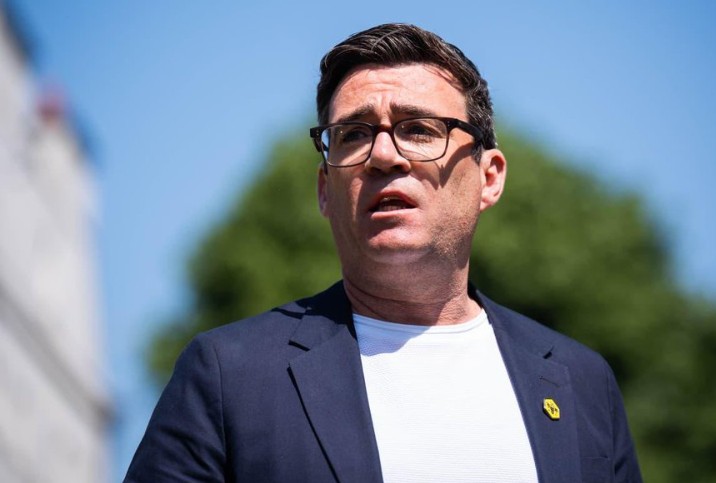
Prime Minister Andy Burnham has reaffirmed the UK’s unwavering support for Ukraine during a high-profile diplomatic summit in London with Ukrainian President Volodymyr Zelenskyy.
Marking his first international engagement since entering Downing Street, Burnham announced a landmark defense technology transfer to scale up frontline capabilities, cementing bilateral relations under the UK-Ukraine 100-Year Partnership.
- New Leadership Commitment: Prime Minister Andy Burnham hosted President Zelenskyy in his first major international visit, guaranteeing absolute continuity in British foreign policy.
- Defense Tech Transfer: The UK is handing over the intellectual property for the Stone Cloak electronic warfare system to allow domestic Ukrainian mass production.
- Multinational Integration: Over 200 Ukrainian military personnel recently concluded Exercise Sea Breeze training under British command structures.
What Does Andy Burnham’s Premiership Mean for UK-Ukraine Relations?
UK Ukraine relations have entered a renewed phase of industrial and military integration following Prime Minister Andy Burnham’s confirmation of ironclad state backing.
Meeting at a strategic naval facility, Burnham and President Zelenskyy reviewed joint security initiatives established under the bilateral Agreement on Security Co-operation and the expansive 100-Year Partnership framework.
At the center of the latest package is the transfer of sensitive sovereign technology. The UK government is handing over design architecture and intellectual property rights for the Stone Cloak, a specialized, tablet-sized electronic warfare jamming device engineered to block Russian drone tracking.
By decentralizing manufacturing directly to Ukrainian production lines, the Ministry of Defence (MoD) aims to bypass long supply chains and accelerate frontline equipment deployment.
How Will the New Defense Tech Transfer Impact British and Ukrainian Industries?
The deepening strategic partnership carries tangible weight across the British public sector and industrial base. According to HM Treasury and Office for National Statistics (ONS) metrics regarding defense expenditure, the UK has committed significant financial backing in direct bilateral assistance for the fiscal cycle, forming part of a broader framework aimed at securing European energy networks and industrial supply chains.
Locally, defense manufacturing hubs across England, including advanced engineering corridors connected to Department for Business and Trade (DBT) initiatives, are pivoting toward joint technological co-production.
Beyond hardware, regional transport infrastructure, including National Rail freight arteries moving specialized supplies toward key maritime export terminals, remains vital for maintaining the continuous logistical bridge required under Department for Transport (DfT) defense-support protocols.
Ministerial Statements and Official Responses
“Britain stands with Ukraine, shoulder to shoulder, and our support remains unwavering. Russia should be in no doubt of our resolve, and we will not back down until we achieve long-lasting and just peace.” Prime Minister Andy Burnham
Foreign Secretary Ed Miliband reinforced this position during the ministerial briefing, stating that the UK’s diplomatic and security posture remains completely resolute against ongoing violations of international law and the UN Charter.
What Is the Future Timeline for Joint Military and Industrial Projects?
Looking ahead, bilateral cooperation will focus on operationalizing the UK Ukraine relations Enhanced Security and Defence Industrial Collaboration Declaration.
- Late 2026: Integration of frontline battlefield feedback into Project Brakestop, the UK’s next-generation low-cost cruise missile initiative.
- Ongoing: Expansion of multinational force training protocols coordinated via the Ministry of Defence, including exercises like Sea Breeze.
- Next Year: Review milestones under the ongoing UK-Ukraine Strategic Dialogue framework managed via the Foreign, Commonwealth & Development Office (FCDO).