


A co-founder of Palestine Action has won a High Court legal challenge against the UK Government’s decision to ban the group under anti-terror laws, but the organisation remains banned for now.
Huda Ammori, who helped set up the direct-action campaign group, took legal action against the Home Office over the decision to proscribe Palestine Action under the Terrorism Act 2000.
The ruling was delivered at the High Court in London on Friday, with judges confirming that the challenge succeeded on two legal grounds.
However, the court has allowed the ban to stay in place temporarily while further legal arguments take place and the Government considers whether to appeal.
The decision matters because the ban makes it a criminal offence to support, promote, or belong to Palestine Action, with penalties of up to 14 years in prison. It has also led to thousands of arrests since the ban began.
Why Was Palestine Action Banned in the First Place?
The Government banned Palestine Action as a proscribed organisation, meaning the group is officially treated in law as being linked to terrorism.
The ban began on 5 July last year and immediately made it illegal to:
- Be a member of Palestine Action
- express support for the group
- wear clothing or display signs linked to it
- help raise money for the organisation
The Government said the ban was necessary to protect public order and national security, pointing to the group’s history of direct action protests, particularly those involving property damage and disruption.
What Did the High Court Decide in the Case?
A panel of High Court judges ruled that Huda Ammori succeeded in her challenge on two out of four grounds.
High Court ruling: the govts decision to proscribe Palestine Action as a terrorist group is unlawful.
Statement from @HudaAmmori here⬇️ pic.twitter.com/x47TRHSrDu
— Saul Staniforth (@SaulStaniforth) February 13, 2026
The court did not immediately remove Palestine Action from the proscribed list. Instead, judges said the ban should remain temporarily to allow time for:
- further arguments in court
- The Government is to review the ruling
- ministers to consider an appeal
This means Palestine Action remains legally banned for now, despite the legal victory.
What Did Huda Ammori’s Legal Team Argue?
During the hearing, lawyers representing Ms Ammori argued that the proscription was:
- rushed and poorly considered
- unfair and discriminatory
- lacking a proper legal process
- an excessive use of Government power
They also argued that the ban clashes with long-standing UK legal traditions and human rights protections, including freedom of expression and freedom to protest.
Barristers highlighted the scale of enforcement since the ban, stating that more than 2,000 arrests had been made, including people from a wide range of backgrounds, such as teachers, pensioners, retired military figures, and even an elderly former magistrate.
They claimed the Government had effectively criminalised civil disobedience and political protest.
What Did the Home Office Say in Defence of the Ban?
The Home Office argued that the ban was lawful and necessary, saying it struck a fair balance between individual rights and the wider interests of public safety.
Government lawyers also insisted that people remain free to protest for Palestine or criticise Government policy, as long as they do not show support for a proscribed group.
The Home Office maintained that the purpose of proscription is to cut off banned groups from publicity, membership, and financial backing.
How Has the Ban Affected Protesters Across the UK?
The ban has had a major impact on public protests and political activism.
Because Palestine Action is proscribed, even holding up a sign saying “I support Palestine Action” could potentially result in arrest.
During demonstrations linked to the case, police arrested 143 people on the first day of one major hearing, following gatherings held in support of the organisation.
The proscription has created fear and uncertainty for many campaigners, especially those involved in peaceful protest, who now worry that simple slogans or public statements could be treated as criminal.
Why Are Writers and Artists Mentioned in the Case?
The case also raised concerns about how anti-terror laws could affect public figures and cultural workers.
The court heard written evidence from novelist Sally Rooney, who previously stated she planned to donate earnings from her books and BBC adaptations to Palestine Action.
She argued that the ban created legal confusion over whether UK companies could make payments to her, and warned that she may be unable to publish or profit from work in the UK while the proscription remains in force.
This aspect of the case has increased debate about whether the ban goes beyond policing protest and begins to interfere with freedom of expression and the arts.
What Happened Outside the High Court in London?
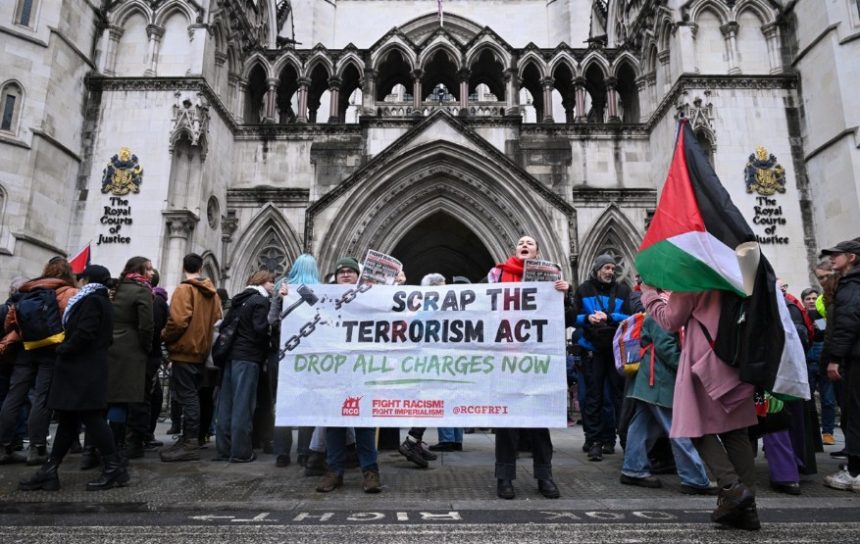
Around 100 people gathered outside the High Court in central London during the ruling. Supporters were seen cheering and chanting “Free Palestine” as the decision was announced.
The crowd reaction showed how politically charged the issue has become, with the Palestine Action ban now sitting at the centre of a wider UK debate over protest rights, policing, and national security laws.
Could the Government Appeal the Palestine Action Ruling?
Yes. The Government can still appeal the High Court ruling. Judges made clear the ban remains in place for now, partly to allow time for ministers to consider an appeal and decide their next legal step.
If the Government appeals, the case could move to a higher court, which would decide whether the proscription should remain or be overturned. Until that happens, Palestine Action remains banned.
What Could This Mean for People Already Arrested?
One of the biggest unanswered questions is what happens to people already arrested or charged under the ban.
Since the proscription has led to thousands of arrests, the High Court decision could encourage defence lawyers to argue that the ban’s legal foundation has been weakened.
However, the ban remains active at this stage, so the Government can still enforce the law as it currently stands.