


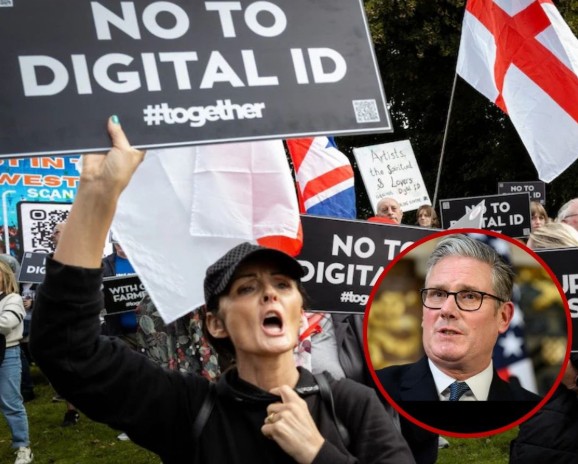
A prominent UK civil liberties campaigner has welcomed signs that Labour is backing away from plans to introduce compulsory digital ID cards, calling the shift a major victory for public resistance.
The Government is now expected to soften proposals that would have required workers to prove their status through a digital-only system by 2029, with ministers instead exploring a voluntary approach.
The change follows sustained national opposition, including protests, lobbying of MPs, and one of the largest public petitions seen in recent years.
What were digital ID cards supposed to do?
The proposed system would have introduced digital ID cards as part of everyday checks, beginning with Right to Work verification in England, Scotland, Wales and Northern Ireland.
The original proposal, which outlined plans to introduce mandatory digital ID cards by 2029, had already sparked widespread concern among civil liberties groups and the wider public.
Under earlier plans:
- Employers would rely on online-only ID checks
- Physical documents, such as passports, could be sidelined
- Mandatory use was pencilled in for the end of the decade
Ministers argued the system would modernise employment checks, reduce identity fraud and speed up access to services.
However, opponents warned it could disadvantage people without smartphones or reliable internet access, while also expanding state oversight of personal data.
Why is Labour now reconsidering digital ID cards?
This week, reports emerged that Labour leader Sir Keir Starmer is preparing to abandon the compulsory element of the scheme.
Instead, officials are understood to be discussing:
- Keeping digital ID checks optional
- Preserving traditional paper-based documents
- Running a public consultation before final decisions are made
Within Westminster, the policy had increasingly been viewed as unpopular with voters and difficult to defend during a general election cycle.
Who led opposition to digital ID cards?
Among the most high-profile critics is Alan Miller, co-founder of the Together Declaration, a UK pressure group that formed during opposition to Covid-era restrictions.
Mr Miller said the Government’s change in tone reflected years of nationwide campaigning.
“People across the country have put huge effort into this, lobbying MPs, working with councillors, leafleting neighbourhoods and protesting.
It shows that when the public speaks loudly and persistently, politicians eventually listen,” he said.
How strong was public opposition?
Public resistance peaked with a parliamentary petition opposing digital ID cards, which garnered nearly three million signatures and was debated by MPs in December.
Not forgetting
2,984,192 signed this petition
The main petition that played a huge role in the backlash against the compulsory digital ID plans was the official UK Parliament petition titled “Do not introduce Digital ID cards” (petition ID 730194).
It demanded that the… https://t.co/NuET14HNXp
— Chris 🇬🇧 Reform UK 🩵 (@ChrisWrightson6) January 14, 2026
Mr Miller said the scale of support highlighted deep unease. “There’s been a strong feeling that this was being pushed onto people without consent. So hearing the Government step back from it is a moment worth recognising,” he said.
The petition ranks among the largest ever submitted through Parliament’s official system.
Could digital ID still return in another form?
Despite the apparent climbdown, campaigners remain cautious.
Attention has now turned to the Children’s Wellbeing and Schools Bill, which includes proposals for a Single Unique Identifier linking a child’s records across:
- Education
- Healthcare
- Social services
Critics fear this could lay the groundwork for a broader “single login” digital identity framework later on.
“There are still voices pushing for centralised digital identity systems,” Mr Miller warned, adding that campaigners would continue monitoring future legislation.
What is the Government saying now?
Official statements suggest the issue is not fully settled. A Government spokesperson said ministers remain committed to improving digital checks but stressed that details are still under review.
“We have always said any digital ID proposals will follow a full public consultation. Digital systems can make services more efficient and accessible, while remaining inclusive,” the spokesperson said.
This indicates internal debate continues over how far digital identification should go.