

Greenlanders are finding themselves unexpectedly pulled into a growing geopolitical storm, as the United States steps up its interest in the Arctic island for national security reasons.
The renewed focus comes ahead of a high-level meeting next week between US Secretary of State Marco Rubio and Danish officials, with Greenland’s future firmly on the agenda.
For the UK and Europe, the situation raises serious questions about Arctic security, Nato unity, and how far global powers are willing to go to protect their interests.
Why Is Greenland Suddenly So Important to the US?
At the heart of this Greenlanders’ geopolitical storm is geography.
Greenland sits between the Arctic and Atlantic Oceans and lies on the shortest route between Russia and the United States for ballistic missiles. US defence planners see it as a critical early-warning and missile-defence location.
The US already operates an air base in Greenland under a 1951 defence agreement with Denmark. During the Cold War, around 10,000 US personnel were stationed there. Today, that number is closer to 200, according to defence analysts.
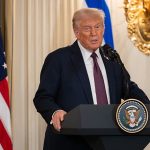
However, President Donald Trump has repeatedly argued that Denmark does not do enough to secure the island, a claim Copenhagen strongly disputes.
US administration (previous statements): “Greenland is vital for American national security,” Donald Trump has said in the past when arguing for greater US control in the Arctic.
How Do Greenlanders Feel About US Interest?
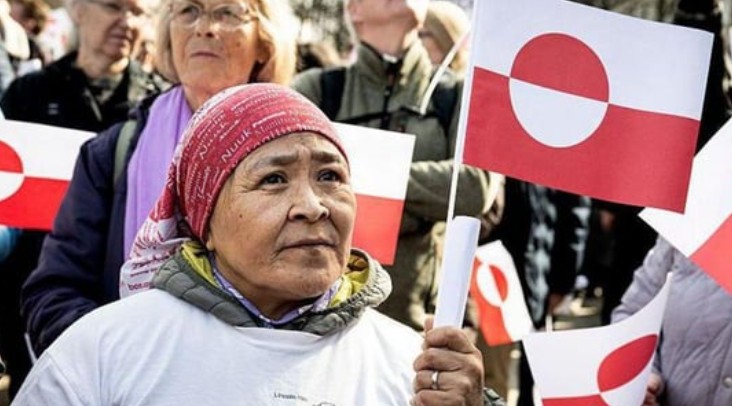
Despite the calm appearance of Greenland’s capital, Nuuk, there is deep unease among locals.
Greenland is nine times the size of the UK but has a population of just 57,000, most of whom are Indigenous Inuit. Many residents say they feel ignored while global powers debate their future.
🚨 Greenlanders are on edge as their Arctic island suddenly becomes the center of a geopolitical storm.
Strategic location, natural resources, and rising global tensions are turning what was remote into a hotspot overnight, and no one there signed up to be a chess piece. pic.twitter.com/LbmlNCbcMo
— TheCommonVoice (@MaxRumbleX) January 10, 2026
Surveys conducted in recent years suggest around 85% of Greenlanders oppose becoming part of the US, yet a majority also favour eventual independence from Denmark.
A young pottery maker in Nuuk summed up local frustration: “We have always lived a quiet and peaceful life here. We just want to be left alone.”
Others fear that talk of military force, which the Trump administration has previously refused to fully rule out, could destabilise the island.
Is Greenland Still Tied to Denmark?
Greenland is a semi-autonomous territory within the Kingdom of Denmark. It gained home rule in 1979 and further self-government in 2009, controlling most domestic affairs.
However, Denmark still oversees defence and foreign policy, and provides annual subsidies worth hundreds of millions of pounds, which help support Greenland’s welfare system.
Pipaluk Lynge-Rasmussen, a Greenlandic MP from the pro-independence Inuit Ataqatigiit party, believes Greenlanders need a louder voice internationally.
Greenland Parliament: “We need to speak out about what we want as a people,” she said, stressing that Greenland should not be treated as a second-class partner.
What Are the Security Risks in the Arctic?
The Arctic has long followed an informal rule of “high north, low tension”. That balance is now under strain.
Key concerns include:
- Russian military expansion following sanctions over Ukraine
- China’s growing interest in Arctic shipping routes, made easier by melting ice
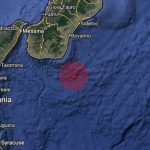
- Increased talk of missile defence systems and radar coverage, including in waters between Greenland, Iceland and the UK, known as the GIUK Gap
China has rejected US claims of a growing threat, accusing Washington of exaggerating risks to justify its own ambitions.
Chinese Foreign Ministry: Beijing has criticised the US for using a “so-called China threat” to seek “selfish gains” in the Arctic.
Where Does the UK Fit Into This?
For the UK, Greenland’s future is not a distant issue. The GIUK Gap is a critical maritime corridor for British and Nato security, used to track Russian and Chinese naval movements. Any increased militarisation of Greenland directly affects UK defence planning.
UK Prime Minister Sir Keir Starmer has reportedly held multiple calls with US leaders, urging cooperation rather than unilateral action and promising that Europe will step up its Arctic presence.
Could Greenland Become Independent?
Many Greenlanders support independence in principle, but economic realities complicate matters.
The island is rich in rare earths and minerals, yet poverty remains a serious issue in Inuit communities. Developing resources requires foreign investment, something opposition politicians argue should be done on Greenland’s own terms.
Opposition MP Pele Broberg has warned against panic. Naleraq Party: “We are not for sale, but we should be open for business,” he said, calling for free trade beyond Denmark alone.