


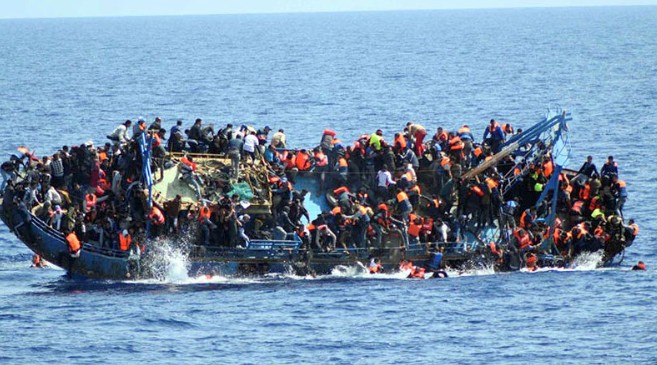
The Gambia migrant boat tragedy has left dozens of people feared missing after an overcrowded boat carrying around 200 migrants capsized off the West African coast late on Wednesday night, Gambian authorities have confirmed.
At least seven people have died, while rescue teams continue searching for survivors in one of the deadliest incidents on the Atlantic migration route so far this year.
What exactly happened off the coast of The Gambia?
According to an official statement from The Gambia’s Ministry of Defence, the wooden vessel overturned close to Jinack village in the North Bank Region shortly after midnight.
The boat was later discovered grounded on a sandbank, suggesting it may have run into shallow waters before capsizing. Survivors told rescuers the vessel became unstable in rough sea conditions.
Press Release: Incident of a capsized boat carrying irregular migrants pic.twitter.com/vA1g9vYurc
— Ministry of Information – The Gambia (@Info_Ministry_) January 1, 2026
So far, 96 people have been rescued, with several pulled from the water by navy patrols and local fishing boats that rushed to assist once the alarm was raised.
What do we know so far?
- Around 200 migrants were believed to be on board
- Seven bodies have been recovered
- 96 survivors have been rescued
- Dozens remain unaccounted for
- Ten people are in critical condition, receiving urgent medical care
Authorities have confirmed that several victims are not Gambian nationals, and formal identification is ongoing.
Where was the boat heading, and why do migrants risk this journey?
The vessel was travelling towards Spain’s Canary Islands, a Spanish territory that has become one of Europe’s most active migrant arrival points.
This Atlantic crossing is often chosen as other Mediterranean routes become harder to access due to stricter border controls. However, the journey is widely regarded as one of the most dangerous sea routes in the world.
Caminando Fronteras, Spanish migrant rights organisation: “In 2024 alone, more than 9,000 migrants lost their lives trying to reach Spain by sea.”
Nearly 47,000 people reached the Canary Islands in 2024, a figure that has alarmed European governments and humanitarian groups alike.
Why is The Gambia a growing departure point?
Although small in size, The Gambia has become a key launch point for migrants from across West Africa. Many travel overland from neighbouring countries before attempting the Atlantic crossing.
Limited job opportunities, rising living costs, and regional instability continue to push young people towards dangerous migration routes, often relying on smugglers who promise safe passage but provide unsafe boats.
What rescue efforts are currently underway?
Following the capsizing, the Gambian Navy immediately launched a search-and-rescue operation, deploying patrol vessels and coordinating with local fishermen.
Gambian Ministry of Defence: “Search operations are continuing as teams work to locate all remaining passengers.”
Despite ongoing efforts, officials warn that survival chances decrease rapidly due to exhaustion, exposure, and strong ocean currents.
Why does this tragedy matter to the UK?
While the UK is not directly connected to the Canary Islands route, incidents like this shape wider European migration policy, which directly influences UK border discussions and asylum strategies.
The tragedy also reignites debate over whether current EU migration agreements with African nations are addressing root causes or simply pushing migrants towards even more dangerous routes.