
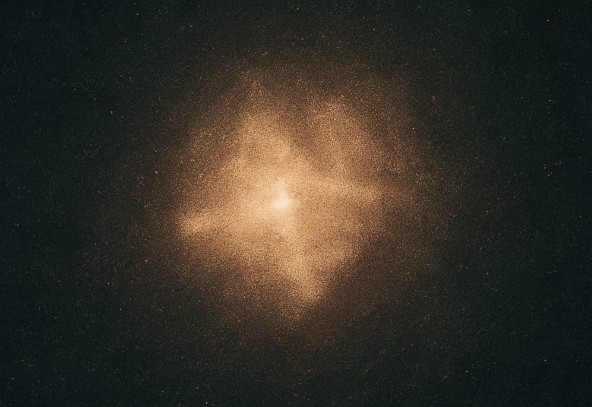
The comet 3I/ATLAS interstellar object is offering UK and European scientists a once-in-a-generation opportunity to study material formed around another star.
As it moves steadily closer to Earth, researchers have confirmed something never clearly seen before in an interstellar visitor: a detectable glow in X-rays, building on earlier scientific breakthroughs that first highlighted the comet’s unusual behaviour.
Discovered on 1 July 2025, 3I/ATLAS is only the third interstellar object ever identified passing through our Solar System.
It will reach its closest point to Earth on 19 December, remaining at a safe distance of roughly 269 million kilometres.
What makes comet 3I/ATLAS different from ordinary comets?
Unlike comets that formed alongside the planets in our Solar System, 3I/ATLAS originated in a completely different star system.
Scientists believe it was ejected billions of years ago and has since wandered through interstellar space before being briefly captured by the Sun’s gravity.
Soon after its discovery, the European Space Agency (ESA) coordinated a global observing campaign using telescopes in Chile, Hawaii and Australia, as well as space-based observatories including Hubble and XMM-Newton.
Recent Hubble imagery revealing active jets has helped scientists pinpoint how the comet responds to solar heating.
“Interstellar objects like 3I/ATLAS are priceless scientific messengers,” ESA scientists said during mission briefings. “They allow us to study chemistry and physical processes from planetary systems far beyond our own.”
How close will the comet come, and should the UK be concerned?
Although headlines often describe the comet as approaching Earth, there is no threat whatsoever. At its closest, 3I/ATLAS will still be nearly twice the average distance between the Earth and the Sun.
For comparison, this is far beyond the orbit of Mars. Astronomers describe it as “close” only in cosmic terms.
Why are scientists excited about X-rays from the comet?
The most striking discovery so far came on 3 December, when ESA’s XMM-Newton X-ray observatory tracked the comet for around 20 hours. Using its highly sensitive EPIC-pn camera, scientists detected a faint but unmistakable X-ray glow.
This glow is produced when gases escaping from the comet collide with the solar wind, a stream of charged particles flowing constantly from the Sun.
Our @ESA_XMM has observed comet #3IATLAS in X-ray light!
When gas molecules streaming from a comet collide with the solar wind they produce X-rays, seen here as the red glow of 3I/ATLAS https://t.co/Hv0Dv3AAg9
Blue marks empty space with little X-rays, while the black… pic.twitter.com/oblPMYz64Q
— ESA Science (@esascience) December 12, 2025
While this process is known in comets from our Solar System, seeing it clearly in an interstellar comet confirms that the same physics applies to material formed around other stars.
What does the comet’s chemistry reveal about its origins?
Spectroscopic data collected since November show that 3I/ATLAS has a highly unusual chemical signature.
It is exceptionally rich in carbon dioxide, contains very little water, and also shows traces of carbon monoxide and even atomic nickel vapour, something rarely observed in cometary gas.
This composition suggests the comet may have formed in a much colder or chemically different environment than the region where our own comets originated.
For scientists in the UK, this strengthens the idea that planetary systems across the galaxy can evolve in very different ways.
How does 3I/ATLAS compare with earlier interstellar visitors?
The table below highlights why researchers consider 3I/ATLAS such a valuable target compared with previous objects.
| Feature | 1I/’Oumuamua (2017) | 2I/Borisov (2019) | 3I/ATLAS (2025) |
|---|---|---|---|
| Type | Object (uncertain) | Comet | Interstellar comet |
| Active outgassing | No clear evidence | Yes | Strong and ongoing |
| X-ray detection | No | No | Yes (ESA confirmed) |
| Chemical composition | Unknown | Similar to Solar System comets | Highly unusual |
| Observation window | Very short | Moderate | Extended and detailed |
Unlike ’Oumuamua, which passed too quickly for in-depth study, 3I/ATLAS is slow enough and active enough to be examined across visible, infrared and X-ray wavelengths.
What else have astronomers learned so far?
High-resolution images from Hubble reveal jets of gas and dust erupting from specific regions of the comet’s nucleus. These jets appear to change over time in a way that suggests the comet rotates roughly once every 15 to 16 hours.
Polarimetric observations also show that the dust reflects sunlight differently from typical Solar System comets, indicating grains with unusual sizes or structures.
Together, these clues point to a body that has spent most of its existence exposed to cosmic radiation in deep space, developing a chemically altered outer crust.
Comet 3I/ATLAS is one of the rarest objects ever studied by astronomers. It will pass Earth safely on 19 December 2025, while offering scientists a detailed look at material formed around another star.
The detection of X-rays, its unusual chemistry and its ancient origins make it a unique scientific laboratory.
Unlike earlier interstellar visitors, this one is giving researchers time and data to unlock long-standing mysteries about how planetary systems form across the galaxy.
NASA experts studying comet 3I/ATLAS – the interstellar object passing through our solar system
(Reddit AMA)
from r/space
What does this mean for the UK public?
For the UK, 3I/ATLAS highlights the value of European-led space science and long-term investment in astronomy.
While the comet poses no risk, it brings humanity closer to understanding whether the building blocks of planets, and possibly life, are common throughout the Milky Way.