
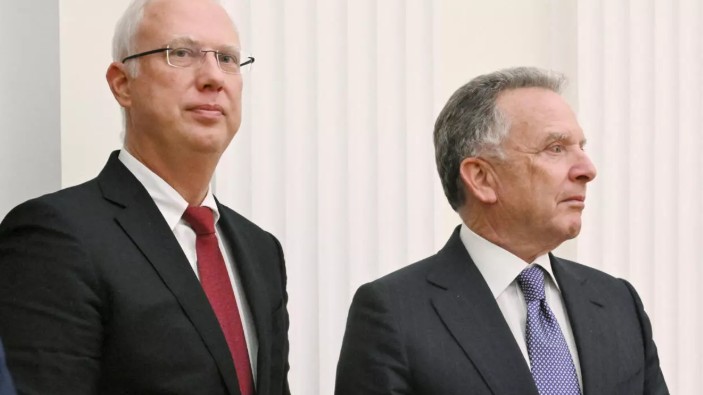
US and Russian officials are preparing to meet in Florida this weekend for a crucial round of talks aimed at ending the war in Ukraine.
The discussions follow recent negotiations between US, Ukrainian, and European representatives, which reportedly made some progress on security guarantees for Kyiv.
With the conflict now approaching its fourth year, international eyes are on these talks, which could shape the future of the region and have direct implications for global security and the UK’s foreign policy.
The upcoming meeting comes amid continued uncertainty, with Moscow maintaining a hardline stance and Kyiv insisting it will not cede any territory captured by Russian forces.
US officials are acting as mediators, hoping to find common ground that could bring both sides closer to a resolution.
Analysts have warned the conflict could escalate further, with Trump recently cautioning that the war might trigger a wider conflict if not carefully managed.
What are the latest US-Russia-Ukraine talks about?
The Florida talks are intended to advance a peace plan that has been under discussion between US, Ukrainian, and European officials.
While progress has reportedly been made on security guarantees for Kyiv, it remains unclear whether Russia will accept these terms.
The discussions reflect ongoing US efforts to mediate the conflict without imposing a solution on either party.
Meanwhile, the EU recently agreed to a significant loan to Ukraine without tapping into Russian assets, signalling continued international financial support alongside diplomatic efforts.
Who is attending the Florida talks?
The Russian delegation will be led by Kirill Dmitriev, an envoy of President Vladimir Putin. On the US side, President Donald Trump’s associates, including Steve Witkoff and Jared Kushner, will participate.
Senator Marco Rubio, serving as a senior diplomat and national security advisor, may also join the discussions.
Previous meetings have taken place at Witkoff’s golf club in Miami’s Hallandale Beach, providing a more informal setting for high-stakes diplomacy.
What progress has been made so far?
US, Ukrainian, and European officials have reported incremental progress on security guarantees for Kyiv.
Ukrainian negotiator Rustem Umerov said, “We agreed with our American partners on further steps and on continuing our joint work in the near future.”
He confirmed that President Volodymyr Zelensky had been updated on the discussions. Despite this, Russian sources have ruled out direct meetings between Dmitriev and Ukrainian negotiators, leaving key questions unresolved.
Is Putin willing to compromise?
US intelligence suggests that President Vladimir Putin remains intent on capturing all of Ukraine.
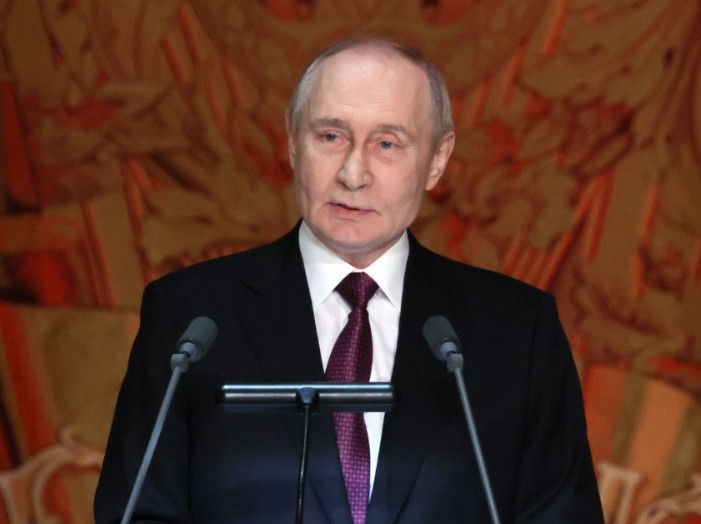
At his latest press conference, Putin reiterated Russia’s demands from June 2024, including that Ukraine withdraw from four contested regions and abandon NATO membership ambitions. Kyiv has consistently rejected these demands, insisting it will retain its territory.
How do US officials view the negotiations?
Senator Marco Rubio emphasised that the US can facilitate dialogue but cannot force a deal. He told reporters: “In the end, it’s up to them to make a deal.
We can’t force Ukraine to make a deal. We can’t force Russia to make a deal. They have to want to make a deal. The role we’re trying to play is figuring out whether there’s any overlap here that they can agree to.”
Rubio expressed hope that some progress could be made before the end of the year, though he acknowledged the challenge of aligning both sides’ positions.
Why does this matter to the UK?
The UK has been a key supporter of Ukraine, providing military and humanitarian aid while coordinating with European partners.
Any breakthrough in US-Russia-Ukraine talks could influence UK foreign policy, defence commitments, and international sanctions against Moscow.