



London’s FTSE 100 is expected to open lower on Friday morning as investors pause after a strong rally and digest fresh interest rate decisions from global central banks.
Attention is also firmly on the UK’s economic data calendar, with retail sales and public sector borrowing figures due shortly after markets open.
Early indicators suggest a more cautious start to trading, with markets recalibrating expectations after a busy week for monetary policy.
Why is the FTSE 100 expected to fall at the open?
Futures pricing from IG indicates the FTSE 100 is set to open around 0.4% lower, or roughly 36 points down, at approximately 9,802.
This follows Thursday’s upbeat session, when the index closed at 9,837.77, up 0.7% on the day and still showing a weekly gain of about 2%.
Friday’s pullback reflects investors locking in profits and reassessing risk as global borrowing costs continue to shift.
In short, markets are not panicking; they are simply pausing after a strong run.
How has the Bank of Japan influenced global markets?
Overnight, the Bank of Japan raised its benchmark interest rate by 25 basis points, taking it to 0.75%. While the move was widely expected, it still carries weight because Japan has spent decades maintaining ultra-low interest rates.
In its policy statement, the central bank said it would continue raising rates if economic growth and inflation remain on track.
“In accordance with improvements in economic activity and prices, the bank will continue to raise the policy interest rate,” the Bank of Japan said.
For UK investors, this matters because changes in Japanese policy can affect global bond yields, currency markets, and international investment flows, all of which have knock-on effects for large multinational firms that dominate the FTSE 100.
Is inflation easing in Japan?
Fresh figures released on Friday showed Japan’s annual inflation rate eased slightly to 2.9% in November, down from 3.0% in October.
While the slowdown is modest, inflation remains above the Bank of Japan’s 2% target, supporting the case for further gradual tightening.
The data suggest price pressures are cooling, but not enough for policymakers to relax just yet.
What is happening in other global markets?
US markets closed higher on Thursday, boosted by a softer-than-expected inflation reading. The S&P 500 and Nasdaq led gains, reflecting renewed optimism that interest rate cuts in the US could continue next year.
Asian markets were broadly positive on Friday morning, with Japan’s Nikkei 225 rising despite the rate hike. This suggests investors were largely prepared for the decision and remain confident in the region’s economic outlook.
However, London is starting the day with more restraint, partly due to the heavy run of domestic economic data.
How has the Bank of England’s decision affected UK sentiment?
On Thursday, the Bank of England cut interest rates by 25 basis points, lowering the base rate to 3.75%. This marked the fourth rate cut of the year and followed a closely split vote among policymakers.
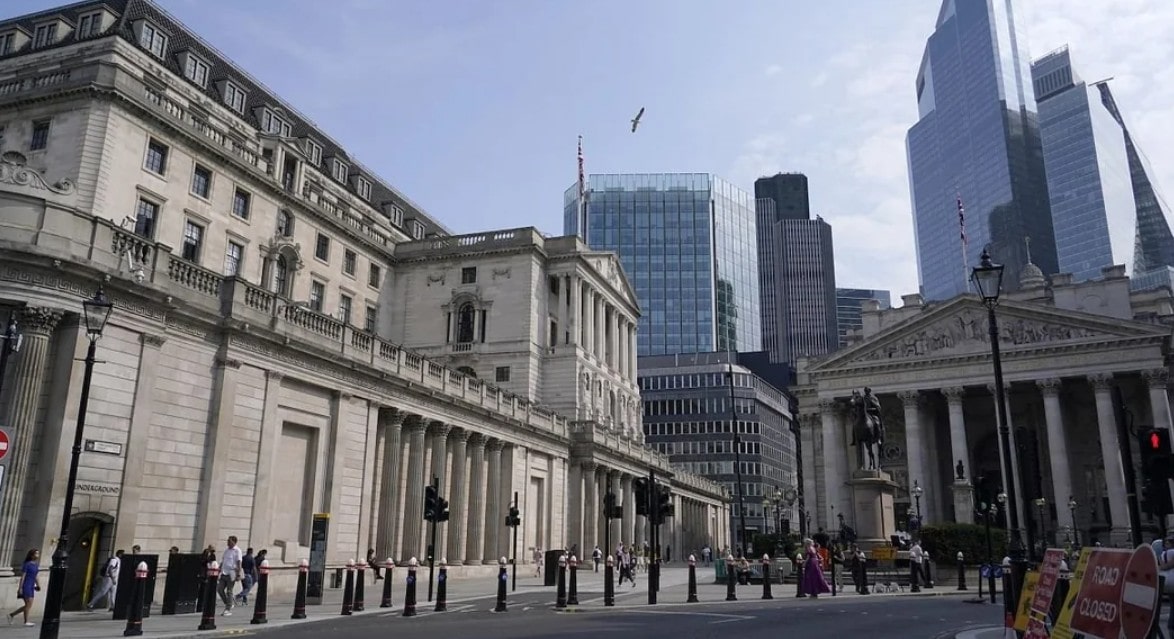
Governor Andrew Bailey stressed that while rates are likely to fall further, future decisions will become more difficult as inflation risks and economic weakness pull in opposite directions.
Commerzbank analyst Norman Liebke said the decision was supportive for the pound, adding: “Despite weaker labour market data and softer inflation, the Bank avoided a dovish surprise.”
Sterling initially strengthened after the decision and also benefited from weaker US inflation data, before easing slightly in early Friday trading.
Why are today’s UK economic figures important?
At 7:00am GMT, investors will closely watch two key releases: UK retail sales and public sector net borrowing.
Retail sales data will show whether households are spending more as Christmas approaches, while the borrowing figures will reveal the state of government finances after recent fiscal decisions.
Together, they provide a clearer picture of how resilient the UK economy remains as borrowing costs slowly fall.
These numbers could influence market direction later in the day, particularly for consumer-focused and banking stocks within the FTSE 100.
Are UK consumers feeling any more confident?
New research from GfK shows consumer confidence has edged higher in December, improving by two points to minus 17.
All areas of the survey showed modest improvement after a weak November, which had been affected by pre-Budget uncertainty.
However, confidence remains firmly in negative territory, reflecting ongoing pressure from high living costs and stretched household budgets.
Which UK companies are in focus today?
Retailer WH Smith is due to publish its full-year results, offering fresh insight into high street footfall and travel retail demand.
Investors will be watching closely for signs that consumer spending is stabilising after a challenging year for retailers.