


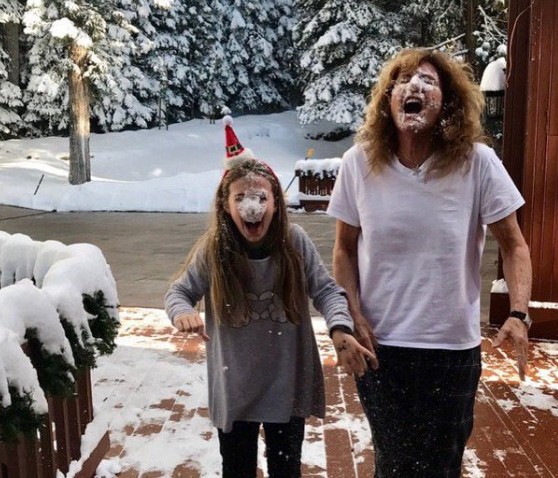
It’s that time of year when cosy jumpers are dusted off, mince pies are on the shelves, and the nation starts dreaming of a white Christmas.
But for those hoping to see snowflakes falling on 25 December, the latest forecast from the Met Office suggests the chances are slim.
What Does the Met Office Say About This Year’s Christmas Weather?
Tom Crabtree, deputy chief forecaster at the Met Office, explained: “High pressure is expected to build into next week, bringing drier and less mild conditions for the Christmas period.
Although temperatures will drop, they are not plummeting. Overnight frosts are likely, and some mist and fog are possible in places, but significant cold weather looks less probable.
Falling temperatures do bring the potential for some wintry showers in the east, but it is too early to discern details for any particular day over the Christmas period.”
In short, expect chilly mornings, maybe some frosty patches, but widespread snow is unlikely.
What Counts as a ‘White Christmas’ in the UK?
According to the Met Office, the criteria are simple: just one snowflake must be observed falling anywhere in the UK on Christmas Day.
- Last year (2024), the UK had a “grey Christmas” with rain and cloud, paired with mild temperatures.
- The last technically white Christmas was 2023, when 11% of weather stations recorded snow, though none reported snow lying on the ground.
- The UK’s whitest Christmas on record remains 2010, with 83% of stations reporting snow on the ground.
Despite this, snow settling on the ground during Christmas is extremely rare, only recorded in 1981, 1995, 2009, and 2010.
Are Some Regions More Likely to See Snow Than Others?
Yes. Historical data from the Met Office (1960–2024) shows snow is far more common in northern and high-altitude regions:
| Region | Number of White Christmases Since 1960 |
|---|---|
| The Highlands | 175 |
| Aberdeenshire | 92 |
Southern England rarely sees a white Christmas, and snow tends to arrive more reliably in January and February than in December.
“For most parts of the United Kingdom, Christmas is only at the beginning of the period when it’s likely to snow,” the Met Office notes.
Long-term averages (1991–2020) show snow lying on the ground in December for about 3 days, compared to 3.3 days in January and 3.4 days in February.
How Has Climate Change Affected Christmas Snow?
Climate change is raising average temperatures across the UK, which has generally reduced the likelihood of a white Christmas.
Historically, snowy Christmases were more common in the 18th and 19th centuries, even more so before the 1752 calendar change, which effectively moved Christmas Day forward by 12 days.
Why Snow at Christmas Is So Rare?
- High-pressure systems in December tend to bring cold but dry conditions.
- Snowfall is more likely in eastern regions, yet settling snow is uncommon.
- Coastal and lowland areas usually see rain rather than snow due to milder air over the sea.
Real-World Case Study: Christmas 2010
The 2010 Christmas remains the UK’s most snowy in recent history: schools closed, trains were delayed, and towns across Scotland, Northern England, and the Midlands were blanketed in white.
Residents still share images on social media each year, showing a nostalgic, snow-covered festive season.
- A true white Christmas in the UK requires just a single snowflake anywhere in the country.
- The Met Office forecasts cold but largely dry conditions for Christmas 2025.
- Widespread snow, especially lying snow, remains very unlikely.
- Northern and high-altitude areas have the highest chance of seeing snow.
- Climate change continues to make snowy Christmases rarer in the UK.
What does this mean for the UK Public?
If you’re dreaming of a snowy Christmas morning, it’s best to manage expectations.
Most of us will likely see frosty pavements rather than snowy rooftops, while those in Scotland and northern England have a slightly higher chance of a festive white scene.
For everyone else, it may be more reliable to enjoy seasonal decorations, mince pies, and perhaps a cosy winter walk instead.